[[[SUMMARY_START]]]
Search is changing from a list of links into a page of direct answers.
AI summaries can help users move faster, but they are reducing the need to visit the sites that supplied the information.
Publishers, regulators and web infrastructure companies are now trying to rebuild the old exchange between content, traffic and revenue.
[[[SUMMARY_END]]]
For more than two decades, the web worked through a simple middle layer. A person searched, a search engine ranked links, and the user clicked through to a website for the answer. That chain is now weakening as AI systems place direct answers at the top of search pages and inside chat-style tools.
## The click is no longer the centerThe old search model did not always feel elegant, but it created a working economy. Search engines indexed pages. Users clicked results. Websites earned attention, subscriptions, ads, sales or donations. That traffic helped fund more pages for search engines to index.
AI search changes that path. Instead of sending users to several pages, the system can read across pages and produce a short answer in one place. A search about travel rules, a recipe, a health term, a product comparison or a local event may now end before the user reaches the original site.
This is the “middle layer” that is under pressure. It includes publishers, blogs, forums, review sites, public-interest pages and specialist databases. These sites still provide much of the raw material. But they may no longer receive the same flow of visitors.
## What the data shows
The clearest public evidence comes from user behavior studies. A Pew Research Center analysis of 900 U.S. adults examined 68,879 Google searches from March 2025. About 18% of those searches produced an AI summary. Among users who saw an AI summary, only 8% clicked a traditional search result. When there was no AI summary, 15% clicked a traditional result.
Clicks inside the AI summaries were even rarer. The same study found that users clicked a source link inside an AI summary in just 1% of visits to pages with such summaries. Users also ended their browsing session more often after seeing an AI summary: 26% of pages with an AI summary ended that way, compared with 16% of pages without one.
A separate 2026 academic field experiment found a similar direction of travel. When AI Overviews appeared, outbound organic clicks fell and zero-click searches rose. Another 2026 measurement study of Google AI Overviews found that question-style searches were especially likely to trigger AI answers.
These findings do not mean every website is losing traffic. They do show that the old habit of clicking from a result page to a source page is becoming less central to the user experience.
## Google’s answer to publisher concerns
Google has argued that AI features make search more useful and that users are asking longer, more complex questions. It says AI Overviews and AI Mode include links to the web and can lead to more valuable clicks when people want to explore a topic more deeply.
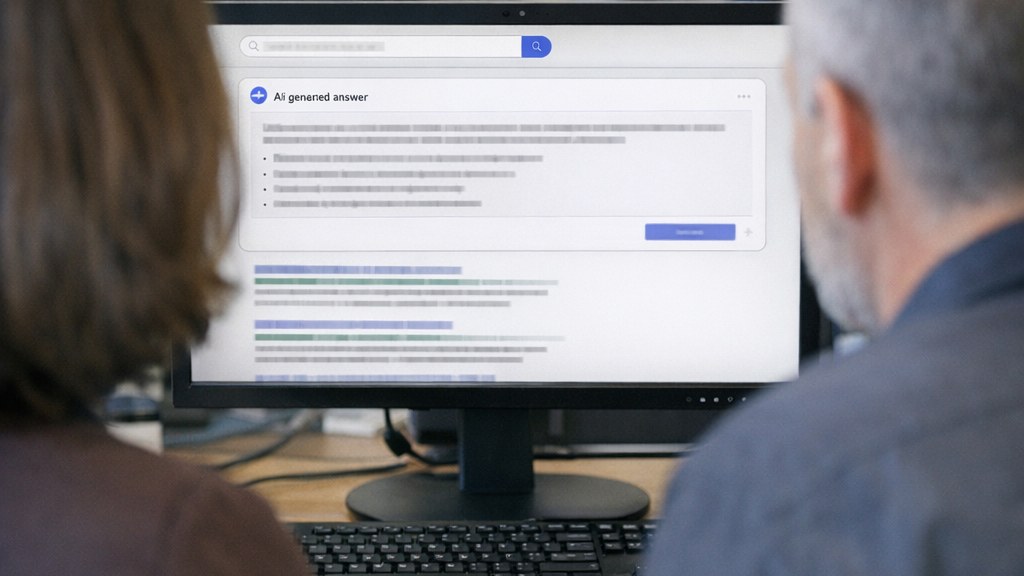
Publishers see a different risk. Many rely on search referrals for advertising, affiliate revenue, subscriptions and audience growth. Even a moderate fall in visits can be serious for small sites with narrow margins. The issue is sharper when AI tools use website content to produce answers while reducing the chance that readers will visit the source.
## New controls and new conflicts
The shift has led to a fight over permission. In July 2025, Cloudflare introduced a permission-based model that blocks AI crawlers by default for new customers unless site owners allow access. The company also promoted tools meant to help website owners decide whether crawlers are collecting content for search, training or other uses.
Some publishers have made licensing deals with AI companies. Others have tried to block crawlers or demand payment. The problem is that blocking access can also reduce visibility in emerging AI search systems. For many sites, that creates a hard choice: protect the content from reuse, or remain visible in the next generation of discovery tools.
Regulators are entering the debate. In June 2026, the United Kingdom’s competition regulator ordered Google to give publishers effective tools to opt out of having their content used for AI search features for British users. The order also requires clearer links and attribution in AI-generated search results.
## A changing web economy
The web is not disappearing. People still visit sites for depth, trust, entertainment, shopping, community and original reporting. But the path to those sites is changing.
The next stage may depend on whether a new bargain can replace the old one. That could include licensing, pay-per-crawl systems, stronger opt-out tools, better attribution or new ways to measure AI-driven visibility. Without such systems, more information may be consumed through answer boxes while the creators behind the information struggle to keep producing it.
The central question is no longer only whether AI can answer. It is whether the web can keep rewarding the people and organizations that make the answers possible.
AI Perspective
AI search gives users speed, but it also changes who gets attention and income. The web’s strength has always come from many independent sources creating useful material. A healthier model will need to keep that variety alive while still letting search tools become easier to use.


-134c72da.webp)