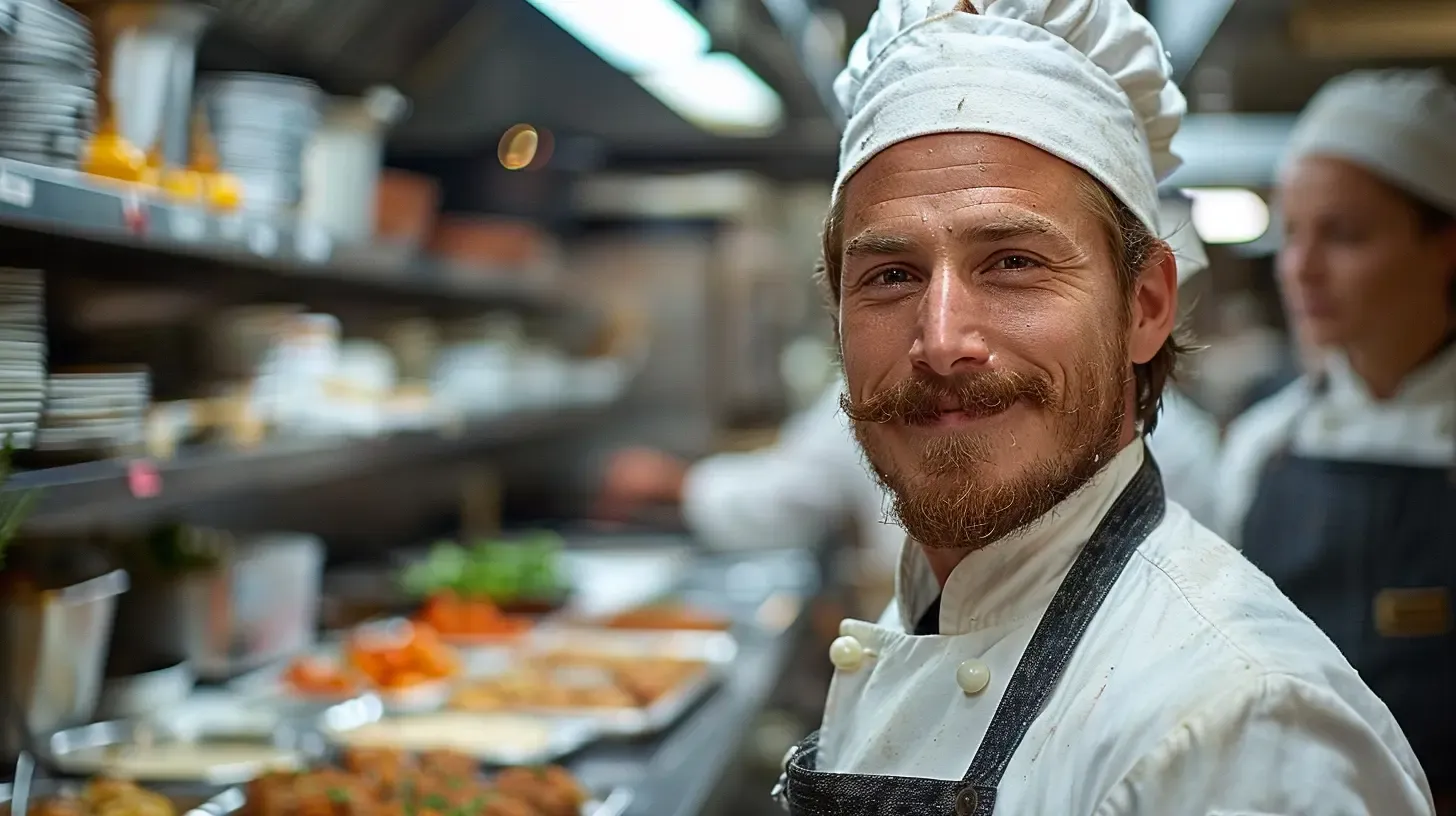
The Language of Chefs Decoding Culinary Terms

In the world of haute cuisine, chefs often use a lexicon that sounds almost as exquisite as the dishes they create. From "confit" to "consommé" and "sous-vide," these terms not only describe cooking techniques but also hint at the culture and history behind each method. This article delves into some of the classic culinary terms that chefs commonly use, unraveling their meanings and the processes they describe.

Confit Originating from French cuisine, "confit" refers to a method of preservation that involves slowly cooking an ingredient in its own fat. While duck confit is among the most celebrated dishes, this technique can be applied to other meats, fruits, and vegetables. The slow-cooking process at low temperatures renders the meat incredibly tender, encapsulating flavors while preserving the ingredient.

Consommé Consommé is a clear, refined soup or broth that has been clarified to remove fat and sediment. This process involves combining egg whites with the broth, which, when gently simmered, traps impurities. The result is a crystal-clear liquid that boasts intense flavor and elegance, often served as the first course in a formal meal to stimulate the appetite.

Sous-vide A term that translates to "under vacuum" in French, sous-vide is a cooking technique where food is vacuum-sealed in a plastic pouch and then cooked in a water bath at a precisely controlled temperature. This method allows for unparalleled control over the cooking process, ensuring that the food is cooked evenly and retains moisture. It's particularly favored for meats and fish, resulting in textures that are difficult to achieve through traditional methods.

A la Minute A phrase that literally means "in the minute," a la minute refers to dishes that are prepared fresh, to order. This approach emphasizes the chef's ability to create dishes that are served immediately upon completion, ensuring peak freshness and flavor. It's a testament to the skill and speed of the kitchen staff, as well as the restaurant's commitment to quality.

Mise en Place "Mise en place" is a French term that translates to "everything in its place." It refers to the practice of organizing and arranging the ingredients (such as cuts of meat, spices, and vegetables) that a cook will require for the menu items that are expected to be prepared during a shift. This preparation is crucial in professional kitchens to ensure efficient and seamless service.

Bain-Marie A bain-marie is a water bath used to gently cook food or keep it warm. The technique involves placing a container (holding the food) into a larger one filled with hot water, providing a consistent and gentle heat. This method is ideal for delicate dishes, such as custards or terrines, that require uniform temperature without direct heat.

Julienne Julienne is a culinary knife cut where the food item is cut into long, thin strips, resembling matchsticks. Commonly applied to vegetables, this technique not only enhances the presentation of a dish but also ensures uniform cooking times for ingredients.

En Papillote "En papillote" describes a method of cooking where food is enclosed in a pouch or parcel—often made of parchment paper—and then baked. The food steams in its own moisture within the enclosed package, infusing with any added herbs, spices, or other flavorings. This technique is celebrated for its ability to retain the natural flavors and nutrients of the ingredients.

These terms are just a glimpse into the elaborate language of culinary arts, where each word and technique carries the weight of tradition and innovation. By understanding these terms, food enthusiasts can gain deeper insights into the processes behind their favorite dishes, appreciating the artistry and skill that define the world of professional cooking.
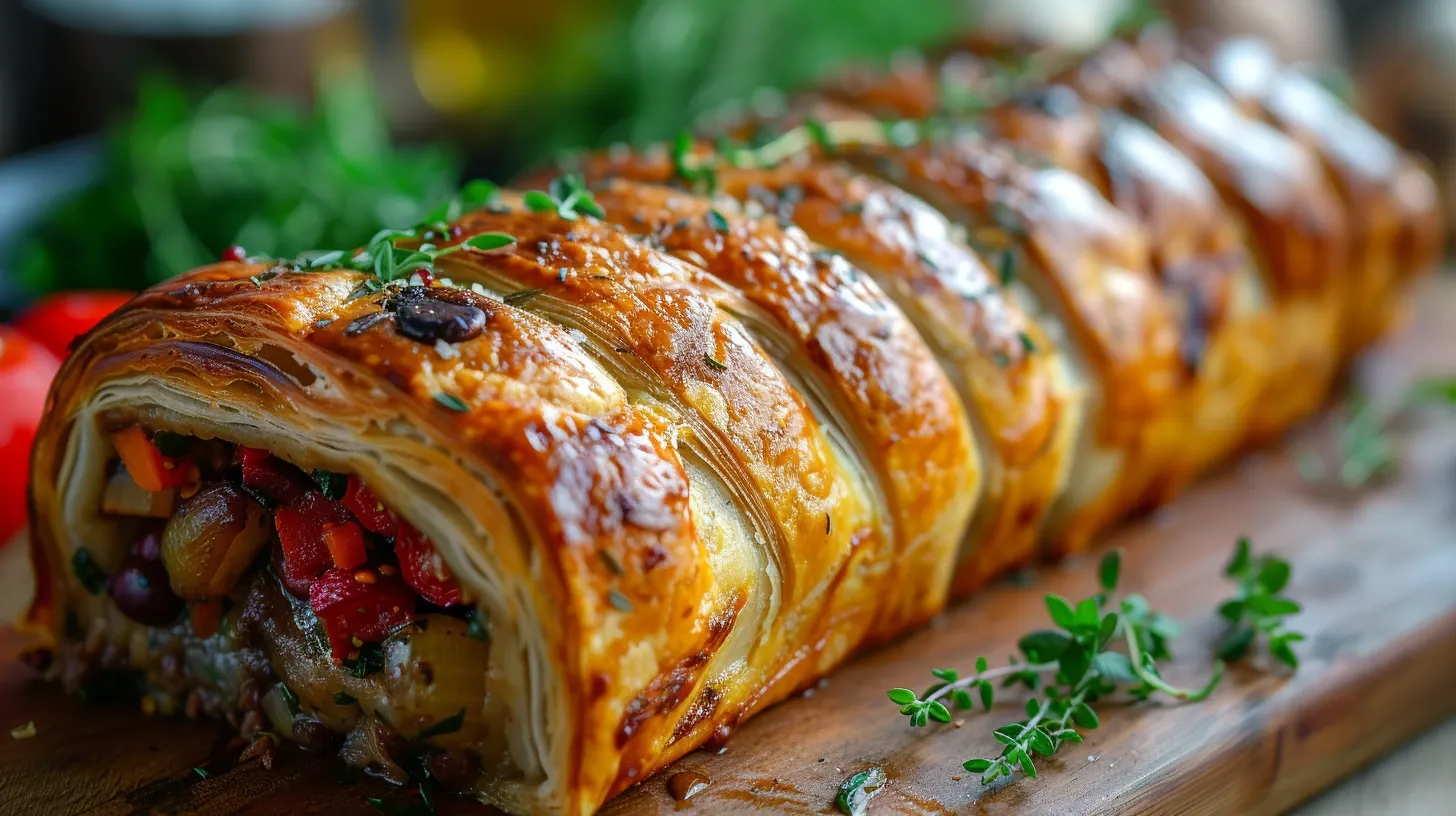

A Feast for the Senses: Mastering the Art of Vegetarian Wellington

In the world of culinary delights, the quest for vegetarian dishes that stand tall amidst traditional gourmet feasts often leads to innovative creations. One such dish that has captured the imagination and taste buds of vegetarians and meat-eaters alike is the Vegetarian Wellington. This dish is a testament to the versatility of vegetarian cuisine, offering a sumptuous alternative to its meat-based counterpart. The Vegetarian Wellington is not just a dish but a centerpiece, promising a blend of flavors and textures wrapped in a golden, flaky pastry.

The Foundation: Choosing Your Ingredients

The beauty of Vegetarian Wellington lies in its flexibility. At its core, the dish consists of a savory mixture of vegetables, grains, and sometimes cheese, all encased in puff pastry. The choice of filling can be tailored to seasonal vegetables or personal preferences, making each Wellington a unique creation.

Key ingredients include:

Mushrooms: The umami-rich base of the filling, mushrooms provide a meaty texture and depth of flavor. Portobello, cremini, or a mix of wild mushrooms are excellent choices.

Lentils or Chickpeas: These add protein and substance to the filling, giving it body and making the dish more satisfying.

Nuts: Walnuts or pecans offer a crunchy texture and nutty flavor, enhancing the overall taste profile.

Cheese: Optional but delightful, adding cheese such as goat cheese or feta can introduce a creamy texture and tangy flavor.

Seasonings: Herbs such as thyme, rosemary, and sage, along with garlic and onions, build layers of flavor that infuse the filling with character.

Puff Pastry: The outer shell, puff pastry should be chosen carefully to ensure it's buttery, flaky, and, if necessary, vegan.

Crafting the Masterpiece: The Method

Creating a Vegetarian Wellington involves a series of steps that transform simple ingredients into a culinary work of art.

Prepare the Filling: Sauté the mushrooms, onions, and garlic until they're soft and golden. Add the lentils or chickpeas, nuts, herbs, and spices, cooking until the mixture is flavorful and slightly reduced. Allow it to cool before adding cheese, if using.

Assemble the Wellington: Roll out the puff pastry on a floured surface. Place the cooled filling in the center, shaping it into a log. Carefully fold the pastry over the filling, sealing the edges with a little water or plant-based milk. Decorate the top with pastry cut-outs if desired, then brush with a beaten egg or a vegan alternative for that golden finish.

Bake to Perfection: Bake in a preheated oven at 200°C (390°F) for about 25-35 minutes, or until the pastry is puffed and golden brown. Let it rest for a few minutes before slicing to serve.

Serving Suggestions

The Vegetarian Wellington is best served as the centerpiece of a meal, accompanied by simple sides that complement its rich flavors. Roasted vegetables, a light salad, or a tangy cranberry sauce can balance the dish's savory notes. When sliced, the Wellington reveals a colorful cross-section of its filling, making it as visually appealing as it is delicious.

The Vegetarian Wellington is a celebration of vegetarian cuisine, offering a dish that is as nourishing as it is flavorful. It stands as proof that vegetarian options can be just as festive and satisfying as any traditional dish. Whether you're a seasoned vegetarian or simply looking to expand your culinary horizons, mastering the art of Vegetarian Wellington is sure to impress at any table.

Unleashing the Power of Calisthenics: A Comprehensive Guide

In the realm of fitness, calisthenics stands out as a timeless and efficient method of building strength, flexibility, and endurance using one's body weight. This exercise form, deeply rooted in the principles of natural human movements, offers a versatile approach to physical conditioning without the need for gym equipment. Calisthenics exercises range from simple movements like push-ups and squats to more advanced techniques such as handstands and muscle-ups, catering to all fitness levels and goals.

The Essence of Calisthenics

Calisthenics revolves around the concept of mastering body control through repetitive movements and progressively challenging exercises. It emphasizes the importance of functional strength, mobility, and the body's natural ability to move through space. This form of exercise not only builds muscle and burns fat but also enhances coordination, balance, and agility, making it an all-encompassing fitness regimen.

Key Benefits

  • Accessibility: One of the most significant advantages of calisthenics is its accessibility. It requires minimal equipment, making it easy to practice anywhere, anytime.
  • Versatility: Whether you're a beginner or an elite athlete, calisthenics offers a wide range of exercises that can be modified and scaled according to individual fitness levels and objectives.
  • Whole-Body Workout: Calisthenics engages multiple muscle groups simultaneously, promoting muscular and cardiovascular health, improving posture, and reducing the risk of injury in daily activities.
  • Mental Strength: Beyond physical benefits, calisthenics challenges individuals to push their limits, fostering mental resilience and discipline.

Getting Started

For those new to calisthenics, starting with the basics is crucial. Fundamental exercises such as push-ups, pull-ups, dips, and squats lay the groundwork for building strength and endurance. Gradually increasing the intensity and complexity of the exercises ensures continuous improvement and prevents plateaus.

Advanced Techniques

As proficiency in basic movements increases, incorporating advanced techniques such as static holds (planks, L-sits), dynamic movements (jump squats, clapping push-ups), and skill work (handstands, front levers) can provide further challenges and excitement to the training routine.

Crafting a Routine

A well-rounded calisthenics routine should include exercises targeting all major muscle groups, ensuring balanced development and reducing the risk of overuse injuries. Incorporating rest days and flexibility training, such as yoga or dynamic stretching, aids in recovery and overall performance.

The Community Aspect

Calisthenics is more than just a form of exercise; it's a community. Joining local or online calisthenics groups can provide motivation, support, and the exchange of tips and techniques, enhancing the training experience.

Conclusion

Calisthenics is a powerful tool in achieving fitness goals, offering a sustainable, dynamic, and effective approach to physical conditioning. By embracing the principles of calisthenics, individuals can unlock their true physical potential, achieving not only a strong, agile body but also a resilient mind.

Tuesday the 13th: Unraveling the Mysteries Behind the Less Known Superstitious Day

While Friday the 13th often steals the spotlight in Western superstitions as a day of ill-omen, its less-known counterpart, Tuesday the 13th, holds a significant place in the lore of other cultures, particularly within the Greek and Spanish-speaking communities. This intriguing day is enveloped in a rich tapestry of myths and historical events that have shaped its ominous reputation over the centuries.

Unlike the widespread apprehension surrounding Friday the 13th, which is largely attributed to Christian folklore and other historical events, Tuesday the 13th's notoriety stems from a combination of linguistic, cultural, and historical factors. In Spanish and Greek culture, Tuesday is considered an unlucky day due to its association with the fall of Constantinople on a Tuesday in 1453, a pivotal moment that marked the end of the Byzantine Empire. The day's connection to Mars, the god of war, also contributes to its perceived negativity, as it is thought to bring forth strife and destruction.

The number 13 has long been regarded as unlucky in many cultures, with various explanations for its ill-fated reputation. From being one seat away from the 12 gods in Norse mythology to the presence of 13 individuals at the Last Supper in Christian tradition, the number carries a weight of historical superstition.

In cultures observing Tuesday the 13th as a day of bad luck, various traditions and customs are observed to ward off the negative energies believed to be more potent on this day. People might avoid important activities, such as getting married or starting new ventures, to sidestep the misfortune that this day is thought to bring.

Despite its ominous reputation, Tuesday the 13th also presents an opportunity to explore the fascinating ways in which superstitions influence human behavior across different cultures. It serves as a reminder of the shared human penchant for finding patterns and meaning in the calendar, as well as the power of folklore to shape our collective consciousness.

In conclusion, Tuesday the 13th's unique position in cultural superstitions offers an intriguing glimpse into the complexities of human belief systems. While it may not be as universally recognized as its counterpart, Friday the 13th, it nonetheless encapsulates a rich blend of history, mythology, and cultural tradition that continues to captivate and mystify.

The Enduring Passion of Americans for American Football

American football stands as a colossal pillar in the cultural landscape of the United States, embodying more than just a sport; it is a fervent tradition that unites millions. This passion, deeply ingrained in American culture, has evolved into a national pastime that commands the attention of fans across the country, from bustling cities to quiet towns. The zeal for American football spans generations, making it a unique phenomenon that reflects the nation's identity, values, and communal spirit.

The Roots of Passion

The origins of American football can be traced back to the late 19th century, emerging from the collegiate level to become a professional spectacle. Its early days, marked by rudimentary rules and a blend of soccer and rugby, set the foundation for a sport that would captivate the nation's heart. The establishment of the National Football League (NFL) in 1920 was a pivotal moment, institutionalizing the sport and setting the stage for its meteoric rise in popularity.

A Cultural Phenomenon

American football transcends the boundaries of mere athletic competition. It is a cultural phenomenon that brings people together, creating a sense of community and belonging. The sport is celebrated through time-honored traditions, such as tailgating, where fans gather for hours before the game, sharing food, camaraderie, and anticipation. The Super Bowl, American football's championship game, has ascended to an unofficial national holiday, with millions tuning in not only for the game but for the halftime performances and commercials, making it a pinnacle of sports entertainment.

The Role of High School and College Football

The passion for American football is nurtured from a young age, with high school and college football playing critical roles in local communities and the broader sports culture. Friday night games under the lights are a staple in many American towns, where the community's pride is on full display. College football, with its rich traditions, historic rivalries, and bowl games, serves as both a breeding ground for professional talent and a cherished institution that engenders fierce loyalty among alumni and fans.

The Impact of Media

The media's role in amplifying the love for American football cannot be overstated. The advent of television and, more recently, digital streaming has expanded the sport's reach, allowing fans to connect with their teams in unprecedented ways. The NFL's strategic broadcasting decisions, including the introduction of "Monday Night Football," have made the sport accessible and engaging, cementing its place in American culture.

Conclusion

The passion of Americans for American football is a testament to the sport's ability to evoke a deep sense of identity, unity, and excitement. From its humble beginnings to its status as a national treasure, football has captured the imagination of the American public, forging an indelible bond that continues to grow stronger with each passing season.