[[[SUMMARY_START]]]
Human memory is increasingly being shared with phones, cloud services, wearable devices and AI assistants.
The shift is not only about storage. New systems can search, summarize and reuse personal information.
Researchers describe this as cognitive offloading, a normal human habit now expanded by digital tools.
The change brings convenience, but also new questions about privacy, dependence and control.
[[[SUMMARY_END]]]
Memory has always lived partly outside the brain. People have used notebooks, calendars, photographs, maps and family records for centuries. What is changing now is the scale and intelligence of those outside memory systems. Phones, search engines, cloud archives, workplace software and AI assistants are becoming active memory partners, not just storage boxes.
## From notebooks to searchable livesThe modern memory system is no longer a drawer full of papers. It is a phone that remembers appointments, a cloud account that stores years of photos, a browser history that retraces old searches, and an AI tool that can summarize past conversations.
In the United States, smartphone ownership is now near universal among adults. A 2024 national survey found that about 91% of U.S. adults owned a smartphone, compared with 35% in 2011. That change made digital memory an everyday habit for most people.
The same pattern is visible in daily life. People use phones to remember passwords, birthdays, routes, receipts, recipes, medical appointments and school assignments. Photos and messages often serve as evidence of where someone was, what was said, or what happened during an event.
Researchers call this behavior cognitive offloading. It means using an outside tool to reduce the mental work of remembering, calculating or planning. The tool can be a notebook. It can also be a search engine, reminder app, shared document or AI chatbot.
## AI changes what outside memory can do
Older digital memory mostly waited for a person to look through it. New AI systems can interpret it. They can search across old chats, identify patterns, create summaries and personalize responses based on earlier information.
ChatGPT, for example, has offered memory features that can use saved details and past conversations to shape future replies when the user allows it. Microsoft has introduced memory functions in Copilot for workplace personalization. Windows Recall, for supported Copilot+ PCs, was designed as an opt-in feature that saves screen snapshots locally so users can search for things they previously saw on their computer.
Wearable AI devices are also pushing memory into new spaces. Some products are built around recording conversations, creating transcripts and helping users review meetings or daily events. These tools show how memory is moving from typed notes to ambient capture.
The result is a new kind of external memory. It is not only a record. It is a system that can answer questions about the record.
## Benefits are practical and immediate
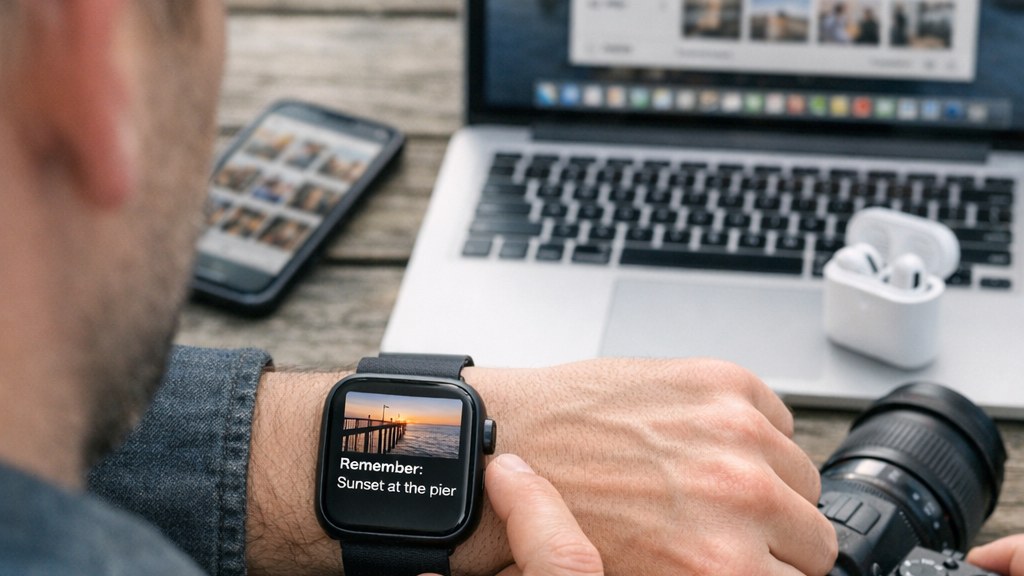
In classrooms and workplaces, reminders and searchable notes can make complex tasks easier. A doctor, engineer, lawyer or project manager may handle more information than one person can reliably hold in mind. Digital systems can help preserve details that would otherwise be lost.
External memory can also protect important personal history. Photos, messages and recordings may preserve family stories, travel, medical records and major life events. For some users, this is not only convenience. It is continuity.
## The risks are also growing
The same systems that help people remember can create new problems. If a tool records a meeting, it may capture other people who did not expect to be part of a personal archive. If an AI assistant stores preferences, routines or personal facts, that memory can become sensitive data.
There is also a cognitive question. Studies of cognitive offloading show a mixed picture. Offloading can improve task performance because people do not have to carry every detail in working memory. But people may remember less of the information they choose to store externally, especially if they expect the tool to remain available.
That does not mean digital tools are simply making people forgetful. It means memory may be changing roles. People may remember where to find information, how to use it, and how to check it, rather than memorizing every fact directly.
Control is becoming central. Users need clear ways to see what a system remembers, delete it, pause it, or keep it local. In homes, schools and workplaces, consent rules may matter as much as technical features.
## A shift in responsibility
The movement of memory outside the mind is not new. The printing press, filing cabinet, camera and internet all changed what people needed to remember. AI is different because it can turn stored traces into suggestions, summaries and decisions.
That makes external memory more powerful. It also makes it harder to ignore. The question is no longer whether people will use tools to remember. They already do. The question is who controls those tools, how reliable they are, and how much of human memory should be handed to them.
AI Perspective
The move of memory into machines is best understood as a trade-off. People gain reach, speed and backup, but they may lose some direct control over what is kept and how it is used. The healthiest future may be one where digital memory supports human judgment instead of replacing it.


-134c72da.webp)


