[[[SUMMARY_START]]]
Generative AI is changing digital media from fixed recordings into material that can be revised, extended and remixed.
Recent tools from major technology companies now combine video generation, editing, sound, likeness controls and augmented reality.
The shift is creating new creative options, while also raising urgent questions about consent, trust and proof of origin.
[[[SUMMARY_END]]]
Digital reality is becoming easier to edit, not just after the fact but as part of everyday creation. A short clip can be extended. A person in a photo can be animated. A scene can be restyled, remixed or rebuilt with a prompt. Smart glasses are also beginning to connect AI assistants to what users see and hear in the physical world.
## From fixed media to editable scenesFor decades, most people treated photos and videos as records. They could be edited, but the process usually required skill, time and specialist software. That line is now changing.
Recent AI video tools let users create scenes from text, images and uploaded clips. They also let users revise those scenes without starting over. The result is a new kind of media workflow where a video is not a finished object. It is closer to a live draft.
OpenAI’s Sora 2, released in September 2025, added synchronized dialogue and sound effects to video generation. Its later product updates added tools to trim clips, stitch scenes, reorder timelines, extend clips and reprompt parts of a video. That means users can change a segment, continue a story or create new variations from the same material.
Google’s Flow, introduced in 2025, was built around Veo, Imagen and Gemini. It gives creators a workspace for making cinematic clips and scenes through natural language prompts. Adobe has also moved AI deeper into professional workflows. Its 2026 updates to Premiere, After Effects and Firefly added faster object masking, color controls for generated and uploaded footage, and tools aimed at refining generative video.
Together, these products show a clear direction. AI creation and AI editing are merging. The camera, the prompt box and the editing timeline are becoming parts of the same process.
## Sound, likeness and motion raise the stakes
The newest systems are not limited to still images. They can include motion, speech, music-like audio, background sound and repeated characters. That makes the output more useful for entertainment, education, advertising and social sharing. It also makes misuse more serious.
Likeness is one of the most sensitive areas. A person’s face and voice can be turned into a reusable character if a platform allows it. Some systems now include consent controls, watermarks, moderation, reporting tools and limits on public figures. Those controls are becoming central because a realistic video can affect reputations, elections, business decisions and private relationships.
The same tools can also help people tell stories in ways that once required studios. A small business can make a product video. A teacher can create a visual explanation. A family can animate an old photo. A filmmaker can test shots before a crew is hired. The creative opening is real, but it comes with a need to know what is real, what is synthetic and what has been altered.
## The physical world is also gaining an edit layer
Editable reality is not only about generated videos on screens. It is also arriving through wearable devices and mixed reality.
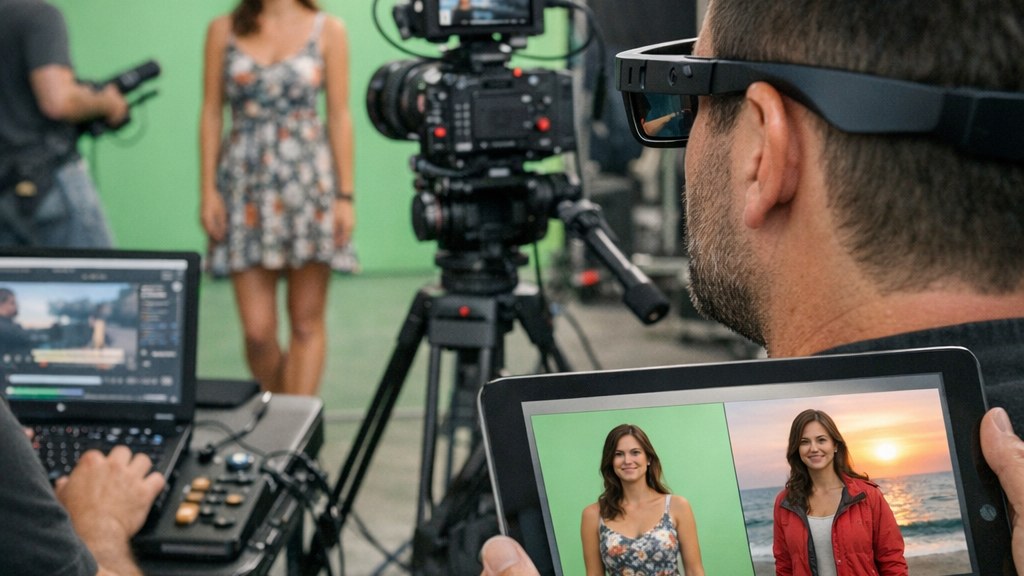
Meta’s smart glasses work follows a similar direction, adding AI assistance, camera-based interaction and hands-free capture. Apple’s Vision Pro platform has also pushed spatial computing, where digital objects, photos and apps can sit inside a user’s room.
These devices do not literally rewrite the world. They change the layer through which people see, remember and act on it. Directions can appear over a street. Translation can appear over a conversation. A memory can become a spatial scene. The everyday environment becomes more searchable, explainable and adjustable.
## Trust systems are trying to catch up
As media becomes easier to change, verification is becoming more important. The C2PA standard and Content Credentials are among the main technical efforts in this area. They are designed to record information about a file’s origin, edits and use of AI in a tamper-evident way.
These systems do not prove that a video is morally true or false. They help show where it came from and what happened to it. That can support newsrooms, courts, platforms, brands and ordinary users who need more context before trusting a file.
Regulators are also moving. The European Union’s AI Act includes transparency obligations for certain AI-generated content, including deepfakes and public-interest text. Those transparency rules are scheduled to take effect in August 2026.
The challenge is speed. Creation tools are becoming easier and more powerful. Detection and labeling systems must work across platforms, apps and file formats. If labels are stripped away or ignored, users may still struggle to separate evidence from simulation.
## A new media habit
The larger change is cultural. People are learning to treat digital media as flexible. A video can be continued. A voice can be cloned. A background can be replaced. A scene can be generated, edited, shared, remixed and checked for provenance.
That does not make all media untrustworthy. It does mean trust will depend less on appearance alone. The next habit for viewers may be simple: do not only ask what a clip shows. Ask how it was made, who controlled it, and whether its history can be checked.
AI Perspective
The key shift is that editing is becoming part of seeing, sharing and remembering. This can make creativity more open, but it also makes context more important. In the next stage of digital life, proof of origin may matter as much as the image itself.


-134c72da.webp)


-6c40e5ef.webp)

-1d29b0b2.webp)
-2721737f.webp)
-55bf1fe2.webp)