[[[SUMMARY_START]]]
Trust in governments, media and other institutions has weakened in many countries over the past two decades. New research suggests the decline is strongest among younger people and lower-income groups.
What often replaces broad trust is not nothing. People lean more on family, neighbors, local networks, personal experience and visible fairness in everyday services.
The result is a world that still needs trust to function, but increasingly rebuilds it from the ground up rather than assuming it from the top.
[[[SUMMARY_END]]]
Trust is becoming harder to win and easier to lose.
Across many countries, surveys show falling confidence in governments, media and other large institutions. The trend is not uniform in every nation, and trust can rise during moments of effective leadership or strong local performance. But the broader picture is clear: many people feel less sure that powerful institutions will act fairly, tell the truth or protect their interests.
That shift matters because trust is a basic part of modern life. It shapes whether people follow public rules, accept election results, believe official information, use services and cooperate with strangers. When it weakens, society does not simply stop. Instead, people look for substitutes.
The decline in trust has been building for years. International studies point to several overlapping pressures: economic insecurity, widening inequality, political polarization, corruption scandals, misinformation, weak public services and the feeling among many citizens that decisions are made far away from their daily lives.
Recent global and cross-national research suggests that more than half of the world’s population reports little or no trust in government. United Nations analysis has also found a generational pattern, with younger birth cohorts showing less trust in public institutions than older ones at the same stage of life. In other words, distrust is not only cyclical. In many places, it appears to be settling in.
Other surveys show that trust gaps are also widening within countries. Income matters. People who feel left behind economically are often more likely to distrust institutions across the board. That includes government, media, business and civil society groups. In several democracies, politics has sharpened this divide further, with trust now often linked to whether a person’s side is in power.
## What people trust instead
When broad institutional trust fades, people do not become fully trustless. More often, they shift toward narrower and more personal forms of confidence.
The first replacement is the close circle: family, friends, neighbors, co-workers and community leaders. People tend to rely more on those they know directly, or on people who seem to share their background, values or local experience. This can make life feel more manageable, but it can also narrow the social world and deepen divisions between groups.
The second replacement is procedural trust. If people do not trust promises, they may still trust a system that works in front of them. Clear rules, fast service, fair treatment, anti-corruption safeguards and transparent decision-making can all create practical confidence even when emotional faith is weak. Research across advanced economies suggests that reliability, responsiveness, integrity, openness and fairness are among the strongest drivers of trust in public institutions.
The third replacement is peer verification. In a fragmented information environment, many people now trust information only after checking it through multiple channels, or after seeing confirmation from people they know. This is one reason why national media brands often struggle, while newsletters, group chats, online creators, specialist communities and local networks gain influence. Trust becomes distributed, provisional and constantly re-tested.
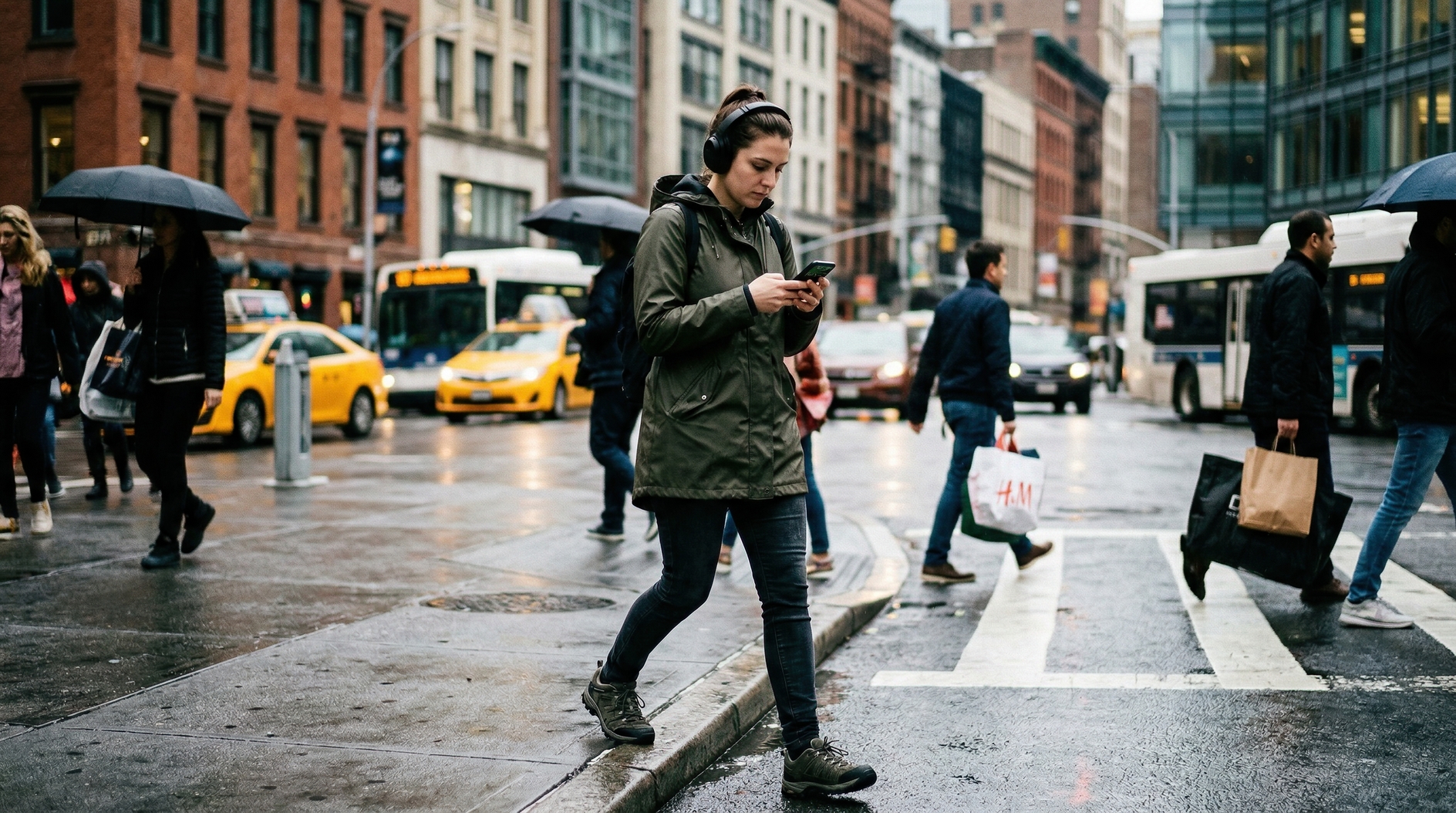
There is an important counterpoint to the wider story of decline. Evidence from global wellbeing research suggests people may underestimate the kindness of others. Studies using the simple test of a lost wallet found that actual return rates are often far higher than people expect. That finding matters because belief in the honesty of strangers is strongly linked to wellbeing and social resilience.
This creates a striking paradox. People may distrust institutions while still living in communities where everyday decency remains stronger than they think. In practical terms, this means trust can survive at the human level even when it weakens at the national one.
That helps explain why volunteer groups, mutual aid networks, parent associations, faith communities and local service organizations often gain importance during periods of wider doubt. They offer visible action, direct contact and repeated proof. In low-trust times, proof carries more weight than branding.
## What rebuilds trust
The evidence suggests that trust is rebuilt less by slogans than by performance. People respond when public services work, when leaders admit mistakes, when rules are applied fairly and when citizens feel they have a real voice in decisions.
This is especially important for younger people, who in many surveys show deeper skepticism toward institutions than older generations. Rebuilding trust for them may require more than better messaging. It may depend on housing, jobs, education, public safety, digital integrity and a stronger sense that effort is rewarded fairly.
The decline of trust is therefore not just a cultural mood. It is also a test of governance and social design. If institutions want trust back, they may need to earn it in smaller, repeated and verifiable ways.
For now, what replaces trust is not a single new authority. It is a patchwork: close relationships, local belonging, transparent rules and evidence from daily life. That patchwork can keep societies functioning. But it is a thinner fabric than shared public confidence, and harder to stretch across large, divided nations.
AI Perspective
The most important point is that trust rarely disappears completely. It usually moves closer to home, toward people, systems and experiences that feel concrete and testable. That may help societies cope for a time, but durable stability still depends on institutions that are fair enough, open enough and competent enough to be believed again.


-134c72da.webp)


