[[[SUMMARY_START]]]
Burnout has become a common part of modern life, especially as work stress, poor sleep and constant digital contact blur the line between job and personal time.
Health and labor data show many adults are tired, stressed or emotionally drained, while employers face falling engagement and rising strain.
Experts now treat burnout as a workplace problem shaped not only by personal habits, but also by long hours, weak boundaries and chronic pressure.
[[[SUMMARY_END]]]
Feeling tired all the time has become a familiar part of modern culture. For many people, the problem is not just lack of sleep. It is a mix of work stress, emotional strain, financial pressure and the sense of being always reachable.
Burnout is now widely used as a catch-all word for this feeling. But health agencies define it more narrowly. The World Health Organization classifies burnout as an occupational phenomenon linked to chronic workplace stress that has not been successfully managed. It describes burnout through exhaustion, growing mental distance from work, and reduced professional effectiveness.
That definition helps explain why so many people say they are worn out even when they are not working extreme hours every week. Fatigue today often builds slowly. It comes from constant pressure, blurred routines and too little real recovery.
The term once belonged mostly to medicine, psychology and workplace research. Now it appears in daily conversation, social media posts and office meetings. People use it to describe everything from career frustration to parenting stress to digital overload.
That shift reflects a real change in how many people live. Work follows people home through phones, email and messaging apps. Remote and hybrid jobs have brought flexibility, but they have also made it easier for the workday to stretch into the evening. The result is that many people are technically off the clock without feeling fully off duty.
Recent workplace research shows the strain clearly. Gallup’s 2026 global summary, based on 2025 data, found stress, anger and sadness among employees remained above pre-pandemic levels. Its earlier 2025 workplace report also showed global employee engagement fell to 21% in 2024, down from 23% a year earlier. Low engagement does not mean burnout by itself, but it often travels with exhaustion, detachment and lower morale.
## Tiredness is not only about work
Still, work is only one part of the story. Sleep loss remains a major driver of daytime fatigue. U.S. public health data show about one-third of adults do not get enough sleep. Separate federal survey data found 13.5% of adults said they felt very tired or exhausted most days or every day over a three-month period in 2022.
Poor sleep and burnout often feed each other. A stressed worker sleeps badly, then brings that fatigue back into the next day. Over time, concentration drops, patience shrinks and even simple tasks can feel heavier.
Financial pressure also matters. Higher housing, child care, food and health costs have left many households feeling stretched. Even when a person likes their job, the wider pressure of trying to stay afloat can make rest feel impossible. The body may be still, but the mind keeps working.
## The culture of being always on
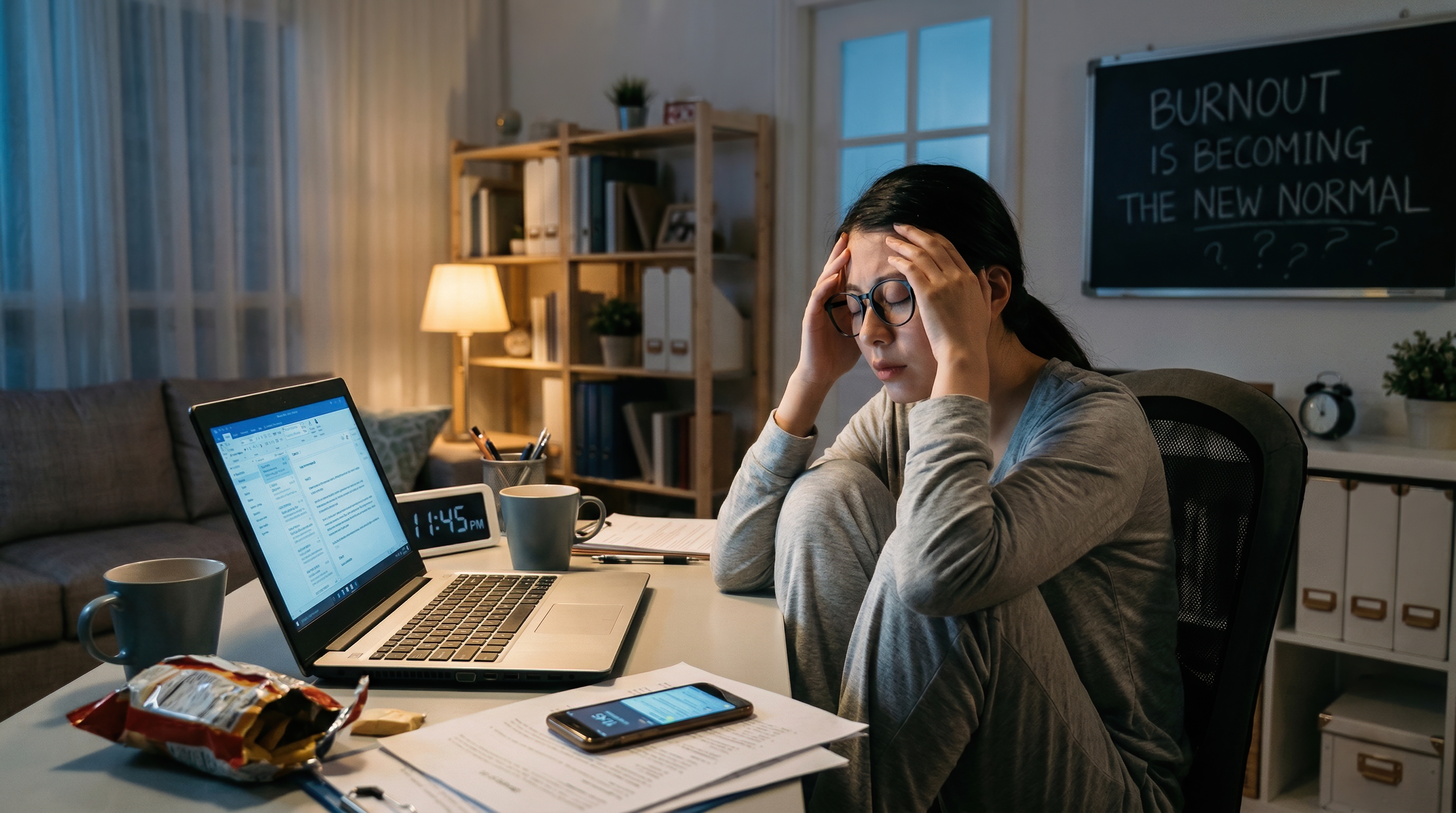
That can trap workers in a cycle where rest feels risky. Taking leave, logging off on time or refusing after-hours messages may seem like falling behind. This is one reason labor and health officials have increasingly focused on workplace design rather than only individual resilience.
The U.S. Surgeon General’s workplace mental health framework points to practical factors that shape well-being, including protection from harm, connection, work-life harmony and room for growth. The message is simple: burnout is not only a private weakness to be managed with better habits. It is often a sign that daily systems are asking too much for too long.
Long hours remain part of the risk. A joint global analysis from the World Health Organization and the International Labour Organization found that working 55 hours or more per week was linked to higher deaths from stroke and heart disease. Not every tired worker is putting in that kind of schedule. But the finding helped strengthen the case that overwork is a health issue, not just a lifestyle choice.
## Why the feeling is so widespread
Part of the reason burnout feels universal is that its drivers are stacked together. A person may be dealing with a demanding boss, poor sleep, family care, economic anxiety and nonstop alerts at the same time. Each pressure alone may seem manageable. Together, they can create a steady state of depletion.
That helps explain why the tiredness can feel deeper than ordinary fatigue. It is not always solved by one good night of sleep or one quiet weekend. Recovery needs time, boundaries and often changes at work as well as at home.
The broad lesson is that burnout culture grows where pressure is constant and recovery is weak. People are not imagining their exhaustion. In many cases, they are responding normally to an environment that rarely lets the brain or body fully power down.
AI Perspective
This topic matters because tiredness is no longer seen as an individual problem alone. More people are starting to recognize that modern life can drain energy through work design, technology and constant pressure. The most useful response may be to rebuild healthier limits, not just ask people to cope harder.


-134c72da.webp)


-6c40e5ef.webp)

-1d29b0b2.webp)
-2721737f.webp)
-55bf1fe2.webp)
-9f154954.webp)
-c76b662d.webp)