[[[SUMMARY_START]]]
The United States and China are pushing harder to lead in artificial intelligence through chips, data centers, software, and state policy.
Washington is leaning on investment and export controls, while Beijing is expanding domestic AI deployment and backing local ecosystems.
The result is a wider contest that now reaches from cloud infrastructure and open models to standards, education, and national security.
[[[SUMMARY_END]]]
The race for AI dominance between the United States and China is intensifying. What began as a contest over research talent and top technology firms has grown into a broader struggle over computing power, industrial policy, data, and global influence. In 2025 and early 2026, both countries took fresh steps to strengthen their positions, showing that AI is now central to economic strategy and national security.
## Chips remain at the centerThe clearest pressure point is still advanced semiconductors. The United States continues to use export controls to limit China's access to the most powerful AI chips and related technology. That strategy is meant to slow China's progress in training and deploying leading models.
The effect has been visible in the market. Nvidia said in April 2025 that new US licensing requirements for its H20 chips for China would lead to a multibillion-dollar charge. The H20 had been designed to comply with earlier restrictions, so the tighter rule showed how quickly the policy line can move. Even where some sales remain possible under revised rules, the broader message is clear: access to top-end computing is now a geopolitical issue, not just a business one.
For China, that pressure has added urgency to the push for domestic alternatives. Chinese companies and policymakers are putting more focus on local chips, domestic software stacks, and cloud systems that reduce reliance on US technology. That effort still faces limits, especially in the most advanced hardware, but it is gaining strategic importance.
## The US is betting on scale
Washington's answer is not only restriction. It is also expansion. In January 2025, President Donald Trump signed an executive order aimed at removing barriers to American AI leadership. That was followed in July 2025 by a White House AI Action Plan focused on accelerating infrastructure, supporting innovation, and shaping federal procurement.
Private investment is moving in the same direction. The Stargate project, announced in January 2025 by OpenAI, SoftBank, Oracle, and MGX, set out plans to invest up to $500 billion over four years in AI infrastructure in the United States, with an initial $100 billion deployment. The project reflects a wider American view that leadership will depend not only on better models, but also on power supply, land, data centers, and the ability to deploy computing at huge scale.
That matters because modern AI systems are expensive to build and run. The country that can secure more energy, more servers, and more advanced chips may gain a lasting edge. In that sense, the AI race is increasingly about industrial capacity.
## China is pushing AI into the wider economy
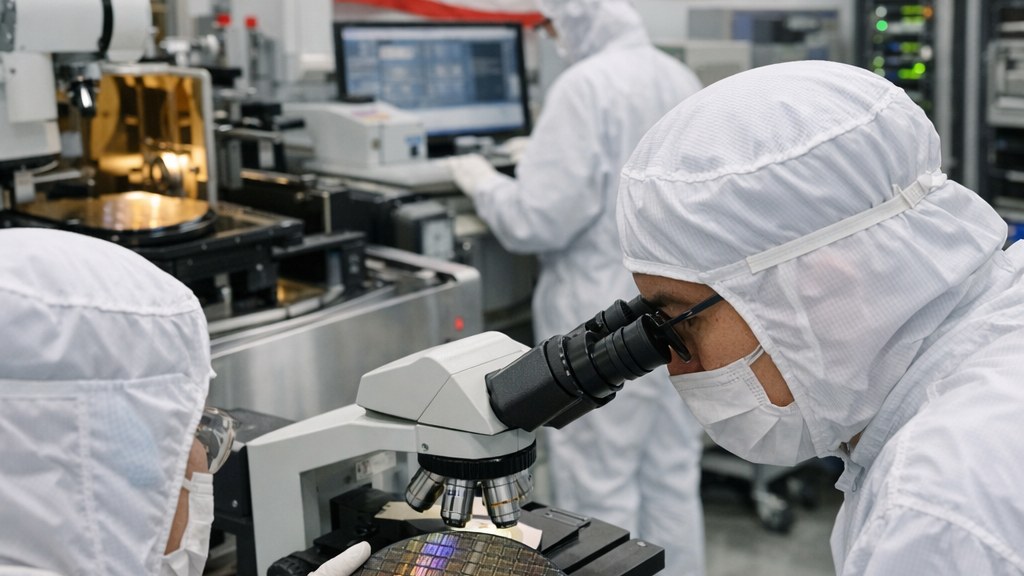
Beijing has also advanced its "AI Plus" approach, which aims to integrate AI across sectors such as manufacturing, services, public administration, and international cooperation. Later policy guidance set targets for deeper AI integration through 2027, 2030, and beyond. China is also emphasizing intellectual property protection in AI and stronger domestic innovation systems.
On the company side, the Chinese field has become more dynamic. Baidu said it released ERNIE 5.0 in January 2026. DeepSeek's earlier rise helped show that Chinese firms could gain global attention with strong open or lower-cost models, even under chip constraints. Large companies including Baidu, Alibaba, and Tencent are all trying to turn model development into broader platforms and applications.
## More than a technology story
The US-China AI race is no longer just about who builds the smartest chatbot. It now includes control over supply chains, cloud platforms, standards, education, government use, and international rules.
The United States still holds major advantages in top chips, frontier labs, capital markets, and large-scale infrastructure planning. China, however, has strengths of its own: a huge domestic market, strong state coordination, fast product deployment, and a growing drive to localize key technologies.
That means the competition is unlikely to produce a simple winner soon. Instead, the world may see a more divided AI landscape, with different hardware ecosystems, policy models, and governance frameworks emerging side by side.
For businesses, universities, and governments, this will shape investment choices well beyond the tech sector. AI is becoming part of trade policy, industrial planning, and diplomacy. The rivalry between Washington and Beijing is helping define how that future will be built.
AI Perspective
This contest is becoming a measure of national capacity, not just software talent. The strongest AI systems will depend on energy, chips, infrastructure, and clear policy over many years. That makes the US-China race important not only for technology firms, but for the wider global economy and political order.


-134c72da.webp)


-6c40e5ef.webp)

-1d29b0b2.webp)
-2721737f.webp)
-55bf1fe2.webp)
-9f154954.webp)