[[[SUMMARY_START]]]
Digital identity is moving from a convenience feature to a working part of daily life.
Governments, airports, banks and online services are building systems that let people prove who they are without handing over a plastic card.
The shift is bringing faster access to services, but also new questions about privacy, security and exclusion.
[[[SUMMARY_END]]]
For many people, identity is no longer only a card in a wallet or a passport in a drawer. It is also a credential on a phone, a login protected by a passkey, or an online profile verified by a government-backed system. In 2026, digital identity is becoming more practical, more widely accepted and harder to ignore.
## From cards to credentialsPhysical identity documents still matter. Passports, driver’s licenses and national ID cards remain the foundation for most official checks. But the places where people need to prove who they are have changed.
Many checks now happen online. People open bank accounts, sign tax forms, access health services, apply for benefits, rent cars and verify their age through digital systems. In those moments, a physical document often becomes only the starting point. The real transaction happens when that document is converted into a trusted digital credential.
This is why governments and technology companies are investing in digital wallets, mobile driver’s licenses and stronger authentication systems. The goal is to let a person prove a fact, such as their name, age, address or right to access a service, without always showing a full document.
## Airports show the change clearly
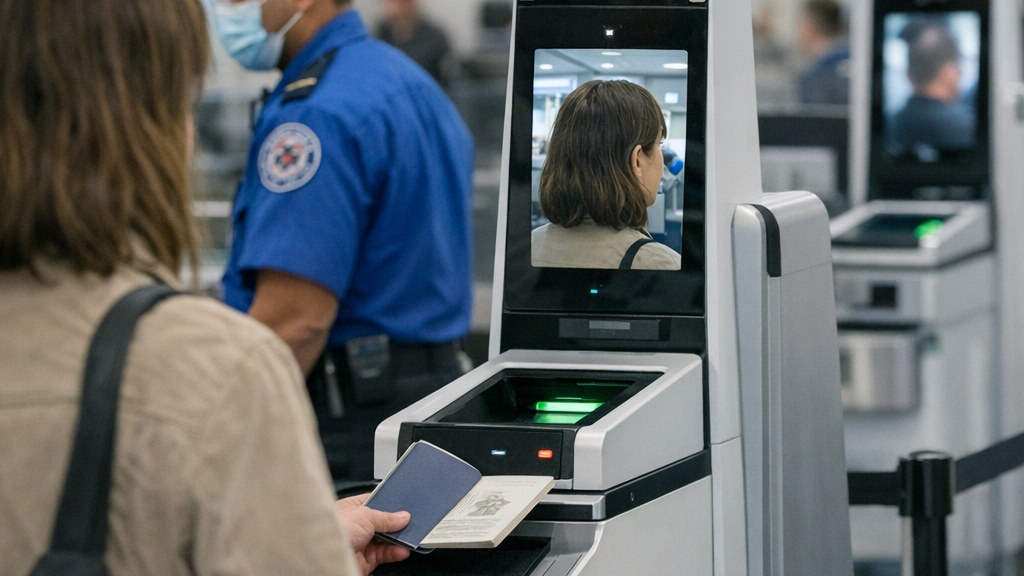
Air travel is one of the clearest examples. In the United States, digital IDs are now accepted at more than 250 airport security checkpoints. Travelers can use eligible mobile driver’s licenses, state IDs or passport-based digital IDs through approved phone wallets and apps.
A digital ID does not replace a passport for international travel. It also does not mean every airport, airline or officer will accept every digital credential in every situation. But the direction is clear. At major checkpoints, a phone can now act as a trusted identity document for domestic screening.
Apple introduced a passport-based Digital ID for its wallet in late 2025. Google and Samsung also support digital ID features in their wallet systems. Several U.S. states have issued mobile driver’s licenses or mobile IDs. These systems usually rely on a secure exchange between the holder’s device and the verifier, rather than a simple photo of an ID card.
## Europe is building a wider system
The European Union is moving toward one of the largest digital identity projects in the world. EU member states are due to make digital identity wallets available to citizens, residents and businesses by the end of 2026.
The wallet is designed to hold official identity data and other trusted credentials. It could be used for public services, bank checks, university records, travel documents, electronic signatures and age verification. The system is meant to work across borders inside the EU, which makes it different from many national ID apps.
The EU has also urged countries to move faster on age verification tools that can be used online and later integrated into digital identity wallets. This shows how identity is becoming linked not only to government services, but also to access rules on digital platforms.
## Governments are setting rules
The United States updated federal digital identity guidance in 2025 through new standards for identity proofing, authentication and federation. The guidance reflects a world where fraud, remote enrollment, passkeys, mobile IDs and privacy risks are central concerns.
The United Kingdom has developed a trust framework for digital verification services. Australia’s Digital ID Act created a legal structure for voluntary digital identity services, with rules for accreditation, privacy and security. Australia’s myID app is already used to access government services online.
These efforts show a common pattern. Governments want digital identity systems that are easier to use, but also harder to abuse. They are trying to balance speed, privacy, security and public trust.
## The benefits are real, but uneven
Digital identity can make life easier. It can reduce repeated paperwork. It can help people prove who they are from home. It can let a person share only the information needed for a specific task, such as proving they are over 18 without showing their address.
It can also help reduce fraud when systems are designed well. A verified digital credential can be checked in real time. It can be harder to forge than a photocopied card or a scanned document.
But the risks are also real. If a digital ID system fails, people can be locked out of essential services. If data is collected too widely, it can create new privacy concerns. If access depends on a smartphone, strong internet connection or biometric check, some people may be left behind.
The global gap remains large. More than 800 million people still lack official proof of identity. Billions more do not have access to a government-recognized digital identity that works safely online. For them, the future of identity is not just about convenience. It is about access to banking, education, health care and public services.
## A new layer of everyday life
Digital identity is becoming more real because more systems now treat it as the active form of identity. A plastic card may still prove who someone is at the start. But the digital credential often completes the transaction.
The shift is likely to continue as wallets, passkeys, mobile IDs and verified credentials become more common. The central question is no longer whether identity will become digital. It is whether digital identity can be built in a way that is secure, voluntary, useful and fair.
AI Perspective
Digital identity is becoming part of ordinary infrastructure, like payment cards or mobile banking. Its value will depend on whether people can use it without losing control over their personal data. The strongest systems will be those that keep physical options available while making digital access safer and simpler.


-134c72da.webp)


