[[[SUMMARY_START]]]
Artificial intelligence is spreading quickly through offices, schools, factories, studios, and public services.
Its cost is not only the price of software or chips. It also includes electricity, water, infrastructure, skills, jobs, and trust.
Recent data shows both sides of the shift: AI can raise productivity, but it also puts new pressure on energy systems and workers.
The central question is how societies use machine power without weakening human potential.
[[[SUMMARY_END]]]
Artificial intelligence has moved from a specialist technology into daily life. It drafts emails, writes code, summarizes documents, creates images, helps doctors review scans, and supports customer service teams. But the true cost of AI is broader than a monthly subscription or a corporate technology budget. It includes the machines that run it, the energy that powers it, and the people whose work is changing around it.
## The machine cost is becoming visibleModern AI depends on large data centers filled with advanced chips. These systems train models and answer billions of prompts. They need steady electricity, cooling systems, backup power, water, land, and new grid connections.
Global data centers used about 415 terawatt-hours of electricity in 2024, or roughly 1.5% of world electricity use. That share is still smaller than many large industrial sectors. But demand is growing quickly and is concentrated in specific places, which can strain local grids.
Energy projections show data center electricity use could more than double by 2030. The United States, China, and Europe remain major centers of growth. In some areas, new AI facilities are already shaping debates over power lines, clean energy, water supplies, and local costs.
The money flowing into AI also shows the scale of the buildout. Corporate AI investment reached about $252 billion in 2024. Private investment in generative AI alone reached nearly $34 billion. That money pays for chips, cloud systems, data centers, research staff, and new products.
Water is another part of the cost. Data centers often use water for cooling, though the amount depends on location, design, and energy source. Large technology companies are investing in water reuse, closed-loop cooling, and replenishment projects. These steps can reduce pressure, but they do not remove the need for public scrutiny in water-stressed regions.
## The human cost is harder to measure
AI also has a social cost. It changes how people write, search, design, code, study, and make decisions. Some tasks become faster. Some jobs are redesigned. Some workers face pressure to learn new tools quickly.
Labour analysis in 2025 found that about one in four jobs worldwide has some exposure to generative AI. Exposure does not mean automatic job loss. Many jobs include tasks that can be assisted by AI while still needing human judgment, communication, care, accountability, and local knowledge.
Clerical roles are among the most exposed because they often involve text, forms, scheduling, records, and standard communication. Other affected areas include software, media, finance, marketing, legal support, education, and customer service.
The impact is not equal. High-income economies tend to have a larger share of jobs involving digital and office-based tasks. Women can also face higher exposure in some clerical and administrative roles. This makes training, worker voice, and fair transition plans important.
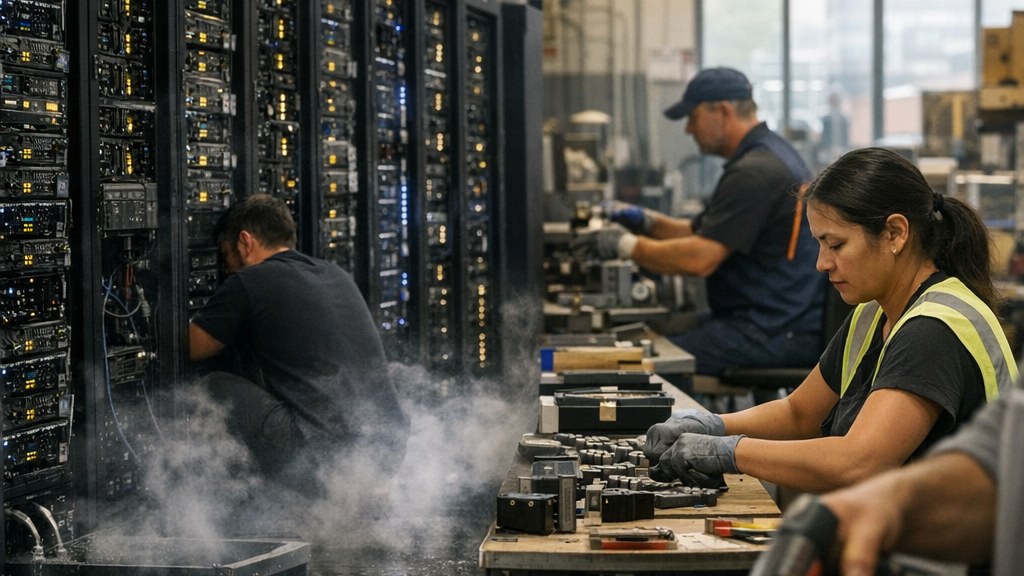
The strongest case for AI is that it can help people do useful work faster. A large workplace study of customer support agents found that an AI assistant raised productivity by about 14% on average, with larger gains for less experienced workers. The tool helped workers answer questions faster and handle more conversations.
Other data shows rapid adoption. By late 2024, nearly 40% of U.S. adults aged 18 to 64 had used generative AI. About 23% of employed respondents had used it for work in the previous week, and 9% used it every workday.
Business adoption is also spreading. In 2024, 78% of surveyed organizations reported using AI, up from 55% the year before. A later global business survey found that nearly nine in ten respondents said their organizations used AI in at least one function. But many firms still remain in pilot stages, and only a smaller group reports clear financial gains.
This gap matters. AI does not create value by itself. It needs clean data, good management, worker training, safe processes, and clear goals. Without those, it can add cost, confusion, and risk.
## The balance will define the next phase
The true cost of AI is not a simple bill. It is a trade-off between machine power and human potential.
Machine power can process huge amounts of information and support scientific research, energy forecasting, medical work, language translation, and accessibility tools. Human potential brings judgment, ethics, creativity, trust, care, and responsibility.
The next phase of AI will depend on whether governments, companies, schools, and communities invest in both sides. Cleaner power, efficient chips, transparent data center planning, and water safeguards can reduce the physical burden. Training, social dialogue, and worker protections can reduce the human burden.
AI may be powerful, but its value will be judged by how well it serves people. The most durable gains are likely to come when machines extend human skill rather than replace human worth.
AI Perspective
The debate over AI should not be framed only as humans versus machines. The deeper issue is whether society can build systems that use machine speed while protecting human dignity, skill, and opportunity. The best outcome is not more automation for its own sake, but better work, better services, and fairer access to the benefits.


-134c72da.webp)


