[[[SUMMARY_START]]]
Faster systems have made daily life more convenient, but they have also brought quieter costs. Across work, shopping, food, and technology, the push for speed has often reduced time for care, repair, and human connection. New data on loneliness, waste, and work strain suggest efficiency can save minutes while eroding habits and spaces that help people feel rooted.
[[[SUMMARY_END]]]
The modern economy is built around one promise: faster is better. Food arrives in minutes. Messages cross the world at once. Offices track output in real time. Stores encourage quick replacement instead of repair.
That promise has delivered real gains. Many services are cheaper, more accessible, and easier to use than they were a generation ago. But as systems have become quicker and more efficient, many people and communities are asking a harder question: what was traded away along the way?
Recent evidence from health, labor, and environmental research points to a pattern. The race for speed has often weakened everyday social contact, shortened the life of products, and pushed more strain onto workers and households. The losses are not always dramatic. They often appear as small absences: less time with other people, fewer chances to fix things, less patience in public life, and more waste at the end of the chain.
Efficiency has become a design principle for almost everything. Digital services reduce waiting. Automated systems cut labor. Delivery networks compress distance. Workplaces use software to measure time, tasks, and response speed.
Yet the same changes can make daily life thinner. In offices and remote workplaces, fewer informal moments happen by chance. At stores, self-service replaces brief human contact. In cities, public spaces are often treated as corridors for movement rather than places to linger.
Health officials have increasingly warned that social connection is not a luxury. It is closely tied to mental and physical health. A recent global report found that one in six people worldwide is affected by loneliness. Separate public health guidance in the United States has described social disconnection as a serious risk linked to heart disease, stroke, dementia, depression, and premature death.
That does not mean speed causes loneliness on its own. But systems built mainly around convenience and throughput can leave less space for the repeated, ordinary contact that helps people feel part of a community.
## The hidden cost of frictionless consumption
The pursuit of efficiency has also changed how goods are made and used. Many products are harder to open, harder to repair, and easier to replace. That model saves time at the point of sale, but it can increase waste over the full life of a product.
Electronic waste is one clear example. The world generated 62 million tonnes of e-waste in 2022, a record level. Only a modest share was formally collected and recycled. The growth reflects rising consumption, shorter upgrade cycles, and product designs that often favor replacement over repair.
Lawmakers in some regions are now trying to reverse that trend. New right-to-repair rules in the European Union are meant to make repair easier and more appealing for consumers, and to keep usable goods in service for longer. The move reflects a wider recognition that a highly efficient market can still be wasteful if it is built around disposability.
Food shows the same tension. Systems that move food quickly and cheaply across long supply chains can still produce large losses. In the United States, an estimated 30% to 40% of the food supply is never eaten. Globally, the most recent Food Waste Index estimated that 19% of food available to consumers was wasted in 2022. In a world where hundreds of millions still face hunger, that is not just an efficiency problem. It is a social one.
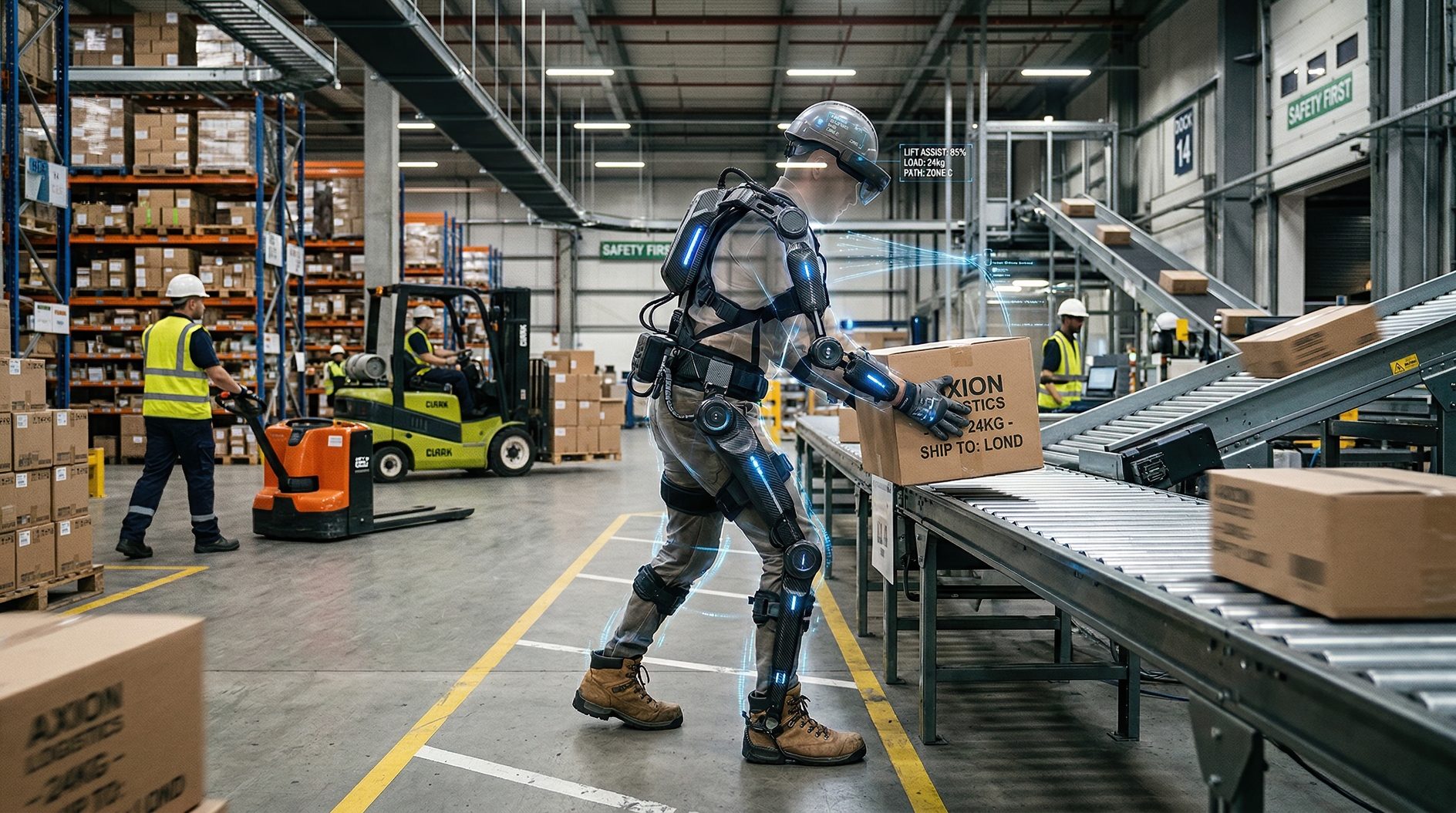
The modern workplace is another place where efficiency has brought both benefits and losses. Digital tools, automation, and artificial intelligence can reduce repetitive tasks and speed up routine work. In some settings, that can free up time for more meaningful work.
But faster systems do not always lead to calmer lives. Workers often describe a different result: tighter deadlines, more monitoring, blurred boundaries, and pressure to stay constantly available. In health care and other high-stress sectors, studies continue to show substantial burnout. Public health agencies have also linked loneliness at work to missed days, poorer well-being, and lower performance.
This is one of the contradictions of the efficiency era. People can save time and still feel they have less of it. A day can become more optimized while also feeling more fragmented.
## What communities are trying to recover
In response, policymakers and local groups are revisiting ideas that once seemed old-fashioned: repair, public space, slower streets, libraries, face-to-face services, and workplaces that leave room for relationships rather than measuring only output.
Urban researchers have argued that familiar everyday encounters in shared places can help build belonging. That may sound modest, but it matters. A bench, a square, a local shop, or a library does not look efficient on a spreadsheet in the same way a delivery app does. Still, these places often support trust and social ties that are hard to rebuild once lost.
The larger lesson is not that speed is bad or that technology should be reversed. Faster systems save labor, widen access, and can improve safety and convenience. But when efficiency becomes the only goal, other values tend to disappear from view.
What many societies seem to be rediscovering is that some forms of friction are not failures. Repair takes time. Conversation takes time. Care takes time. Strong communities do too. Those things may slow a system down, but they also make life more durable, more humane, and less disposable.
AI Perspective
This topic shows that progress is not only about saving time. It is also about deciding what deserves time in the first place. The challenge now is to build systems that stay efficient without treating people, places, and objects as disposable.


-134c72da.webp)


