[[[SUMMARY_START]]]
Living alone is becoming more common in the United States and across Europe as populations age, marriage happens later, and households grow smaller.
The shift is changing demand for homes, transport, services and social support.
It also brings a mixed picture: more independence for many people, but higher risks of isolation and financial strain for some groups.
[[[SUMMARY_END]]]
Living alone is no longer a niche way of life. It is now a major part of modern society, especially in wealthier and older countries where people are marrying later, having fewer children, and spending more years of adult life outside traditional family households.
Recent official data show the change clearly. In the United States, one-person households reached 39.7 million in 2025, or 29% of all households, up from 20% in 1975. In the European Union, single-adult households without children were the bloc’s largest household type in 2024, reaching 75 million and growing faster than any other household category since 2015.
The rise in solo living has been building for decades. It reflects several trends moving at once: later marriage, lower birth rates, longer life expectancy, higher divorce rates in many countries, and a larger share of older adults living after children have left home or after the death of a partner.
In the United States, married-couple households made up less than half of all households in 2025. That is a sharp change from 50 years earlier, when they represented about two-thirds. The result is a broader spread of living arrangements, including people living alone for part or much of adult life.
Europe shows a similar pattern. EU data for 2024 show that the total number of households rose modestly from 2015, but single-adult households without children grew much faster than the overall average. Couples with children, by contrast, declined over the same period. This points to a structural shift rather than a short-term lifestyle fad.
## Why solo living is growing
Ageing is one of the biggest drivers. Older adults are more likely to live alone after widowhood or after retirement, and many countries now have larger elderly populations than they did a generation ago. In the United States, the share of householders aged 65 and older has steadily increased. In Europe, nearly one third of people aged 65 and over were single adults in 2024.
Younger adulthood is also changing. People are spending longer in education, entering stable jobs later, and marrying later than earlier generations. That does not always mean young adults live alone right away. In fact, many still live with parents for longer. But over the full life course, delayed marriage and more flexible partnerships often increase the years spent in one-person households.
Economic and cultural factors matter too. In large cities, solo living can reflect a desire for privacy and autonomy. For women in particular, greater educational and financial independence has expanded the range of household choices. Remote work has also made it easier for some people to organize daily life without sharing space with family or roommates.
## Pressure on housing and services
More people living alone means more homes are needed for the same population size. That has consequences for rents, land use, energy demand and urban planning. A city with many small households needs more kitchens, bathrooms and utility connections than a city where the same number of people live in larger family units.
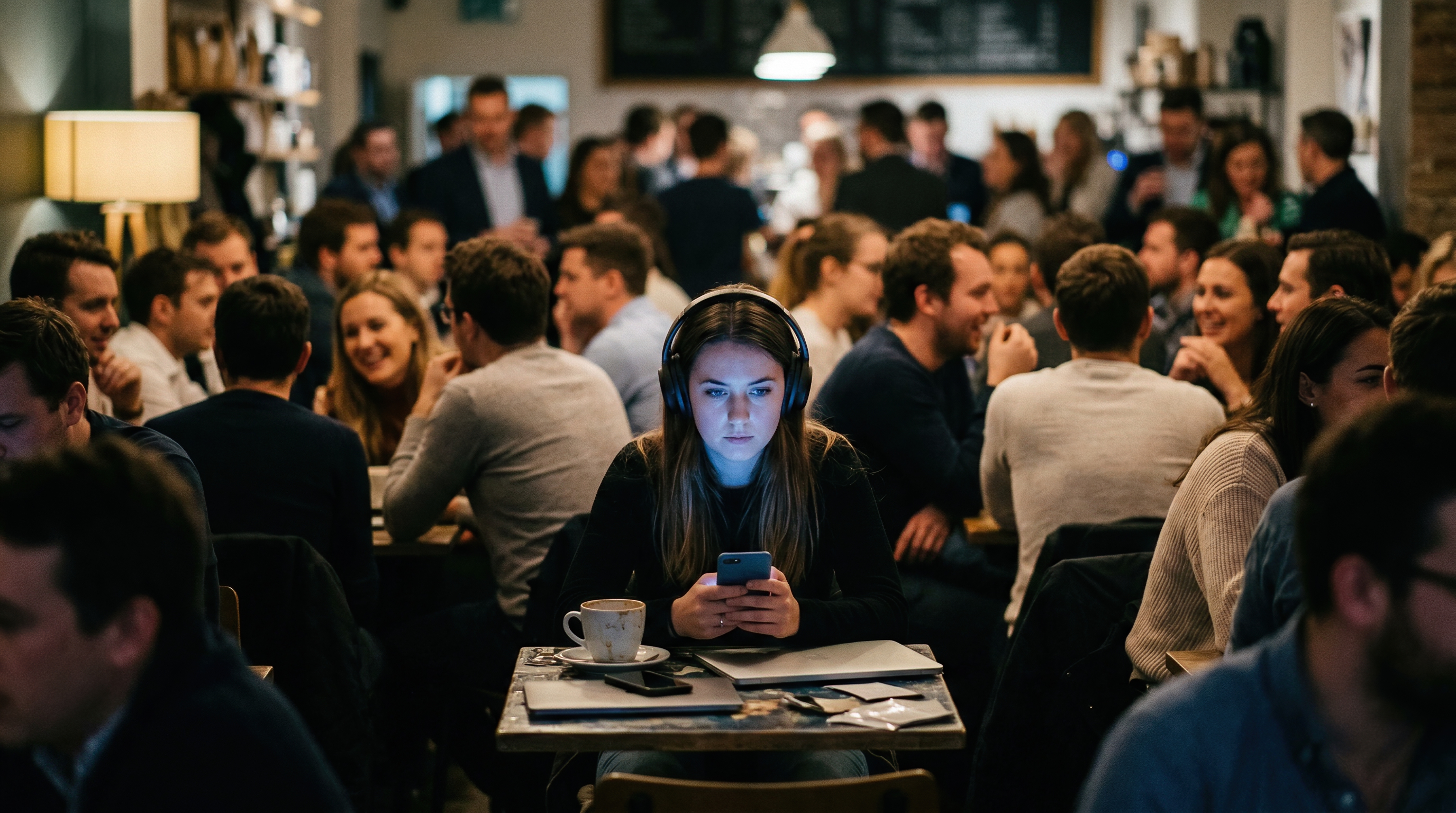
Public services are affected as well. People who live alone may rely more on delivery networks, local transit, community health services and digital tools for banking, care and administration. Emergency planning also changes when more residents do not have another adult at home to help during illness, heat waves or other disruptions.
## Independence and risk at the same time
Solo living often brings freedom. Many people value control over their time, space and routines. For some, living alone is a sign of stability and choice rather than hardship.
But the picture is not the same for everyone. One-person households usually have just one income to cover rent, food and utilities. That can leave people more exposed to housing costs and inflation. Older adults living alone can face practical problems with mobility, health and care. Younger adults may face loneliness or financial pressure, especially in expensive cities.
Recent OECD analysis suggests people who live alone are more likely than others to report weaker family contact in some settings. That does not mean living alone automatically causes loneliness. Many solo dwellers have strong social networks. Still, the growth of one-person households is pushing governments and communities to think more seriously about social connection as part of public well-being.
## A new social norm
What once looked unusual is becoming ordinary. Solo living is now a standard household form in many advanced economies, and institutions are adjusting slowly around it. Workplaces, housing developers, retailers, transport systems and care services are all being shaped by smaller households.
The broader message is that family life is not disappearing. It is diversifying. More people move between living with parents, partners, children, friends and periods alone over the course of a lifetime. As that pattern spreads, the challenge for society is less about reversing solo living and more about building systems that support people whether they live with others or on their own.
AI Perspective
The rise of solo living shows how deeply modern life has changed. It reflects both progress in personal freedom and new social pressures around housing, ageing and connection. The main public question is no longer whether living alone is normal, but whether society is ready for it.


-134c72da.webp)


-6c40e5ef.webp)

-1d29b0b2.webp)
-2721737f.webp)
-55bf1fe2.webp)
-9f154954.webp)