[[[SUMMARY_START]]]
Digital life is increasingly shaped by recommendation systems that choose what people see next.
From short videos and search results to streaming menus and shopping feeds, discovery now often starts with a suggestion.
Recent surveys, platform changes and new rules show a growing effort to give users more control over algorithmic feeds.
[[[SUMMARY_END]]]
The internet was once described as a place to browse. In 2026, much of it feels more like a guided route. Users still search, click and choose. But many of the next steps are selected by recommendation systems before a person asks for them.
## Suggestions have become the front doorRecommendation systems now sit at the center of everyday digital life. They shape the videos on YouTube, the For You feed on TikTok, Reels on Instagram, viewing rows on streaming services and product suggestions on marketplaces.
The scale is large. A 2025 survey of U.S. adults found that 84% use YouTube, 71% use Facebook, 50% use Instagram and 37% use TikTok. About half of U.S. adults visit YouTube and Facebook daily. Nearly a quarter say they use TikTok every day.
These platforms are no longer just places people visit after making a clear choice. They are places where the next item is always ready. A video ends and another begins. A search opens a row of recommended results. A streaming home screen offers titles based on earlier viewing.
The result is a shift in how people discover culture, information and products. Exploration has not disappeared. But it is increasingly routed through systems that learn from behavior and rank options in real time.
## News, entertainment and shopping are all affected
The same pattern appears across different parts of online life.
In news, social platforms remain major gateways. A 2025 survey found that 38% of U.S. adults regularly get news on Facebook and 35% do so on YouTube. Instagram and TikTok each reach 20% as regular news sources. That means many people meet public affairs in feeds built for personalization, not in a fixed front page.
In entertainment, viewers face a different version of the same issue. Streaming libraries have grown across many services. A 2025 international survey found that users spent an average of 14 minutes looking for something to watch. In the United States, the figure was 12 minutes, up from 10.5 minutes in mid-2023. Nearly half of surveyed users said the streaming experience felt overwhelming.
This has made recommendation tools more important for media companies. The goal is not only to display more titles. It is to reduce the time between opening an app and pressing play.
Shopping platforms use similar methods. Product rankings, sponsored placements and “you may also like” sections guide consumers through large catalogues. These tools can help buyers find items quickly. They can also make it harder to see why one product appears above another.
## The systems learn from small signals
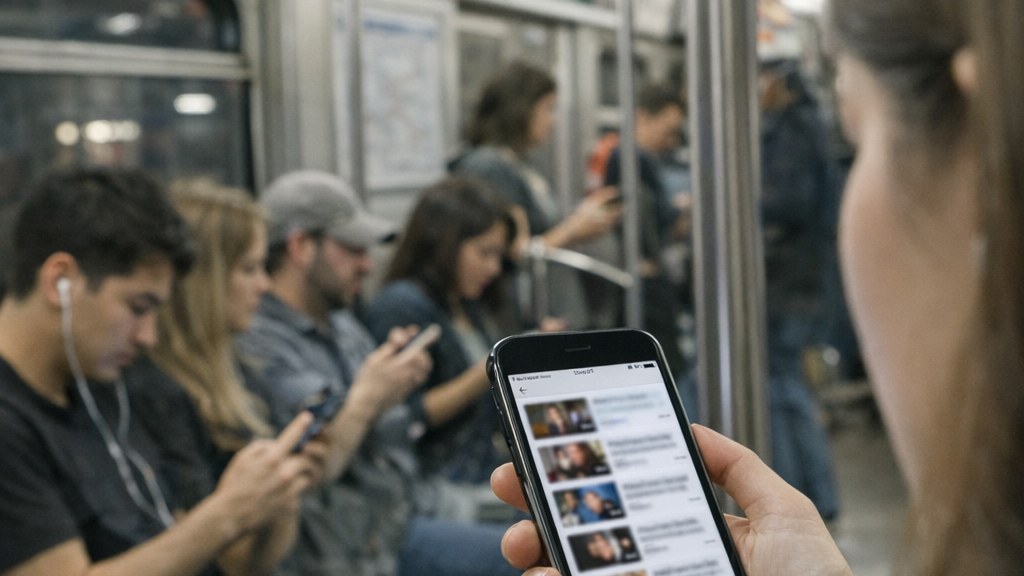
Video platforms use these signals to estimate what a person may want next. Short-video apps can respond quickly because each swipe, pause or replay gives fresh information. Academic audits of TikTok-style recommendation systems have found that feeds can reinforce a user’s apparent interests within a short sequence of watched videos. Some studies also found a trade-off: as feeds became more aligned with a measured interest, exposure to new topics often declined.
Platform companies say they also use safety rules and quality checks. YouTube has described systems that demote some borderline or harmful content in recommendations. TikTok has added tools for users to refresh feeds, mark videos as not interesting and filter keywords. In 2025, it also announced AI-assisted keyword filtering and said its keyword filters had been used to block more than 200 million words from feeds globally.
These changes show a central tension. Personalization can make digital services feel useful and fast. But it can also narrow what people see, especially when the system optimizes for attention.
## Regulators push for more control
Governments are paying closer attention. In the European Union, the Digital Services Act requires large platforms to explain certain moderation decisions and offer more transparency. Very large platforms and search engines must also provide options that are not based on profiling, such as chronological or non-personalized feeds.
The EU rules apply most strongly to services with more than 45 million monthly users in the bloc. They also include data access provisions for vetted researchers, intended to support independent study of systemic risks.
Recent enforcement has focused on issues including advertising transparency, researcher access, recommender systems, online marketplaces and protection of minors. The direction is clear: algorithmic feeds are no longer treated only as product design. They are becoming a public policy issue.
## A new kind of digital literacy
For users, the practical question is simple: how much of the journey is chosen by them, and how much is chosen for them?
People can still search directly, follow trusted accounts, use chronological feeds where available, clear watch histories, adjust recommendation settings and filter topics. These actions do not remove algorithms. But they can change the signals that shape future suggestions.
The modern internet is not a single open road. It is a set of guided paths, ranked menus and predicted next steps. The challenge now is to make those paths useful without making them invisible.
AI Perspective
Recommendation systems can save time, but they also change the meaning of choice. The main issue is not whether suggestions exist, but whether users understand and can adjust them. A healthier digital space may depend on making exploration easier to recover.


-134c72da.webp)


-6c40e5ef.webp)

-1d29b0b2.webp)