[[[SUMMARY_START]]]
As AI spreads through offices, factories, hospitals and service work, human skills are becoming the support system that keeps organizations running.
Recent labor market studies show rising demand for judgment, communication, resilience, leadership and collaboration.
The shift is changing hiring, training and daily work, even when those human skills remain hard to measure.
[[[SUMMARY_END]]]
Artificial intelligence is taking over more routine tasks. But it is also making a quieter part of work more important: the human ability to judge, explain, adapt, listen and build trust.
## A Hidden Layer Under New TechnologyIn 2026, many workplaces are focused on AI tools, automation and digital agents. Yet the less visible change is happening around the people who use them.
Human skills are becoming a kind of invisible infrastructure. They help teams decide when to trust a machine output, when to question it and how to turn a fast answer into a useful decision.
This includes skills that are easy to name but hard to count. Communication, ethical judgment, problem-solving, leadership, active listening and resilience are now central to how AI is used at work.
The point is not that technical skills matter less. AI literacy, data skills and cybersecurity remain among the fastest-growing areas of demand. But recent workforce research shows that technology is not replacing the need for human ability. It is changing where that ability is needed.
## Jobs Are Changing Faster Than Titles
Labor market studies continue to show a large skills shift ahead. One major global jobs assessment estimated that 22% of jobs could face disruption by 2030. It projected 170 million new roles and 92 million displaced roles, for a net gain of 78 million jobs.
The same work found that nearly 40% of job skills are expected to change by 2030. Employers also identified the skills gap as a major barrier to business transformation.
Another large workforce analysis projected that 70% of the skills used in many jobs may change by 2030, with AI acting as a major driver.
These figures point to an important distinction. A job title may remain the same while the work inside it changes sharply. A marketing manager may spend less time drafting first versions of content and more time checking claims, shaping tone and protecting brand trust. A software developer may spend less time writing routine code and more time reviewing AI-generated code, designing systems and spotting errors. A nurse or customer service worker may use AI support, but still rely on empathy, context and judgment in human moments.
## The New Value of Judgment
AI systems can produce answers quickly. They can summarize documents, search data, draft messages and automate workflows. But workplaces still need people to decide whether an answer is correct, fair, safe and useful.
That makes judgment more valuable, not less. In many settings, the most important human role is not to compete with the machine on speed. It is to provide context.
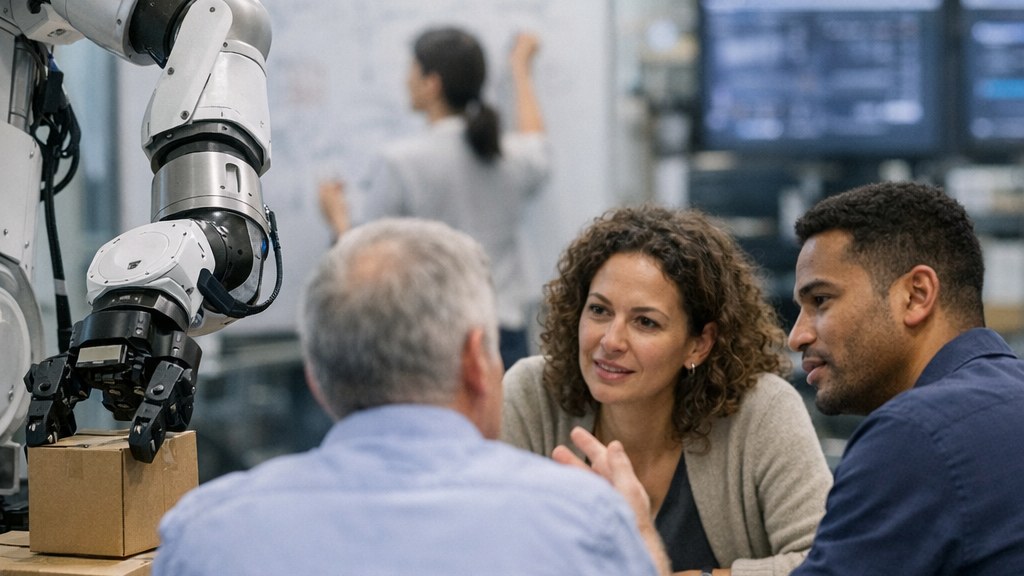
The same pattern is visible in everyday office work. As AI handles more drafting and scheduling, workers spend more time coordinating across teams, explaining decisions, managing exceptions and aligning people around shared goals.
## Training Is Moving Into Daily Work
Companies are also changing how they think about training. Short, occasional courses are no longer enough when tools and tasks change quickly.
Many organizations are moving toward continuous learning. That can include AI literacy, prompt writing, data awareness and stronger feedback habits. It can also include mentoring, coaching and leadership development.
This shift supports a skills-first approach to hiring and promotion. Employers are paying closer attention to what people can do, not only what degrees or past job titles they hold. That can widen access for workers who gained skills through nontraditional paths.
But it also creates risks. Human skills can be undervalued because they are often less visible than technical output. A worker who prevents confusion, calms a customer, improves team trust or catches a flawed AI answer may save time and money without leaving a clear data trail.
## Why Invisible Work Matters
The phrase “invisible infrastructure” fits because human skills often work like plumbing or electricity. People notice them most when they fail.
A workplace with weak communication can adopt advanced AI and still make poor decisions. A team without trust may avoid using new tools or use them carelessly. A company that ignores judgment and accountability may move faster while increasing mistakes.
For this reason, the next phase of AI adoption is not only a technology project. It is also an organizational design project. Employers need clear rules on when humans review AI outputs, who is accountable for decisions and how workers can raise concerns.
The companies that manage this well are likely to treat human skills as core operating capacity. They will measure them, reward them and build them into workflows. They will not treat them as soft extras.
AI may become more capable, but work still depends on people who can connect facts, values and real-world consequences. That human layer is becoming less visible in some processes, but more important to the system as a whole.
AI Perspective
The rise of AI is making human work harder to see in some places, but not less important. The strongest workplaces will likely be those that combine automation with trust, care and sound judgment. Human skills are becoming the quiet structure that helps technology create real value.


-134c72da.webp)


-6c40e5ef.webp)

-1d29b0b2.webp)
-2721737f.webp)
-55bf1fe2.webp)