[[[SUMMARY_START]]]
Goods, money, data and people move across frontiers more easily than in earlier decades, linking economies and daily life in ways that often make borders feel less fixed.
Yet states still use borders to control security, migration, trade and digital space.
The result is a world where borders are more porous in some areas, but still deeply powerful in others.
[[[SUMMARY_END]]]
Borders are not disappearing. But in many parts of modern life, they matter less than they once did. A video call can cross continents in seconds. A payment can support a family hundreds of miles away. A company can design a product in one country, build it in another and sell it almost everywhere.
At the same time, borders still define who can enter, who must wait, what can move freely and what is blocked. They remain central to war, migration, trade disputes and state power. That tension helps explain the modern world: borders are easier to cross in some ways, but still shape opportunity, risk and identity.
Migration has also made borders feel more flexible for millions of families. The United Nations says the number of international migrants reached 304 million in 2024. Money sent home by migrants has become one of the steadiest forms of cross-border support for developing economies. Remittance flows to low- and middle-income countries were expected to reach about $685 billion in 2024, exceeding foreign direct investment and official development assistance combined.
These flows make borders look less like hard walls and more like filters. People may live in one country, work in another, send earnings to a third and stay socially connected across all of them.
## Trade and travel reduced some barriers
In some regions, governments have deliberately lowered border friction. In Europe’s Schengen area, many internal border checks have been removed over time to support free movement. Bulgaria and Romania became full members on January 1, 2025, extending that system further.
That kind of integration changes daily life in practical ways. Commuters, truck drivers, tourists and students can move with fewer delays. Supply chains also benefit when borders become faster and more predictable.
Even so, easier movement does not mean borders have lost their role. Schengen members still maintain a common external frontier. They also keep the power to reintroduce internal checks in specific cases tied to security or other pressures. In other words, the border has not vanished. It has been moved, shared or redesigned.
## Borders still decide safety and belonging
The strongest proof that borders still matter may be human displacement. At the end of 2024, about 123.2 million people worldwide were forcibly displaced by conflict, persecution, violence or related upheaval. For refugees and asylum seekers, crossing a border is not a convenience. It can mean the difference between danger and relative safety.
But access is uneven. A border can open quickly for some groups and stay closed for others. Visa rules, asylum systems, detention policies and enforcement practices all shape who is welcomed and who is turned back.
## The digital world has borders too
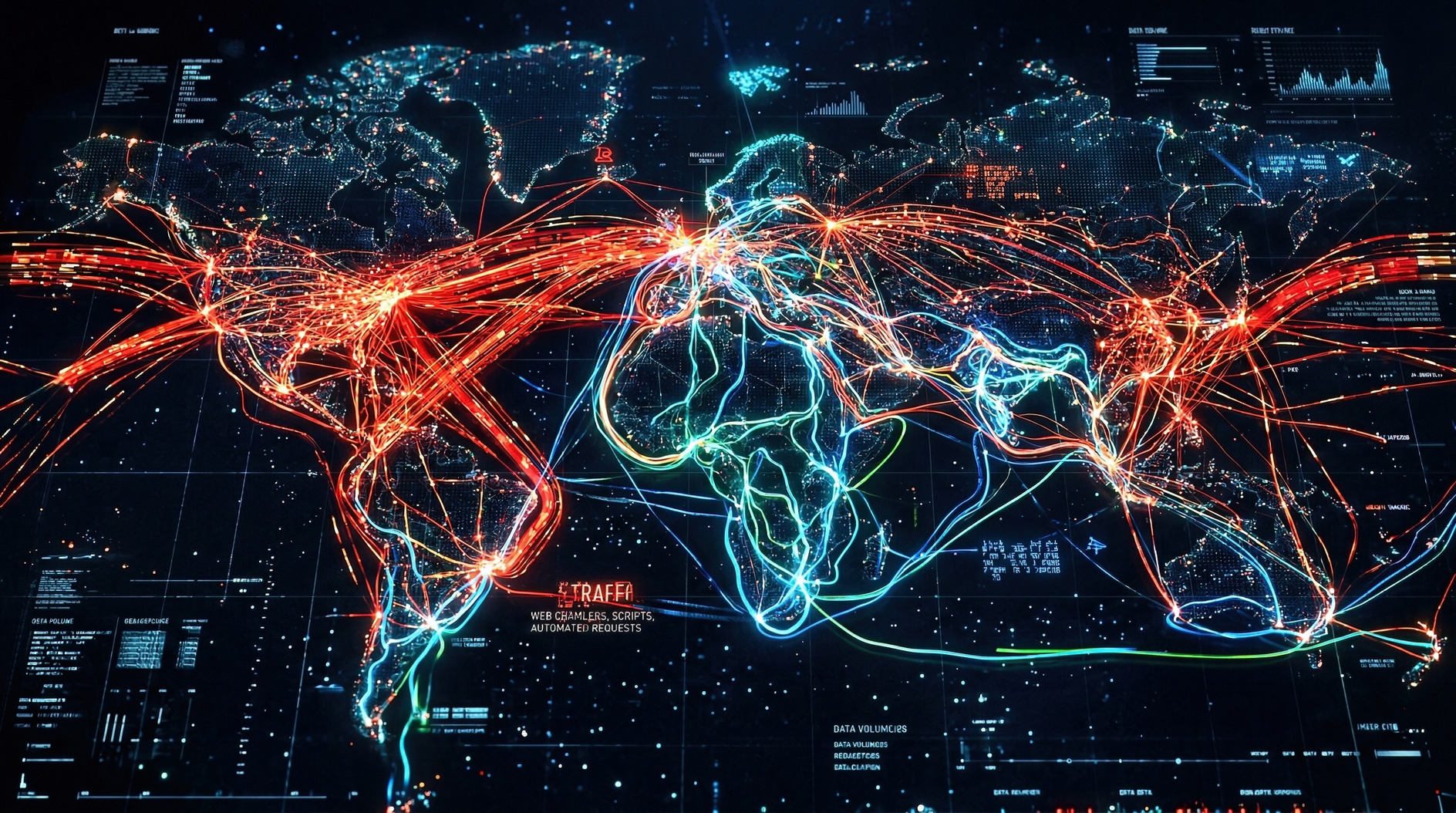
The internet once encouraged the idea of a borderless world. In practice, states are drawing new lines in digital space. Governments are tightening rules on privacy, data storage, cybersecurity, online speech and digital platforms. Cross-border data flows are now a major policy issue because data can carry economic value, political influence and security risk.
This has created a new kind of frontier. A person may be able to message anyone abroad, but not every service, app or data transfer moves freely across jurisdictions. Digital life can feel global, while regulation remains national or regional.
Trade shows the same pattern. Global commerce still depends on borders opening enough for goods and services to move. But tariffs, sanctions, export controls and industrial policy can quickly harden those same boundaries again. Recent trade forecasts show world merchandise trade still growing, but under pressure from conflict, energy shocks and policy uncertainty.
## Less visible, not less important
So why do borders seem to matter less? One reason is that technology and integration have made many crossings less visible. Consumers see a package arrive, not the customs systems behind it. Workers receive wages abroad, not the financial rails that moved them. Travelers use an e-gate, not a long paper process.
Yet the state remains present throughout. It issues passports, sets customs rules, polices airspace, defines asylum law and decides what data can move or what products can be exported. Borders may feel softer in everyday experience, but they still organize power.
That is why both ideas are true at once. Borders matter less as barriers to communication, finance and some forms of movement. But they still shape who gets access, who gets protection and who bears the cost when the world turns unstable.
AI Perspective
Borders are no longer just lines on a map. They now work through rules, databases, visas, networks and institutions as much as fences and checkpoints. The big lesson is that a more connected world has not erased borders; it has changed how they work and where their power is felt.


-134c72da.webp)


