[[[SUMMARY_START]]]
Phones, social apps and constant messaging have made it easier to reach people at any hour. Yet health agencies and new surveys show many people still feel lonely, unsupported and emotionally distant.
The problem is not simply how much technology people use, but how it changes time, attention and the quality of relationships.
Researchers and public health officials now describe loneliness as a broad social issue, not just a private feeling.
[[[SUMMARY_END]]]
Technology promised to bring people closer. In many ways, it has. Messages arrive instantly, group chats never sleep, and video calls can cross borders in seconds. But that constant connection has not ended loneliness. For many people, it may be changing what connection feels like.
Digital life now fills much of the day. Smartphones are rarely out of reach. Social platforms offer an endless stream of updates, reactions and short exchanges. Yet public health data and recent surveys suggest that being online more often does not always mean feeling more supported.In the United States, recent federal health material says about one in three adults report feeling lonely, and about one in four say they lack social and emotional support. Global health officials have also elevated loneliness and social isolation as a major public health concern affecting people across ages and regions.
## More contact, less closeness
One reason is that technology can increase contact while weakening depth. A person may exchange dozens of messages in a day and still have very few meaningful conversations. Quick reactions, short comments and algorithm-driven feeds can create a sense of activity without providing the calm, sustained attention that close relationships usually need.
Digital platforms can also shift social life toward performance. Many users do not just talk to friends online. They present themselves to an audience, compare their routines with others, and measure response through likes, views and replies. That can leave some people feeling visible but not truly known.
This tension appears clearly among younger users. A recent survey found that 45% of U.S. teens say they spend too much time on social media, up from 27% in 2023. The same survey found that 44% say they have cut back on social media use, and the same share say they have reduced smartphone use. Those numbers suggest growing unease even among people who have grown up with these tools.
## What screens may be replacing
The issue is not only what people do on screens. It is also what screens may displace. Time spent scrolling can crowd out face-to-face time, sleep, exercise, quiet reflection and unplanned moments with family, classmates, co-workers or neighbors. Those ordinary interactions often look small, but they help build trust and belonging over time.
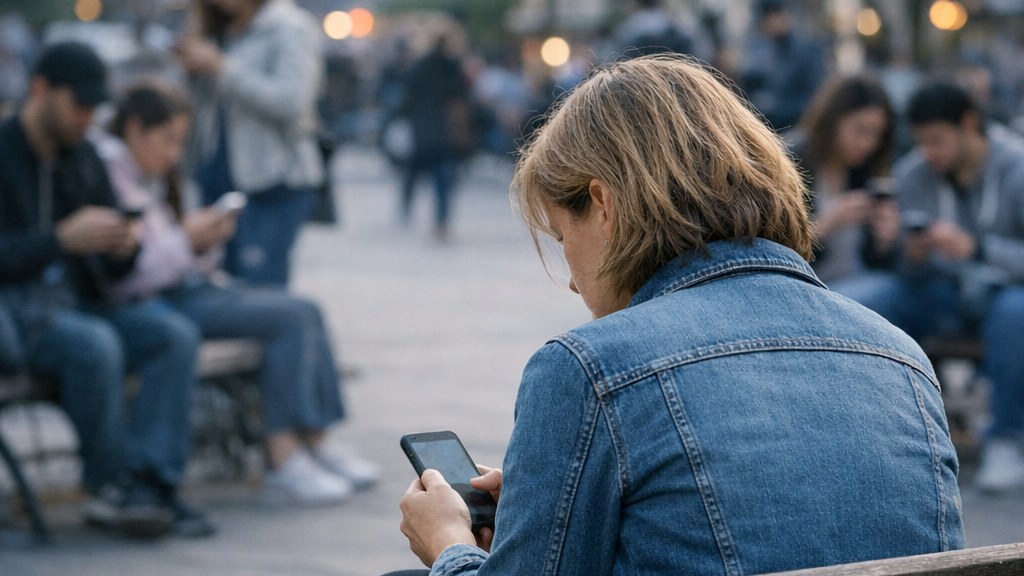
This matters in daily settings. A lunch break can become a private phone session instead of a shared conversation. A train ride can pass in silence with everyone wearing headphones. Family members may be in the same room while each person is inside a separate digital world. None of these moments is harmful on its own, but repeated over months and years they can thin out social habits.
## A problem with no single cause
Research does not support a simple claim that technology alone causes loneliness. Digital tools can help people stay in touch with distant relatives, find support groups, maintain friendships and build communities that might not exist locally. For some people, especially those with disabilities, illness or geographic isolation, online connection can be deeply valuable.
But newer research also points to a more mixed reality. A recent study of young adults found that reducing social media use for one week was linked to lower symptoms of depression, anxiety and insomnia, though longer-term effects still need study. That does not prove that all screen time is harmful. It does suggest that some forms of constant use may be draining rather than connecting.
Recent U.S. survey work also shows that loneliness coexists with weaker support networks. About one in six Americans say they feel lonely or isolated from those around them, while differences in whom people turn to for emotional support suggest that many social ties may be thin or hard to use when people actually need help.
## Looking for connection that feels real
The deeper challenge may be quality. Technology is very good at maintaining awareness of other people. It is less reliable at creating the slower forms of intimacy that come from shared time, mutual care and sustained presence.
That is why the debate has shifted away from simple ideas about being online or offline. The harder question is whether digital habits leave room for friendship, community and attention that feels human. The answer will depend not only on individual choices, but also on how schools, workplaces, families and technology companies shape the social environment around them.
AI Perspective
This topic shows that connection is not the same as contact. People may need fewer interactions that are shallow and more that feel steady, personal and safe. Technology will remain central to modern life, so the real task is to use it in ways that protect human closeness instead of slowly wearing it down.


-134c72da.webp)


-6c40e5ef.webp)

-1d29b0b2.webp)
-2721737f.webp)
-55bf1fe2.webp)