[[[SUMMARY_START]]]
New research is sharpening the picture of how magma is stored beneath Yellowstone.
Scientists have identified a sharp cap near the top of the magma reservoir and mapped a deeper basalt-fed heat source in the northeast part of the system.
The findings improve understanding of Yellowstone’s plumbing, but they do not mean an eruption is near.
[[[SUMMARY_END]]]
Fresh studies of the Yellowstone volcanic system are giving scientists a clearer look at where heat and magma sit beneath the caldera. The new picture suggests that part of the system lies closer to the surface than some people may expect, while the deeper source that helps feed it remains far below ground.
Together, the results help explain how Yellowstone stays active over long periods of time. They also show why researchers say the region is dynamic but not on the edge of a major eruption.
Two recent lines of research have helped answer those questions.
One study used controlled seismic imaging to identify a sharp reflective cap at the top of Yellowstone’s magma reservoir about 3.8 kilometers, or roughly 2.4 miles, beneath the northeastern part of the caldera. That is a shallow level in geologic terms, but it does not mean there is a giant pool of fully molten rock sitting just below the park.
Another study used magnetotelluric data, which track how the subsurface responds to Earth’s natural electromagnetic fields, to map how rhyolitic melt is stored in the crust. It found that melt beneath Yellowstone is spread through separate zones with generally low melt fractions. In simple terms, much of the reservoir is hot and partly molten, but mostly solid.
## A closer top, not a ready eruption
The shallower feature highlighted in the seismic work is important because the top of a magma system can control pressure, gas behavior, and the way fluids move underground. Scientists also described this upper boundary as volatile-rich, meaning it likely contains gases released from magma.
That matters for understanding how volcanic systems evolve. But it is different from saying Yellowstone is suddenly more dangerous.
Monitoring updates released in early 2026 say the recent deformation seen near the north rim of the caldera, south of Norris Geyser Basin, most likely reflects magma movement at about 14 kilometers, or 9 miles, depth. The same update says this activity is well below the top of the magma chamber and does not indicate an increased chance of eruption.
Researchers note that Yellowstone’s magma chamber is mostly solid. Before any eruption, scientists would expect much stronger warning signs, including faster and shallower deformation, major increases in earthquake activity, and broader changes in gas and heat output.
## Northeast Yellowstone stands out
The newer mapping also points to a key difference across the volcanic system. The largest region of rhyolitic melt storage appears to be concentrated beneath the northeast part of Yellowstone Caldera.
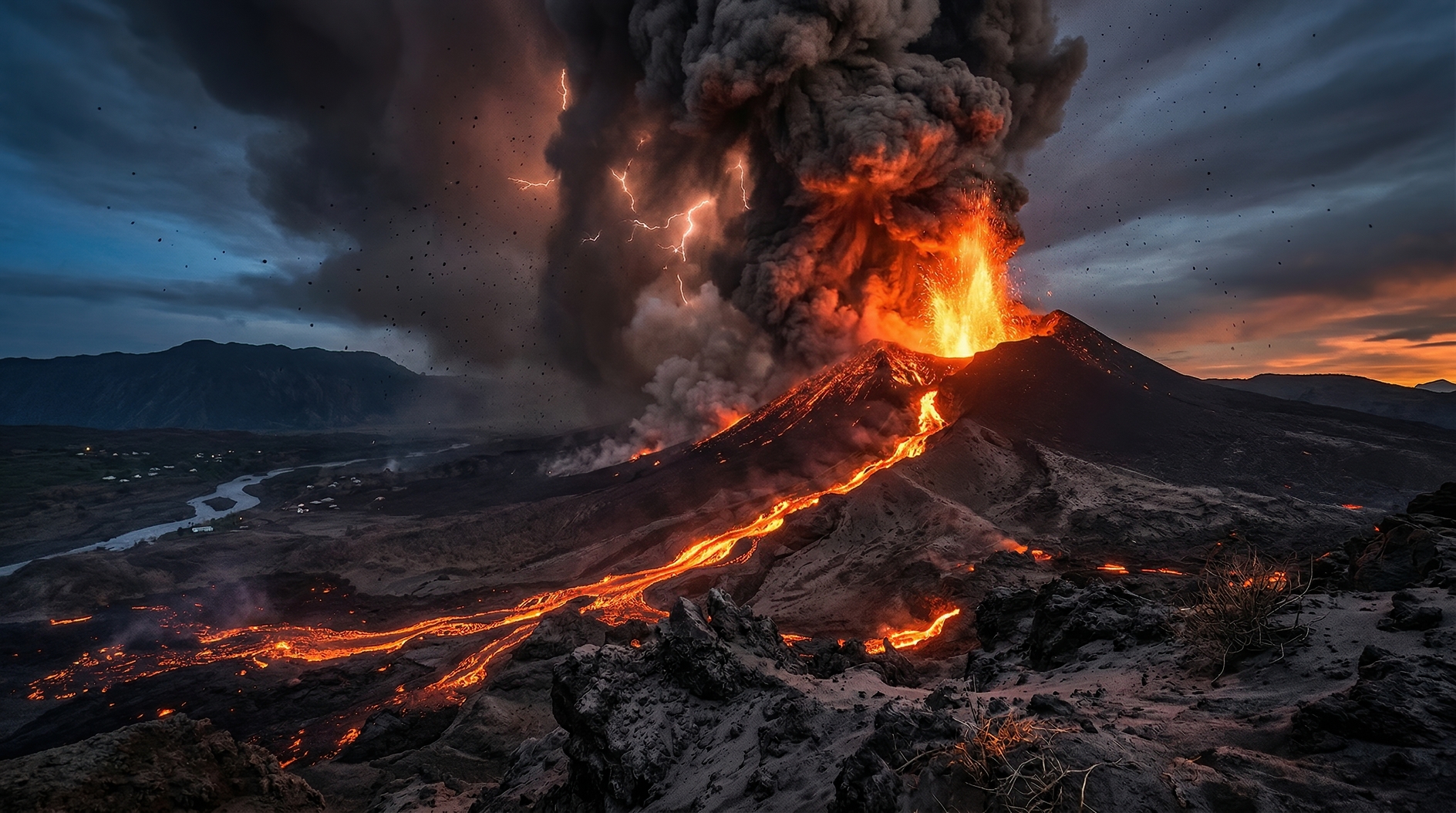
This is one reason scientists say the likely focus of future rhyolitic volcanism has shifted toward the northeast part of the caldera. Even so, the studies do not suggest that such activity is imminent. The point is about long-term volcanic evolution, not a short-term forecast.
The finding also helps explain why some parts of Yellowstone may cool over time while others remain more capable of producing melt. In western parts of the caldera, researchers say rhyolitic magma may gradually cool if it is no longer supported by enough fresh heat from below.
## Better tools, clearer picture
The improved view of Yellowstone comes from combining different methods rather than relying on one kind of data alone. Seismic imaging can highlight structures and boundaries in the subsurface. Magnetotelluric methods are especially useful for detecting melt. Ground deformation, earthquake records, gas studies, and thermal monitoring add more pieces.
This broader approach matters because Yellowstone is not a simple underground chamber. It is a large, layered system shaped by heat from the hotspot below, magma stored at different depths, and active hydrothermal features at the surface.
Recent monitoring has also shown how sensitive the region can be. The Yellowstone Volcano Observatory’s latest annual report and separate science updates describe ongoing work to track earthquakes, ground motion, gas emissions, and hydrothermal change across the park.
That effort is especially important because the most likely hazards on human timescales are not necessarily giant caldera-forming eruptions. Strong earthquakes and hydrothermal explosions are more realistic risks in the near term. Yellowstone’s most recent volcanic eruption, a lava flow, happened about 70,000 years ago.
The latest research does not change that basic outlook. What it does change is the level of detail in scientists’ underground map of Yellowstone. The top of the magma reservoir now appears more sharply defined and locally shallower than before, while the deeper heat feeding part of the system is becoming easier to trace.
For researchers, that is a meaningful step. It turns Yellowstone from a broad outline into a more readable system, one layer at a time.
AI Perspective
These findings make Yellowstone easier to understand without making it more alarming. The main lesson is that a volcanic system can be active, complex, and still far from eruption. Better imaging does not just find risk; it also helps narrow what is and is not happening underground.


-134c72da.webp)


