[[[SUMMARY_START]]]
People are living with more messages, alerts, feeds, and data than ever before. Research suggests that this constant stream can strain attention, weaken memory, and make decisions feel harder. At the same time, better digital habits, clearer design, and stronger information literacy can help people manage the pressure.
[[[SUMMARY_END]]]
Information overload is no longer just an office problem or a complaint about busy inboxes. It has become a daily mental condition for millions of people who move between news alerts, work chats, video clips, search results, and social media posts from morning to night.
Researchers say the issue is not simply that people see more information than in the past. It is that information now arrives faster, from more directions, and with more interruptions. That combination appears to be changing how people focus, remember, judge what matters, and make choices.
Studies across psychology, education, and workplace research point to the same basic pattern: when people are flooded with too much material, performance often drops. The problem is not only volume. It is also complexity, repetition, and the need to switch quickly between tasks.
This can create what researchers describe as cognitive overload. In simple terms, the brain has limited room to hold and work with incoming information at any one time. When that limit is pushed, people are more likely to skim instead of read deeply, miss key facts, forget details, and rely on shortcuts.
That shift matters because modern digital life is built around interruption. Notifications, message badges, autoplay feeds, and multitasking tools all compete for attention. Recent studies on digital learning and social media environments suggest that pop-up interruptions and constant switching can weaken retention and make it harder to stay with one task long enough to understand it well.
## Attention becomes fragmented
One of the clearest effects of overload is on attention. When people expect new information at any moment, attention becomes more reactive. Instead of directing focus steadily, the mind starts scanning for the next update.
That can make concentration feel shorter and less stable. Research on attention and memory continues to show that memory works better when attention is sustained. If focus is repeatedly broken, the chances of forming strong memories fall.
In daily life, this often means people remember the feeling of being busy more than the content they just consumed. They may read headlines without absorbing the article, save links they never return to, or move through a stream of posts that leaves little lasting understanding.
The effect is visible in schools and workplaces as well. Reviews of digital learning have found that overly dense materials and competing on-screen signals can add unnecessary mental load. In offices, workers facing heavy flows of messages, documents, and updates report more stress and a stronger sense of being overwhelmed.
## Decision-making gets harder
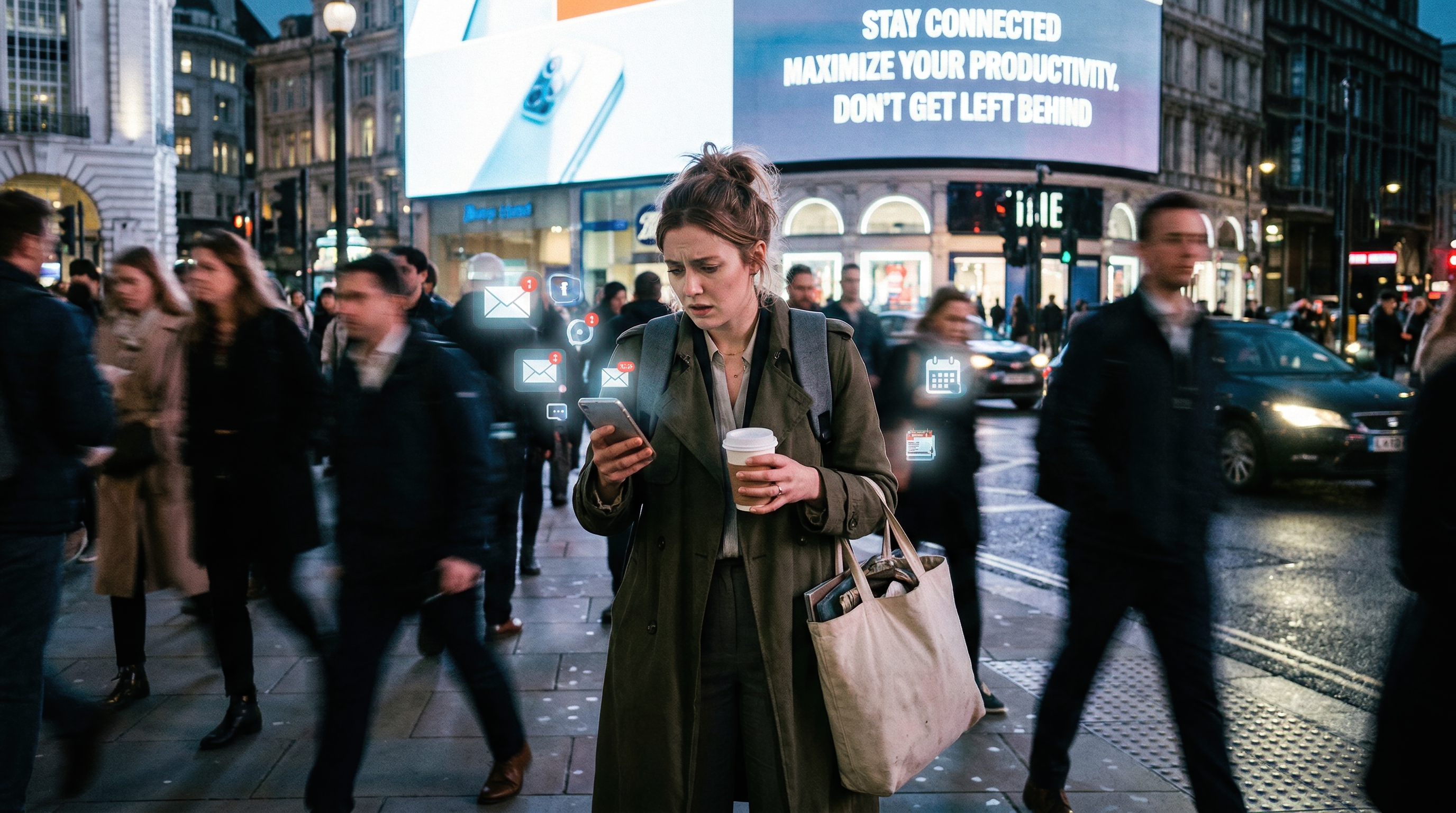
This is one reason overload is often linked to decision fatigue and analysis paralysis. In theory, more information should lead to better judgment. In practice, that is only true if people have enough time, trust, and mental space to sort it.
When they do not, they may choose the first acceptable answer rather than the best one. They may also become more vulnerable to repeated claims, emotional framing, or simple cues that save effort. Research on misinformation and social media fatigue suggests that exhausted users are less likely to carefully evaluate what they see.
This has wider social effects. During health emergencies and other fast-moving events, public agencies have warned that an "infodemic" can make it harder for people to find reliable guidance. In those moments, overload is not just distracting. It can interfere with judgment and behavior.
## People are adapting, but unevenly
Not everyone experiences overload in the same way. Skill, age, work demands, platform design, and digital literacy all shape how well a person can filter and organize information.
Some people build strong coping habits. They mute notifications, use summaries, separate work channels, or set aside time for focused reading. Clearer interfaces and better information design also help. Research suggests that cues, structure, and thoughtful filtering can reduce unnecessary load and improve understanding.
But adaptation has limits. The burden is often placed on individuals even when the information environment is designed to keep them engaged, responsive, and always available. That is why experts increasingly frame overload as both a personal challenge and a design problem.
The next stage of the issue may involve artificial intelligence. AI tools can reduce overload by sorting, summarizing, and prioritizing large amounts of material. But they can also add to the flood by making it easier and cheaper to produce more content. That means the core challenge may shift from finding information to deciding what deserves attention.
For many people, that already feels like the hardest part.
AI Perspective
Information overload is shaping thought less by changing human nature than by changing the conditions in which attention operates. People still think deeply, but deep thinking needs time, structure, and fewer interruptions. The real test now is whether digital systems will support human focus or keep competing against it.


-134c72da.webp)


