[[[SUMMARY_START]]]
A new global race is taking shape around clean water as climate pressure, population growth, pollution and aging infrastructure strain supplies.
Governments and cities are turning to desalination, water reuse, leak reduction, better monitoring and new finance models.
The challenge is not only finding more water. It is making water systems reliable, affordable and safe for all communities.
[[[SUMMARY_END]]]
Clean water is becoming one of the world’s most important tests of resilience. Countries are no longer treating water only as a public service. They are treating it as a strategic asset tied to health, food, energy, jobs and national security.
## A basic need under growing pressureThe scale of the gap remains large. In 2024, about 2.1 billion people still lacked safely managed drinking water. About 3.4 billion lacked safely managed sanitation. Another 1.7 billion lacked basic hygiene services at home.
There has been progress. From 2015 to 2024, nearly 1 billion people gained access to safely managed drinking water. But demand is rising fast in many regions. More people are moving to cities. Farms need water for crops and livestock. Factories, mines, power plants and data centers also depend on reliable supplies.
Water stress is already severe in many places. Global water risk data show that 25 countries, home to about one-quarter of the world’s population, face extremely high water stress each year. Around 4 billion people live under highly water-stressed conditions for at least one month a year.
The pressure is strongest in the Middle East and North Africa, where many countries have limited renewable freshwater. South Asia also faces major stress because of high demand, large populations and heavy use of groundwater.
## Desalination moves into the mainstream
One part of the race is desalination. The technology turns seawater or brackish water into usable water. It is already central to supply in parts of the Gulf, North Africa, Israel, Singapore and island states with few rivers or lakes.
The industry is changing. Older thermal desalination plants used large amounts of heat, often from fossil fuels. Newer reverse osmosis plants use membranes and electricity. They have become more efficient and now account for most desalination capacity added worldwide.
Saudi Arabia has invested heavily in large desalination systems. In 2025, the Al-Khobar production system was recognized for a major reverse osmosis plant with capacity of more than 670,000 cubic meters per day. Projects of this size show how water-scarce countries are moving from emergency supply planning to permanent industrial-scale water production.
But desalination is not a simple answer. It needs power, pipelines, intake systems and careful brine disposal. It is most useful near coasts and where customers can afford the higher cost. For inland towns and poorer rural areas, other solutions are often more practical.
## Wastewater becomes a resource
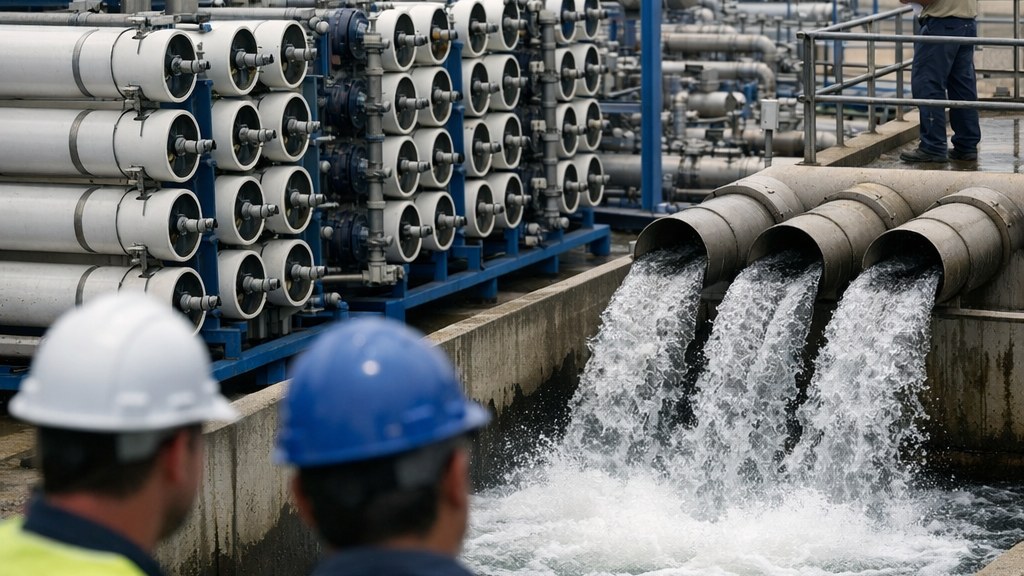
The untapped potential is large. Global water agencies estimate that safe wastewater reuse could reach about 320 billion cubic meters a year, more than 10 times current global desalination capacity.
Some places already show how this can work. Singapore uses treated and purified used water, known as NEWater, as a core part of its water system. The city-state also uses desalination, local catchments and imported water, giving it a diversified supply.
Orange County, California, has built one of the world’s best-known potable reuse systems. Its groundwater replenishment system purifies treated wastewater and stores it in an aquifer. A final expansion added about 30 million gallons per day of drought-resilient supply, raising total production capacity to about 130 million gallons per day.
Israel is another example. It reuses a very high share of treated wastewater for agriculture, reducing pressure on freshwater sources and helping farmers manage dry conditions.
## The race is also about pipes and trust
New supply gets attention, but much of the clean water race will be won or lost in ordinary infrastructure. Many utilities lose large volumes through leaks. Others lack meters, steady power, chemicals, trained staff or money for maintenance.
Better water systems also need better data. Water quality monitoring remains uneven. In many countries, groundwater is poorly measured even though it is a critical source of drinking water and irrigation.
Finance is becoming a central issue. Public budgets alone are not enough in many countries. New water programs are trying to bring together governments, lenders, private investors and local utilities. The goal is to make water projects easier to fund while protecting affordability for households.
The biggest risk is inequality. Wealthier cities can pay for desalination plants, reuse systems and digital monitoring. Poorer communities may still rely on unsafe wells, distant taps or untreated surface water. The next stage of the race will depend on whether innovation reaches these communities, not only the cities that can pay first.
Clean water is no longer a quiet background service. It is becoming a measure of how well societies can adapt to a warmer, more crowded and more uncertain world.
AI Perspective
The clean water challenge is not only about technology. It is about planning, fairness and long-term maintenance. The strongest systems will likely combine many tools: saving water, reusing water, protecting watersheds and building public trust.


-134c72da.webp)


