[[[SUMMARY_START]]]
Sleep tourism is moving from a niche wellness idea into a more visible part of hotel and resort travel.
Travelers are increasingly choosing stays built around rest, quiet rooms, better beds, and recovery-focused routines.
Hotels are responding with sleep suites, pillow menus, sleep coaching, calming spa treatments, and low-stimulation design.
The trend reflects a wider shift: many people now want vacations that help them return home rested, not exhausted.
[[[SUMMARY_END]]]
A growing number of travelers are booking trips with a simple goal: to sleep better. The trend, often called sleep tourism, is changing how some hotels design rooms, packages, and wellness programs. It is a quieter form of travel demand, but it is becoming harder for the hospitality industry to ignore.
## Rest becomes a travel goalFor many travelers, rest is no longer just a benefit of a vacation. It is becoming the main reason to go.
Recent travel surveys show that many leisure travelers now rank rest and recharging among their top reasons for taking a trip. Wellness industry data also shows strong demand for travel linked to personal well-being. Global wellness tourism spending has returned above pre-pandemic levels and reached hundreds of billions of dollars annually.
Sleep tourism sits inside that larger wellness market. It is not medical tourism. It usually does not involve hospital care or clinical treatment. Instead, it focuses on better sleep habits, calmer spaces, and a more restorative stay.
The demand is easy to understand. In the United States, federal health data for 2024 showed that 30.5% of adults slept less than seven hours in a 24-hour period on average. Many people also struggle with stress, screen use, shift work, travel fatigue, or noisy home environments.
A hotel room that promises silence, a dark space, a better mattress, and a slower schedule can feel less like an extra and more like the purpose of the trip.
## What hotels are offering
The sleep tourism trend can be seen in both simple amenities and high-end packages.
Some hotels now offer pillow menus, blackout curtains, white-noise machines, weighted blankets, aromatherapy, calming teas, and evening rituals. Others go further with smart beds, room temperature controls, circadian lighting, soundproofing, guided meditation, yoga nidra, and spa treatments designed to support relaxation.
Six Senses promotes sleep programs that combine tracker data, personal consultations, yoga nidra, meditation, nutrition advice, light exercise, and wellness therapies. Rosewood launched sleep-focused retreats across multiple properties, with options ranging from one-night rest packages to longer stays built around sleep habits, movement, nutrition, and mindfulness.
In New York, Park Hyatt New York has offered a sleep suite built around a smart bed designed to adjust pressure and climate during the night. Equinox Hotel New York has also built sleep into its wellness identity, with sleep-focused rooms, rituals, coaching concepts, and recovery services.
The trend is not only about luxury. Airport hotels and transit hubs have also leaned into rest, with sleep pods, day-use rooms, quiet lounges, and spa services for travelers facing long layovers or early flights. These offerings show how sleep has become part of the travel experience itself.
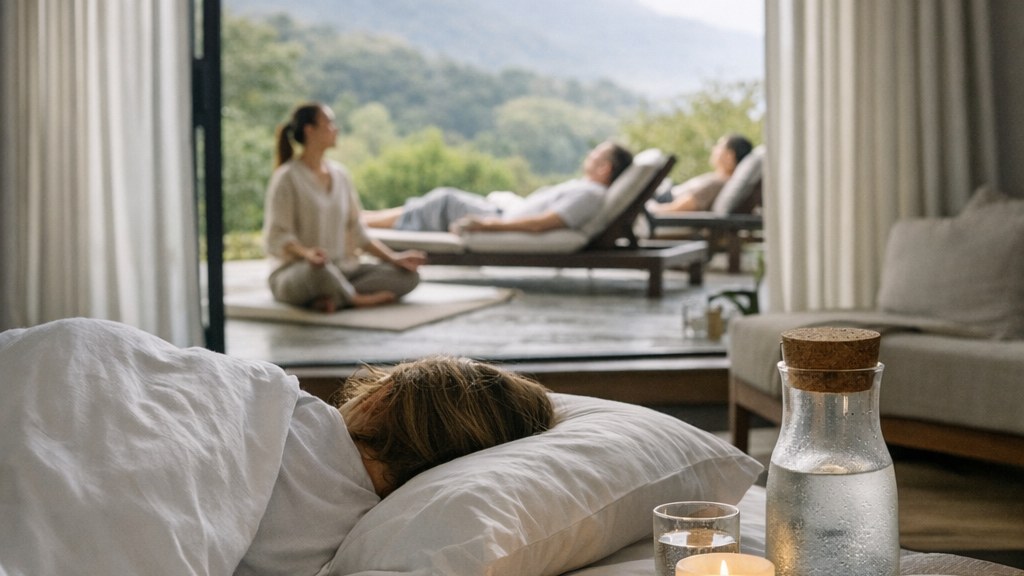
Several forces are helping sleep tourism grow.
The first is travel fatigue. Many people returned to travel quickly after pandemic restrictions ended. Some trips became busy, expensive, and packed with activities. Now, some travelers want the opposite: fewer plans, less noise, and more recovery.
The second is the wider wellness economy. Fitness, mental health, nutrition, mindfulness, and longevity are now common parts of travel marketing. Sleep fits naturally into that mix because it touches all of them.
The third is hotel competition. Many rooms already offer similar basics: a bed, a bathroom, Wi-Fi, and breakfast. Sleep-focused design gives hotels a clear way to stand out. It also links directly to the most basic promise of lodging: a good night’s rest.
There is also a business reason. Sleep amenities can range from low-cost upgrades to premium suites. That allows hotels to serve both everyday guests and high-spending wellness travelers.
## A trend with limits
The boom also has limits.
Sleep is personal. A mattress that works for one guest may not work for another. Some claims around wellness technology can be hard for travelers to judge. A room may include advanced lighting or a smart bed, but noise, jet lag, alcohol, stress, and late-night screen use can still affect sleep.
Experts in sleep health generally stress consistent routines, dark rooms, cool temperatures, reduced evening stimulation, and enough time in bed. Travel can support those habits, but it cannot replace them.
Cost is another issue. The most elaborate sleep retreats and suites are often found in luxury hotels. That means the people most able to buy sleep-focused travel may not be the people most affected by poor sleep at home.
Still, the direction of the market is clear. Sleep is no longer treated only as something that happens after the vacation day ends. For a growing group of travelers, it is the main event.
AI Perspective
Sleep tourism shows how travel is becoming more personal and more practical. Many people are not only looking for new places, but also for a better way to feel after they return home. The strongest version of the trend may be the simplest one: quieter rooms, fewer demands, and more respect for rest.


-134c72da.webp)


