[[[SUMMARY_START]]]
The 2026 World Cup is set to be the largest in football history, with 48 teams playing across Canada, Mexico and the United States.
But the tournament is also arriving at a tense moment for travel, security, climate and public costs.
Its scale shows football’s global pull, while its problems reflect wider worries shaping daily life around the world.
[[[SUMMARY_END]]]
The World Cup has long sold itself as a month of shared joy. In 2026, it will still bring that promise. Stadiums from Mexico City to Vancouver, Dallas, Miami and New York-New Jersey will fill with flags, songs and hope.
But this tournament also reflects a more anxious world. The first World Cup hosted by three countries will be bigger, richer and more complex than any before it. It will also test borders, cities, weather planning, public safety and the wallets of fans.
The 2026 FIFA World Cup will run from June 11 to July 19. It will feature 48 teams, up from 32, and 104 matches across 16 host cities in Canada, Mexico and the United States.
The opening match is scheduled for Mexico City. The final is scheduled for the New York-New Jersey area. For FIFA, the expansion means more countries, more matches and a wider global stage.
For many fans, that is good news. More teams means more nations get a rare chance to play on football’s biggest stage. It can give smaller football countries a moment of pride and visibility.
Yet the same expansion also makes the event harder to manage. Teams and fans will move across long distances in North America. Many trips will require flights. Cities must prepare for crowds, traffic, security demands and public events at the same time.
That mix of celebration and strain is part of what makes this World Cup feel different.
## Borders and travel are part of the story
The World Cup depends on movement. Fans cross borders. Teams cross borders. Journalists, workers and officials do the same.
In 2026, travel is not just a logistical issue. It is a political and social issue. FIFA has told ticket holders that a match ticket does not guarantee a visa or entry into Canada, Mexico or the United States. That warning is practical, but it also captures a larger reality: global mobility has become more uncertain.
Some hotel and travel groups in the United States have raised concern that visa delays, high prices and geopolitical tensions could limit international demand. Civil society groups have also warned that some visitors may face risks linked to immigration enforcement or protest activity in the United States.
Officials in host cities and federal agencies have been preparing security plans for years. They must protect stadiums, fan zones, airports, transit systems and public gathering places. The task is large because the tournament is spread across a continent, not one compact host nation.
## The cost of joining the party
The World Cup is also a mirror of rising costs. Many fans are facing expensive flights, hotels, match tickets and local transport.
FIFA has said some lower-priced tickets are available, including a fixed-price supporter tier for qualified teams. But many fans have criticized high prices and dynamic ticket pricing, where prices can change with demand.
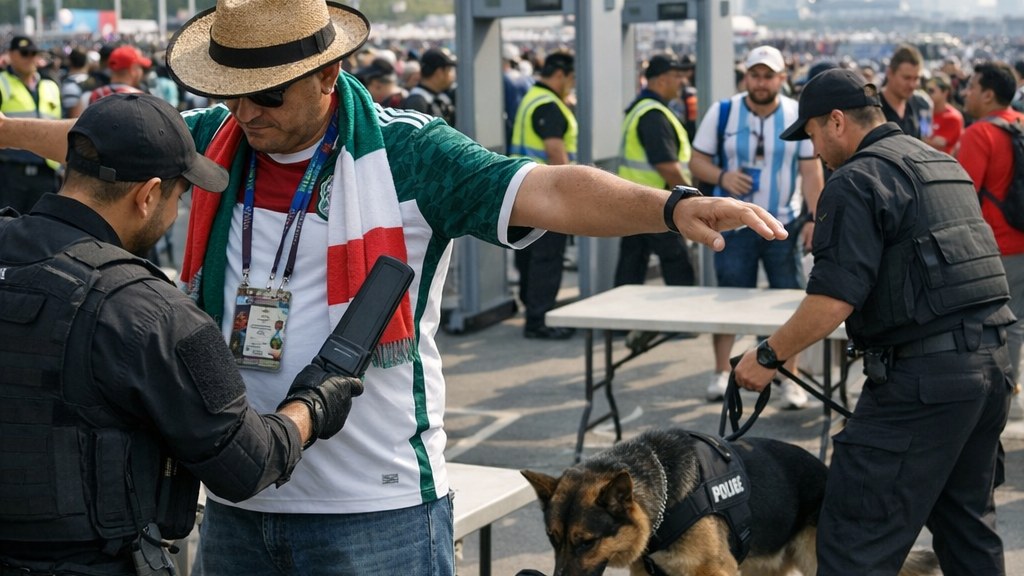
Those investments may help cities manage the crowds. But they also raise familiar questions. Who pays for a global sports event? Who benefits most? And what remains for residents after the final whistle?
These questions are not new. But they are sharper at a time when many households are already worried about rent, food, transport and energy costs.
## Heat and climate move onto the pitch
The World Cup will be played in June and July, when several host regions can be very hot. Climate and sports researchers have warned that heat stress could affect players, staff and spectators in some locations.
Texas, Florida and northern Mexico are among the areas drawing close attention because of summer heat. Other host cities may face different risks, including storms, air quality problems or heavy rain.
Tournament planners have discussed hydration breaks, cooling areas, water access, medical teams and scheduling choices. Some stadiums also have roofs or climate-control features that can reduce risk.
Still, the issue is bigger than one tournament. Major sports events are increasingly being forced to plan around extreme heat and changing weather. The 2026 World Cup will show how much adaptation is now part of modern sport.
## A festival under pressure
None of these concerns means the World Cup will fail to inspire. Football remains one of the few events that can hold global attention across language, class and politics.
There will still be unforgettable goals. There will be fans meeting strangers in city squares. There will be players carrying the hopes of countries that rarely get a global spotlight.
But the tournament will not take place outside the world’s pressures. It will sit inside them. It will show the joy of connection, and the difficulty of connection. It will show how much people still want to gather, and how much harder gathering has become.
That may be the central meaning of the 2026 World Cup. It is not only a sports event. It is a picture of a planet that still loves common rituals, but now approaches them with more caution, more planning and more worry.
AI Perspective
The 2026 World Cup shows how sport can still bring people together, even when the world feels tense. Its challenges are not separate from daily life; they are part of the same concerns about cost, climate, borders and safety. The tournament’s value may depend not only on great football, but on how well it protects access, fairness and trust.


-134c72da.webp)


-6c40e5ef.webp)

-1d29b0b2.webp)
-2721737f.webp)
-55bf1fe2.webp)