[[[SUMMARY_START]]]
Phones, feeds, alarms and breaking-news banners have made alertness part of daily life.
Recent research links constant alerts with distraction, stress, avoidance and emotional fatigue.
The challenge is not only the number of warnings people receive, but whether they are clear, useful and trusted.
Experts continue to urge people to stay informed while setting limits on nonessential notifications.
[[[SUMMARY_END]]]
Modern life now comes with a near-constant stream of alerts. Weather warnings, health updates, war headlines, political news, work messages, school notices and app notifications can all arrive on the same device, often within minutes of one another. For many people, the phone has become both a safety tool and a source of strain.
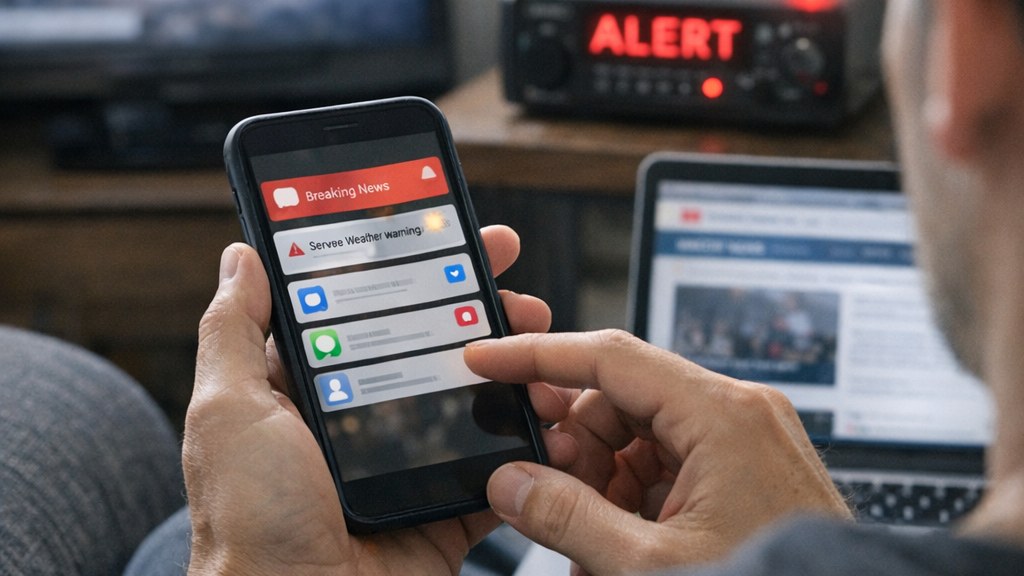
## A life shaped by interruptionThe alert was once reserved for urgent danger. Today, it can mean many things. A tornado warning may appear beside a shopping offer. A public safety message may arrive after a news headline, a group chat, a sports score and a work reminder.
This mix makes the psychology of alerts more complicated. People need reliable warnings in moments of danger. They also need time when the body and mind are not being asked to react.
Psychologists often describe this as a problem of attention and arousal. Each sound, vibration or banner asks the brain to decide whether something needs action. Even when the alert is not opened, it can briefly pull focus away from the task at hand.
A 2026 study in a human-computer behavior journal found that smartphone-style notifications slowed cognitive processing for about seven seconds. The effect was linked more closely to notification volume and checking habits than to total screen time. In simple terms, frequent interruptions may matter more than how long a person spends on a phone.
## When vigilance becomes fatigue
Permanent alerts can create a state of low-level vigilance. People scan for change. They check for updates. They may feel pressure to know what is happening at all times, especially during elections, wars, disasters, public health events or extreme weather.
That habit can become tiring. A recent U.S. survey found that 52% of adults said they were worn out by the amount of news, while 60% said they had reduced the amount of news they get overall at some point. The same research found that many people still see being informed as important, especially for civic life.
This tension is central to the alert age. People do not want to be uninformed. But they also do not want to feel constantly summoned by events they cannot control.
Global news-alert data point in the same direction. In a 2025 survey across multiple markets, 79% of respondents said they did not receive news alerts in an average week. Among those who did not receive them, 43% said they had actively disabled alerts because there were too many or because they were not useful.
## The pull of bad news
The problem is not only interruption. It is also content. Many alerts carry negative information: violence, disaster, political conflict, disease, economic stress or climate risk. Negative information can feel more urgent than positive or neutral news, so people may keep checking even when it causes distress.
Research on doomscrolling has linked the repeated consumption of negative news with higher existential anxiety in student samples in the United States and Iran. The findings do not mean every person who reads difficult news will develop anxiety. They do show that heavy exposure to upsetting information can shape mood and worldview.
Public health guidance has long warned against this pattern. During major emergencies, people are encouraged to follow trusted information, but also to seek updates at set times rather than staying attached to news feeds all day.
## Safety alerts still matter
The rise of alert fatigue does not mean alerts are harmful by nature. Emergency warnings can save lives. In the United States, wireless emergency alerts are used for tornadoes, destructive severe thunderstorms, flash floods, hurricanes, storm surge, snow squalls, dust storms, AMBER Alerts and other urgent threats.
The issue is quality. Warnings that are timely, targeted and clear are more likely to be useful. Warnings that feel vague, repeated, outdated or irrelevant can make people less willing to pay attention.
Recent research on earthquake early-warning systems shows that public trust is not always weakened by false or precautionary alerts. In one 2026 study, most participants still supported proactive warnings and said they would continue following future guidance. The study also found that people can be confused about what action to take, which points to the need for clear instructions.
That distinction matters. The public may tolerate more alerts when the threat is serious and the message is understandable. Fatigue grows when alerts compete with routine digital noise.
## Setting boundaries without tuning out
Mental health advice in this area is usually practical, not extreme. The goal is not to ignore the world. It is to reduce unnecessary interruption.
Common strategies include turning off nonessential app alerts, keeping emergency alerts on, checking news at planned times, using focus modes during work or sleep, and relying on a small number of trusted information channels. These steps help people move from a reactive pattern to a more intentional one.
For families, workplaces and public agencies, the lesson is similar. An alert should earn attention. It should be clear about what happened, who is affected, what action is needed and when more information will come.
The future is likely to bring more alerts, not fewer. Climate hazards, public safety systems, digital platforms and artificial intelligence tools are all expanding the ways information reaches people. The psychological task is to protect attention without losing readiness.
AI Perspective
The alert age shows how closely safety and stress can sit together. A useful warning can protect people, but constant low-value interruption can wear them down. The healthiest path is not silence, but better signals and stronger personal boundaries.


-134c72da.webp)


