[[[SUMMARY_START]]]
True crime remains one of the most durable forms of modern entertainment.
Its appeal spans streaming series, podcasts, books, social media and documentaries.
Audiences are drawn by mystery, fear, justice, human behavior and the hope of understanding danger.
The genre also faces growing questions about privacy, consent and harm to victims’ families.
[[[SUMMARY_END]]]
True crime has moved far beyond paperback shelves and late-night television. It is now a global media habit, watched on streaming platforms, heard in podcasts, shared on social media and discussed in online communities. Its staying power comes from a mix of suspense, real-world stakes and a deep public interest in how crime happens, how investigations work and how justice can fail or succeed.
## A genre built on real stakesTrue crime is not new. Books such as Truman Capote’s "In Cold Blood," first published in book form in 1966, helped shape the modern form of the genre. Later television shows, documentary films and long-form podcasts brought it to wider audiences.
The podcast "Serial," released in 2014, became a major turning point. It showed that one real case, told in chapters, could become a shared public conversation. Since then, true crime has become a regular part of the podcast and streaming economy.
Recent audience data shows that demand remains strong. A 2024 U.S. survey found that 57% of adults said they consume true-crime content. Another study of weekly podcast listeners found that true crime was among the most listened-to podcast genres in the United States, with 22% of weekly listeners age 13 and older listening to true crime podcasts.
Streaming figures also show the scale. In 2025, the documentary series "American Murder: Gabby Petito" opened at No. 1 among English-language television titles on Netflix with 31.3 million views in its first week. Later Netflix engagement figures for 2025 also placed several documentary and crime-related titles among the platform’s most watched unscripted programs.
## The pull of mystery and order
One reason true crime holds attention is simple: it often begins with a question. What happened? Who knew what? Was the right person arrested? Could someone have stopped it?
Those questions give the audience a structure to follow. A case has clues, witnesses, timelines, suspects and evidence. For viewers and listeners, that structure can make a frightening event feel possible to understand.
True crime also gives people a way to look at systems that are usually hard to see. Police work, courts, forensic science, prisons, missing-person investigations and wrongful convictions all become part of the story. Some audiences watch for the mystery. Others watch to understand how institutions respond when something goes wrong.
This is why cold cases, miscarriages of justice and missing-person stories often attract long-term interest. They do not always offer clean endings. But they invite the public to think about evidence, fairness and accountability.
## Fear, safety and empathy
True crime is often described as entertainment, but many viewers say they approach it for practical reasons. Surveys have found that people connect the genre with safety awareness, warning signs and understanding dangerous behavior.
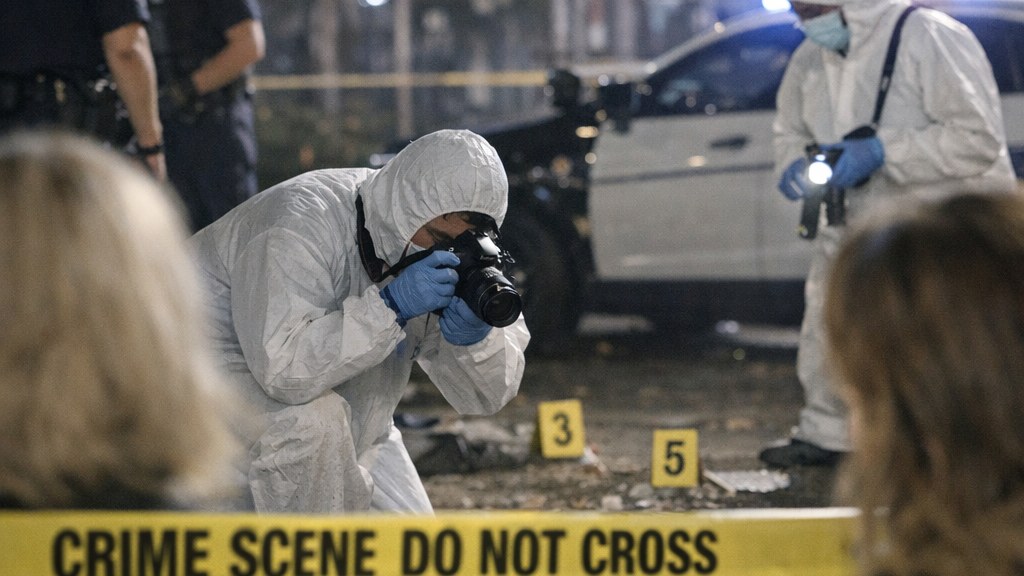
Stories involving intimate partner violence, missing women, online scams or abuse of authority can feel close to daily life. Viewers may not see these programs only as mysteries. They may see them as cautionary stories about trust, control, vulnerability and survival.
That does not mean true crime always teaches useful lessons. Some programs simplify complex cases. Others focus too heavily on offenders. But the best-known examples often hold attention when they place the victim’s life, the investigation and the wider social context at the center.
## Podcasts, streaming and social media changed the scale
The format of true crime fits today’s media habits. A podcast can turn a case into a weekly routine. A streaming series can be watched in one night. Short videos can reopen public interest in old cases. Online forums allow viewers to compare timelines, documents and theories.
This has made true crime more participatory than many other genres. Audiences do not only watch. They discuss, search, post and sometimes contact officials or families. In a few cases, public attention has helped bring renewed focus to forgotten investigations.
But that same attention can create problems. Online speculation can spread errors. Families can be flooded with messages. People who were never charged with crimes can become targets of public suspicion. The line between public interest and intrusion can become thin.
## The ethical question is now central
As the genre has grown, so has criticism of it. Families and friends of victims have described the pain of seeing a loved one’s death turned into content. Academic research has raised concerns about inaccuracies, sensational storytelling, loss of privacy and lack of control for people connected to cases.
This has pushed producers, podcasters and audiences to ask harder questions. Was the family consulted? Is the victim treated as a full person? Are claims checked? Is the program helping the public understand the case, or mainly using grief for suspense?
True crime still holds the world’s attention because it deals with fear, justice, memory and human behavior. But its future may depend on whether it can keep that attention while showing more care for the real people at the center of each story.
AI Perspective
True crime remains powerful because it turns real disorder into a story people can follow. Its strongest form helps audiences think about safety, justice and the people harmed by violence. Its weakest form forgets that every case began as someone’s real life, not as entertainment.


-134c72da.webp)


