[[[SUMMARY_START]]]
Fashion is moving back into politics, but the new fight is less about slogans and more about technology.
AI images, smart glasses, digital product records, trade rules and waste laws are changing how clothes are made, sold and judged.
The debate now reaches from runways and ad campaigns to customs offices, privacy rules and climate policy.
[[[SUMMARY_END]]]
Fashion has always carried messages. A suit can signal power. A uniform can show belonging. A T-shirt can turn into a protest sign. In 2026, fashion is becoming political again, but the new politics are often hidden inside technology. The questions are no longer only about what people wear. They are also about who made it, what data it carries, how it was advertised, and who profits from the system behind it.
## Clothes now carry dataThe clearest shift is happening in regulation. The European Union’s Ecodesign for Sustainable Products Regulation entered into force in July 2024 and is now pushing fashion toward digital product passports. These records are meant to give key information about a product, such as materials, repairability, environmental impact and supply chain details.
For fashion brands, this is a major change. A jacket or pair of shoes may soon need a digital identity that follows it through sale, resale, repair and recycling. That turns a garment into a data object as well as a style object.
The same law also targets the destruction of unsold clothing, accessories and footwear. New EU measures adopted in February 2026 support rules designed to stop large companies from destroying unsold textile goods. The issue is large enough to have climate consequences. EU environmental data estimate that processing and destroying returned or unsold textiles can create up to 5.6 million tonnes of carbon dioxide equivalent emissions.
## AI changes the politics of image
Artificial intelligence has brought another layer of conflict. Fashion companies are testing AI in design, styling, product search, virtual try-on and advertising. Some uses are behind the scenes. Others are highly visible, especially when brands use synthetic models or AI-generated campaign images.
That has created a direct labor question. Models, photographers, stylists, makeup artists and set workers all depend on image production. When a campaign can be built partly with generated people, generated lighting and generated locations, the cost structure changes. So does the meaning of representation.
The debate is not only about jobs. It is also about identity. Earlier AI model experiments drew criticism when brands presented synthetic diversity instead of hiring a wider range of real people. More recent AI fashion ads have renewed questions about beauty standards, consent and disclosure.
EU AI rules add pressure. From August 2026, transparency obligations will apply to certain AI systems, including requirements tied to deepfakes and some AI-generated public content. For fashion, that means synthetic images may increasingly need clearer labels, especially when they could be mistaken for real people or real shoots.
## Wearables bring privacy into style
The politics of fashion is also moving onto the face. Smart glasses have become one of the most visible fashion-tech products. Partnerships between eyewear companies and major technology firms have made camera-equipped and AI-assisted glasses look more like ordinary Ray-Bans, Oakleys or prescription frames.
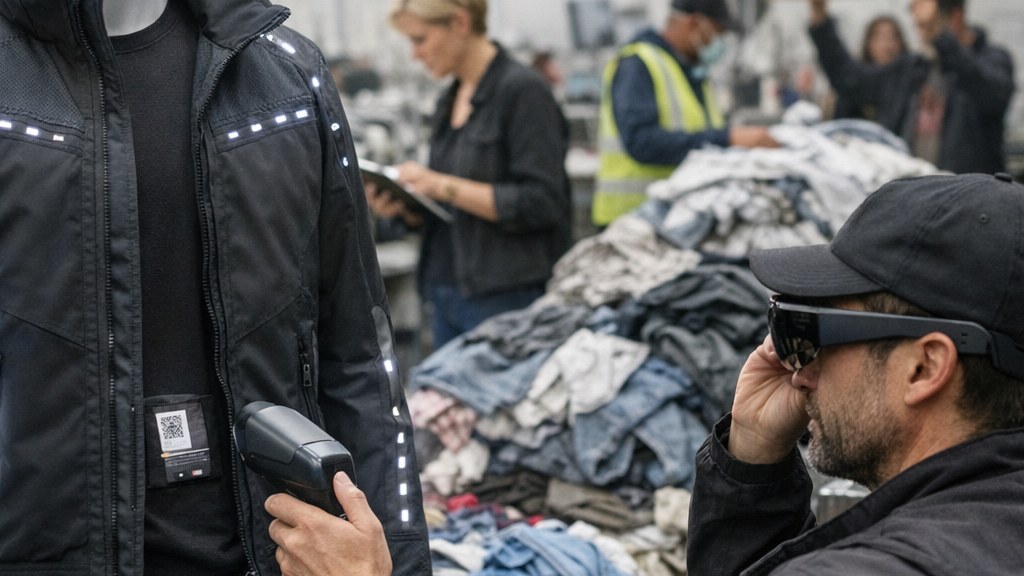
This makes eyewear a political object. It sits at the meeting point of personal convenience, public space and surveillance. A pair of glasses can now be a camera, a microphone, an AI assistant and a fashion accessory at the same time.
## Trade rules reshape fast fashion
Fashion’s politics are also visible in customs policy. In the United States, duty-free treatment for many low-value shipments from China and Hong Kong ended on May 2, 2025. The rule change affected the direct-to-consumer model used by low-cost online retailers, including platforms known for fast fashion and rapid trend turnover.
The issue was not only price. Officials and critics linked the old system to unfair competition, weak customs screening, counterfeit goods and concerns over illegal shipments. For shoppers, the change meant that a cheap dress ordered online was suddenly connected to trade enforcement and border policy.
In Europe, textile waste rules are also becoming tougher. EU data show that in 2022, member states generated about 6.94 million tonnes of textile waste, or about 16 kilograms per person. Consumption of clothing, footwear and household textiles reached about 19 kilograms per person in the same year.
## The runway is no longer separate
This week’s Met Gala in New York used the theme “Costume Art” and the dress code “Fashion Is Art.” That reflected fashion’s long effort to be treated as culture, not just commerce. But the larger industry conversation now goes beyond art.
Runways and campaigns are being judged against questions of labor, climate, privacy and authenticity. Designers are also responding with a renewed emphasis on craft, handwork and imperfection. In a market crowded with digital images, human-made details have become more than decoration. They are part of a wider argument about value.
Fashion has not stopped being glamorous. But glamour now sits beside regulation, algorithms and environmental accounting. The politics are quieter than a slogan on a shirt, but they may be more lasting.
AI Perspective
The new politics of fashion are less about telling people what to wear and more about showing how clothing systems work. Technology can make fashion more transparent, but it can also make labor and privacy easier to hide. The strongest brands may be the ones that treat data, people and materials as part of the same design problem.


-134c72da.webp)


