[[[SUMMARY_START]]]
Students are using AI video tools to place teachers’ faces into memes, lip-sync clips, and insulting scenes on TikTok and Instagram.
Some posts are framed as jokes, but schools say they can damage reputations and disrupt classrooms.
Recent cases in Texas, Florida, and Washington show how quickly school pranks can become public harassment.
Districts are responding with warnings, parent education, investigations, and calls for stronger digital responsibility.
[[[SUMMARY_END]]]
A new form of student social media prank is spreading through schools: AI-made “slander” videos that use teachers’ faces, names, and images in mocking or misleading clips. The videos often appear on student-run TikTok and Instagram accounts. Many are presented as memes. But educators say the damage can be serious when a joke suggests misconduct, sexual behavior, political extremism, or criminal acts.
## A school prank with a stronger toolThe accounts are often called “slander pages.” They use artificial intelligence to make teachers appear in scenes they never took part in. Some clips animate a still image. Others place a teacher’s face or body into an existing meme video. A single photo from a school website, yearbook, social media page, or classroom event can be enough to create a realistic-looking edit.
Tools such as Viggle AI and other image-to-video apps can map motion from a reference video onto a person in a photo. They can also create lip-sync clips and full-body animations. That has made it easy for students with little editing skill to produce videos that once required advanced software.
The content ranges from silly dances to harsh attacks. Some videos use sexualized insults. Others falsely suggest that a teacher is dangerous, predatory, politically extreme, or connected to notorious public figures. Even when the intent is humor, the result can look like a public accusation.
## Recent incidents show the risk
In Texas, Wylie Independent School District said it was aware of student-made AI videos targeting educators. One account connected to the district drew large attention online and included clips that used teachers’ identities in insulting or misleading ways. The district warned that AI tools and social media trends should not come at the cost of educators’ reputations or disrupt the learning environment.
In Florida, Millennium Middle School in Seminole County warned families after multiple AI-generated TikTok videos involving teachers and administrators circulated online. School officials said some videos encouraged students to “slander” staff, and one video was described as threatening. The school asked parents to talk with students about responsible online behavior and the real-world consequences of posts that may feel anonymous.
In Washington state, teachers at Fort Vancouver High School walked out of a staff meeting after an anonymous Instagram account shared altered images and AI-generated videos of educators. The posts included political and sexual references. The account was later removed, but the incident showed how quickly an online page can affect a whole school building.
These cases are part of a wider problem facing schools as generative AI becomes easier to use. AI has already been involved in fake nude images of classmates, impersonation pages, and altered audio. The teacher videos are less often explicit, but they raise similar concerns about consent, reputation, and harm.
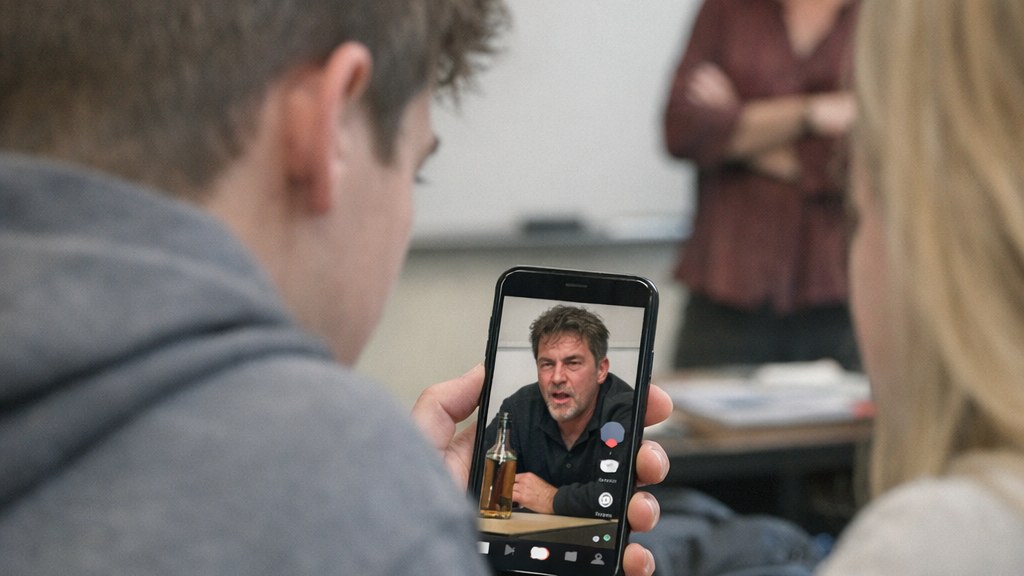
Teachers are public-facing workers, but most are not public figures in the way politicians or celebrities are. They often live in the same communities as their students. A false or humiliating video can be seen by students, parents, coworkers, and strangers before it is removed.
That can create stress, fear, and mistrust. It can also make routine school discipline harder. A teacher who becomes the target of a viral account may have to keep working with students who shared, liked, or commented on the post.
Schools also face limits. Administrators may be able to discipline students when off-campus online behavior disrupts school or targets staff. But each case depends on local policy, state law, the content of the post, and how it affects the school environment. If a video contains threats, sexual harassment, impersonation, or false claims of misconduct, the consequences can become more serious.
## Platforms and schools are under pressure
TikTok’s community rules prohibit harassment and bullying, including doxing, sexual harassment, and coordinated abuse. Instagram’s parent company also bars bullying and harassment and says it uses a mix of user reports, automated systems, and enforcement teams.
Still, AI-edited school videos can be difficult to moderate. Some clips look like satire. Others use coded language, inside jokes, or school-specific context that outsiders may not understand. A platform may not immediately know whether a caption is a harmless joke between friends or a damaging attack on a real teacher.
For schools, prevention is becoming as important as removal. Districts are adding parent workshops, student warnings, digital citizenship lessons, and reminders about reporting real concerns through official channels. Educators are also asking families to explain that sharing a video can amplify harm, even if a student did not create it.
The debate is not about whether students can make jokes. It is about what happens when AI turns a joke into a convincing public image of a real person doing or saying something false. In a school setting, that line can be crossed quickly.
AI Perspective
AI has made media creation easier, but it has also made consent more important. Schools now need clear rules that students can understand before harm happens. The central lesson is simple: using someone’s face without permission can have real consequences, even when the post is meant as a joke.


-134c72da.webp)


-6c40e5ef.webp)

-1d29b0b2.webp)
-2721737f.webp)
-55bf1fe2.webp)