[[[SUMMARY_START]]]
Measles, cholera, polio and tuberculosis are again testing health systems in several regions.
The pattern is not a single global outbreak, but a series of local flare-ups linked by travel, conflict, climate stress and gaps in vaccination.
Recent data show that missed childhood shots and weakened surveillance can quickly give familiar diseases new openings.
[[[SUMMARY_END]]]
Diseases once pushed to the margins are again appearing in headlines, clinics and wastewater samples. The return is uneven, but the warning is clear: in a world of fast travel and crowded cities, old infections can move quickly when public health defenses weaken.
## A warning from measlesMeasles has become the clearest signal of the problem. It is one of the most contagious human viruses, and outbreaks can grow fast when vaccination levels fall below the high coverage needed to stop spread.
Global vaccination data show why health officials are worried. In 2024, about 14.3 million children received no routine vaccines at all. About 20.6 million missed their first routine measles shot. Worldwide, 84% of children received a first measles vaccine dose by their second birthday, and 76% received two doses. To stop measles transmission, coverage needs to be near 95% with two doses.
Recent outbreaks show how quickly gaps can be exposed. The European Region recorded 127,350 measles cases in 2024, about double the number in 2023 and the highest level since 1997. In the United States, 1,714 confirmed measles cases had been reported in 2026 as of April 9. Bangladesh also reported a nationwide increase in 2026, affecting 58 of 64 districts, and began an emergency measles-rubella campaign for more than 1.2 million young children in high-risk areas.
These figures do not mean measles is uncontrolled everywhere. Many countries still prevent large outbreaks through high vaccination coverage and quick case investigations. But the disease is often the first to reveal weak spots, because it spreads before many other vaccine-preventable infections can gain ground.
## Cholera follows water, conflict and displacement
Cholera is another old disease showing renewed force. It spreads through contaminated water and food, and it is closely tied to unsafe sanitation, disrupted services and population movement.
The global cholera upsurge that began in 2021 continued into 2026. In January 2026, 16,912 cholera and acute watery diarrhoea cases and 182 deaths were reported from 19 countries, territories and areas across three regions. The global risk level remained very high.
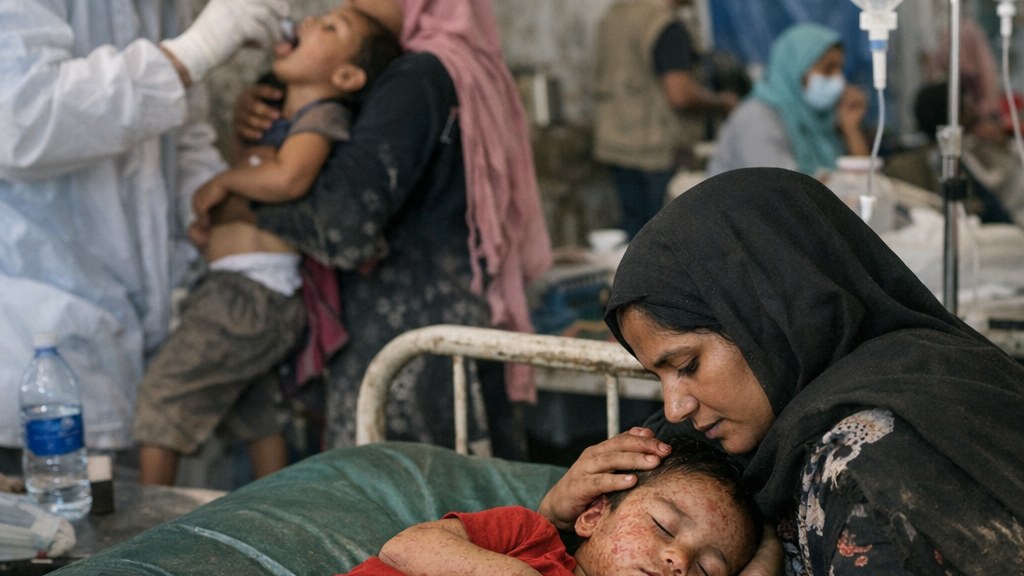
Southern Africa showed how weather and displacement can sharpen the danger. In the first six weeks of 2026, five southern African countries recorded 4,320 cholera cases and 56 deaths, more than seven times the cases recorded in the same period a year earlier. Flooding, damaged infrastructure and poor access to clean water helped fuel the surge.
## Polio and TB show the long tail of unfinished work
Polio has been pushed close to eradication, but it has not disappeared. Wild poliovirus transmission remains centered in Afghanistan and Pakistan. Other risks come from circulating vaccine-derived polioviruses, which can emerge in under-immunized communities. Recent detections in wastewater in parts of Europe also show the value of surveillance even where paralytic polio is rare.
Tuberculosis tells a different story. It never went away. It remains one of the world’s deadliest infectious diseases, especially where poverty, crowding, HIV, malnutrition and delayed diagnosis overlap. In 2024, an estimated 10.7 million people fell ill with TB worldwide, and 1.23 million people died from it. Eight countries accounted for about two thirds of global TB illness: India, Indonesia, the Philippines, China, Pakistan, Nigeria, the Democratic Republic of the Congo and Bangladesh.
The United States also saw TB concerns rise. In 2024, 10,388 TB cases were reported, up from 2023 and the highest national count in more than a decade. Provisional 2025 data later suggested a small decline, but the numbers remained a reminder that TB control needs steady screening, treatment and public health follow-up.
## Why old diseases find new openings
The causes differ by disease, but several forces repeat. Routine immunization was disrupted during the COVID-19 pandemic and has not fully recovered in many places. Conflict and displacement interrupt clinics, water systems and disease reporting. Climate-linked flooding and drought can increase the risk of waterborne disease. Rapid travel can carry infections from one vulnerable community to another before an outbreak is recognized.
Misinformation and low trust also matter. When parents delay vaccines, when adults miss boosters, or when communities lose contact with health services, familiar infections gain room to spread.
The return of old diseases is not a sign that modern medicine has failed. It is a sign that prevention needs constant maintenance. Vaccines, clean water, good data, trained health workers and fast local response remain the tools that keep old threats from becoming new crises.
AI Perspective
The lesson is that infectious disease control is never finished. A vaccine or treatment can change history, but only if people can still reach it and trust it. In a connected world, protecting one community often helps protect many others.


-134c72da.webp)


