[[[SUMMARY_START]]]
Nostalgia has moved from a creative style to a core business strategy across film, streaming, music and games.
Studios and platforms now use familiar characters, songs and worlds to cut through a crowded digital market.
Recent box-office, streaming and music data show that audiences still want new ideas, but familiar stories often carry less risk.
[[[SUMMARY_END]]]
Nostalgia is no longer just a warm feeling attached to childhood movies, old songs or early video games. It has become one of the main engines of modern entertainment, shaping what gets made, marketed and promoted around the world.
## Familiar names cut through a crowded marketThe entertainment business is bigger and more crowded than ever. Global entertainment and media revenue moved close to $3 trillion in 2024 and is forecast to reach about $3.5 trillion by 2029. Viewers, listeners and players now move between streaming apps, social video, games, music, podcasts and live events every day.
In that busy market, familiarity has value. A known title gives audiences a quick reason to pay attention. It also gives studios a clearer way to market a project before anyone has seen it.
That is why sequels, remakes, reboots and adaptations keep filling release calendars. They arrive with built-in memory. A trailer for “Inside Out 2,” “Zootopia 2,” “Lilo & Stitch” or “The Super Mario Bros. Movie” does not have to explain every part of its world from the beginning. Millions of people already understand the basic emotional promise.
## Box office shows the power of old worlds
Recent box-office results show how strong that pattern has become. In 2024, the biggest worldwide films were led by familiar properties. “Inside Out 2” earned about $1.7 billion globally. “Deadpool & Wolverine” earned about $1.34 billion. “Moana 2” passed $1 billion. Other major performers included “Despicable Me 4,” “Dune: Part Two,” “Godzilla x Kong: The New Empire,” “Kung Fu Panda 4” and “Sonic the Hedgehog 3.”
The pattern continued in 2025. The Chinese animated sequel “Ne Zha 2” became the year’s top global film with more than $2 billion in worldwide ticket sales. “Zootopia 2” also became a global blockbuster, while Disney’s live-action “Lilo & Stitch” remake crossed $1 billion. A film based on “Minecraft” became another major worldwide hit.
These results do not mean original stories have disappeared. They do show why companies often lean on known worlds for their largest bets. Big films are expensive to produce and promote. A familiar brand can reduce uncertainty, especially when families are choosing whether a theater trip is worth the cost.
## Streaming made the past easier to sell
Technology changed nostalgia from a memory into an always-on product. Streaming libraries keep old shows available every day. Recommendation systems push familiar titles to new audiences. Social platforms can revive a scene, song or character years after release.
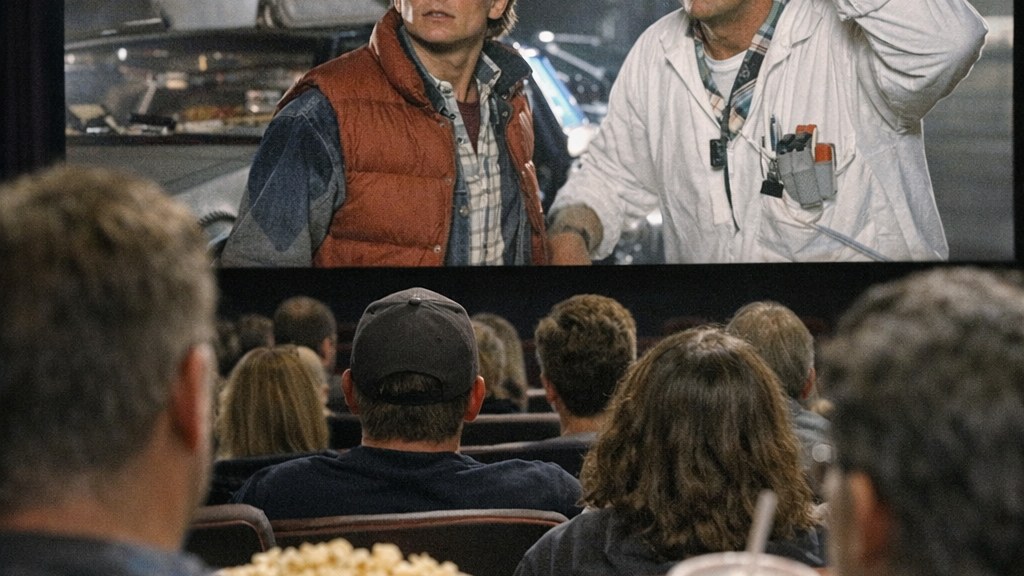
This is a different kind of nostalgia from the old rerun era. Today, a teenager can discover a 1990s sitcom, a 2000s fantasy film or an 1980s song through an algorithm, a meme or a game soundtrack. The past is no longer locked to one generation.
## Music and games show the same pattern
Music data also point to the strength of older material. In 2025, only 43% of U.S. on-demand audio streams came from tracks released in the previous five years. That means most listening came from older songs. Short-form video helped push catalog tracks back into daily life, including songs tied to films, trends and fan edits.
Gaming has its own version of the same force. The global video game market was about $224 billion in 2024 and is forecast to approach $300 billion by 2029, larger than movies and music combined. Players are also aging with the medium. In the United States, the average player is 36 and has been playing for about 18 years.
That creates a large audience for remasters, remakes and returning franchises. “EA Sports College Football 25” became a major U.S. seller after the college football series had been absent for more than a decade. Remakes and remasters of older games also keep appearing because they offer modern graphics with familiar mechanics, characters and memories.
## Audiences want both comfort and surprise
Nostalgia’s rise does not mean people reject originality. A 2025 U.S. survey found that 32% of adults preferred movies with new stories and new characters, while only 5% preferred existing stories alone. The largest group, 54%, said they liked both equally.
That helps explain the current entertainment mix. Audiences may say they want fresh ideas, but they often choose familiar worlds when time and money are limited. The strongest nostalgic hits usually add something new: a different cast, updated visuals, a wider cultural setting or a story that speaks to today’s audience.
The risk is overuse. Familiarity can bring people in, but it cannot guarantee affection. When a revival feels too mechanical, audiences can move on quickly. Nostalgia works best when it treats the past as a starting point, not a substitute for storytelling.
AI Perspective
Nostalgia has become powerful because technology made old culture easy to find, share and repackage. The lesson for entertainment companies is not simply to repeat the past, but to connect memory with a clear new reason to care. Audiences still respond to surprise when it is placed inside a world they trust.


-134c72da.webp)


-6c40e5ef.webp)

-1d29b0b2.webp)
-2721737f.webp)
-55bf1fe2.webp)
-9f154954.webp)