[[[SUMMARY_START]]]
The global food system is feeding billions of people, but recent shocks show how fragile it remains.
Conflict, climate extremes, high input costs and disrupted trade routes are putting pressure on prices and supplies.
Recent assessments show hundreds of millions of people are already facing crisis levels of hunger.
The risks are greatest in places that depend heavily on imported food, fuel, fertilizer or humanitarian aid.
[[[SUMMARY_END]]]
A loaf of bread, a bowl of rice or a plate of pasta can look simple on the dinner table. Behind it is a long chain of farms, fuel, fertilizer, ships, ports, traders, mills, trucks and markets. In 2026, that chain is still working for much of the world. But recent data show that it is also under strain, and small shocks can quickly become serious problems for millions of people.
## A system built on long supply linesModern food is global. Wheat from one region may be milled in another. Fertilizer may come from a few major exporting countries. Cooking oil, rice, maize and animal feed often travel through crowded ports and sea lanes before reaching consumers.
This system can lower costs in stable times. It also spreads risk. A drought in one breadbasket, a war near a shipping route, a jump in fuel prices or an export restriction can move through the chain and raise prices far from the original shock.
That is the hidden fragility of the global dinner table. Many countries do not only import food. They also import the energy and fertilizer needed to grow it. When those costs rise, farmers may use fewer inputs, plant different crops or reduce production. The effect may not be immediate, but it can appear later in lower yields and higher prices.
## Hunger remains deeply concentrated
Recent global food crisis assessments show that about 266 million people in 47 countries and territories faced high levels of acute food insecurity in 2025. That means they were in crisis or worse, with households forced to cut meals, sell essential assets or rely on urgent support.
The burden is not spread evenly. A large share of global hunger is concentrated in a small group of conflict-hit countries. Protracted crises in places such as Sudan, the Democratic Republic of the Congo, Yemen, Afghanistan, Somalia, Nigeria, Syria and Myanmar have left many communities exposed to repeated shocks.
Conflict remains one of the strongest drivers. Fighting can destroy farms, block roads, close markets and force families from their homes. It can also weaken local currencies and make imported food more expensive. Weather extremes and economic shocks then add pressure to people who already have little room to absorb another setback.
## Prices are rising again
Global food prices eased at times after the sharp spikes linked to the pandemic and the 2022 invasion of Ukraine. But the latest monthly figures show renewed pressure. The international food price index rose in March 2026 and again in April, reaching 130.7 points in April. That was the third straight monthly increase.
The rise was driven by different parts of the food basket, including vegetable oils, meat and cereals. Higher fuel and freight costs also matter because food is heavy, perishable and often moved over long distances.
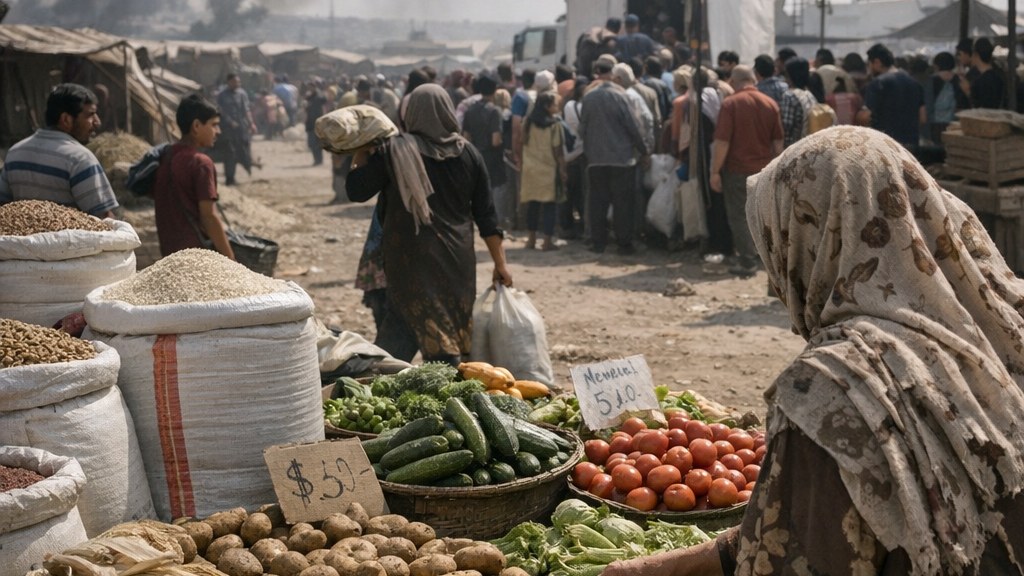
The concern is not only the price on global commodity exchanges. It is the price paid by families in local markets. In poorer households, food can take up a large share of income. Even a modest increase can mean less protein, fewer fresh foods or smaller meals.
Fertilizer has become one of the clearest examples of food-system fragility. It is essential for high yields in many farming systems, but production and trade are closely tied to energy markets and a limited number of exporters.
Market monitors in May 2026 showed renewed pressure from disrupted fertilizer supplies, higher energy costs and higher logistics costs. Crop conditions for major staples such as wheat, maize, rice and soybeans were broadly favorable in late April. Yet higher input prices can still weaken the outlook for later seasons.
Farmers often make planting decisions months before harvest. If fertilizer becomes too costly or hard to obtain, the effect may show up later in smaller harvests. That delay can make food crises harder to predict and harder to stop.
## Climate adds another layer of risk
Climate extremes are making the food chain less predictable. Drought can reduce wheat and maize harvests. Floods can destroy rice fields. Heat can harm livestock and lower worker productivity. Storms can damage ports, roads and storage sites.
These events do not need to hit every major producer at once to matter. A shock in one region can tighten export supplies. If governments then limit exports to protect domestic consumers, international buyers may face even higher prices.
The most vulnerable countries are often those with low reserves, weak currencies and high import needs. For them, a global price rise is not an abstract market signal. It can become a budget crisis, a nutrition crisis and a political crisis at the same time.
## What resilience looks like
A stronger food system does not mean every country must grow everything it eats. It means fewer single points of failure. That includes more diverse suppliers, better grain storage, healthier soils, reliable early warning systems and support for small farmers before a shock becomes a disaster.
Humanitarian aid remains vital in emergencies. But long-term resilience also depends on local production, rural roads, irrigation, social protection and open trade rules that reduce panic during shortages.
The global dinner table is not collapsing. It is still supplied by millions of farmers and workers every day. But the latest warning signs show that stability cannot be taken for granted.
AI Perspective
The main lesson is that food security is not only about harvest size. It also depends on peace, energy, trade, transport and household income. A resilient food system needs buffers before a crisis, not only emergency action after one begins.


-134c72da.webp)


-6c40e5ef.webp)

-1d29b0b2.webp)
-2721737f.webp)
-55bf1fe2.webp)
-9f154954.webp)