[[[SUMMARY_START]]]
Technology companies are spending heavily in 2026 to keep pace with artificial intelligence.
The main cost is no longer only software development. It is data centers, chips, power, security, talent, and management control.
Recent forecasts show record IT spending, but many companies are still working to prove clear returns from AI.
[[[SUMMARY_END]]]
The technology industry is entering a more expensive phase of the AI race. Companies are not only paying to build new tools. They are also paying to reduce uncertainty about demand, competition, computing power, regulation, and future business models.
## AI spending moves from experiment to infrastructureGlobal technology spending is expected to reach about $6.31 trillion in 2026, up 13.5% from 2025. The fastest growth is in data center systems, where spending is projected to rise by more than half and approach $788 billion.
That shift shows how the cost of uncertainty has changed. In earlier technology cycles, many companies could test new software with limited budgets. AI now often requires costly hardware, cloud capacity, data work, security checks, and skilled staff before a company knows how large the return will be.
The biggest cloud and internet platforms are spending at a scale that few other businesses can match. Recent industry estimates put combined 2026 capital spending by nine major cloud service providers at about $830 billion, up nearly 79% from the previous year. The spending is led by companies building large AI data centers in North America and Asia.
These investments are meant to secure access to chips, servers, networking equipment, land, and electricity. They also act as a hedge. If AI demand keeps rising, companies with capacity can win customers. If demand grows more slowly, some assets may take longer to pay off.
## Businesses want AI, but returns are uneven
The pressure is also reaching companies outside the largest technology platforms. A recent survey of more than 230 finance leaders found that 68% expect IT and digital transformation spending to increase over the next year. Many are funding targeted AI projects even as they watch costs more closely.
The challenge is that AI adoption is still uneven. In one 2026 survey of U.S. technology leaders, 46% said their companies had made strategic AI investments in core business capabilities. Only 31% said they were deploying AI at scale and delivering return on investment across multiple use cases.
That gap is important. Many companies have moved beyond simple pilots, but fewer have rebuilt business processes around AI. Common uses still include customer support, software coding help, document review, marketing content, fraud checks, and internal search. These can save time. They do not always change the economics of a whole business.
## Power and data centers become a boardroom issue
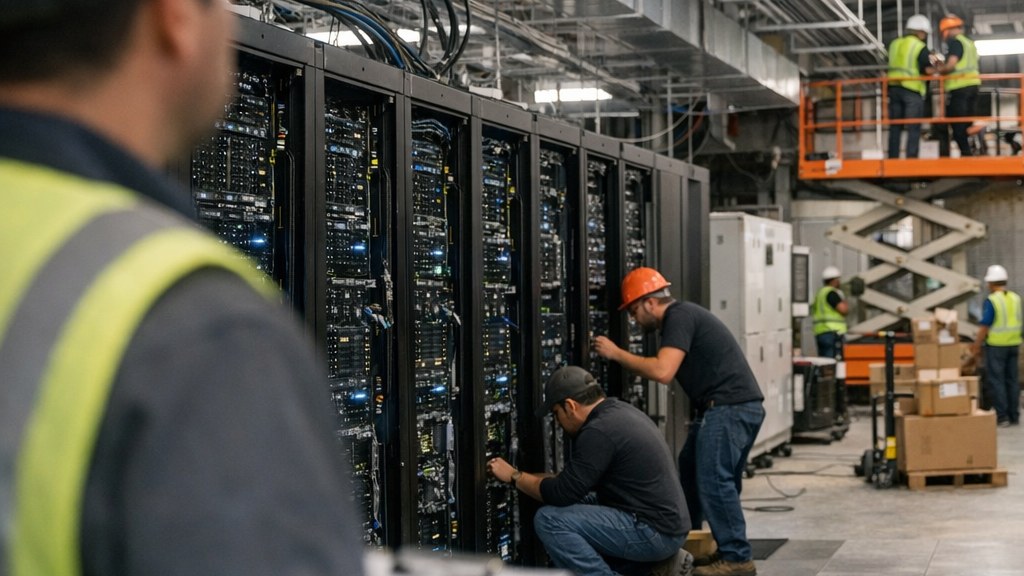
The new AI cost is also physical. Data centers need steady power, cooling, water access, fiber connections, and permits. Forecasts for 2026 point to strong growth in global data center power capacity, with AI demand as a major driver.
In the United States, electricity demand is rising after years of slower growth. Large computing facilities, including data centers, are now one of the factors shaping utility planning through 2027. This has made power availability a strategic concern for technology companies, local governments, and grid operators.
Some regions want the jobs and tax revenue that data centers can bring. Others are asking who should pay for grid upgrades, how much water should be used, and whether new demand could raise costs for households and smaller businesses. These questions are becoming part of the price of AI expansion.
## From speed to discipline
The current phase does not show a retreat from technology spending. It shows a search for discipline. Boards and finance teams are asking which AI tools reduce costs, which create revenue, and which mainly add complexity.
For chief information officers, the task is becoming more practical. They must manage cloud bills, select vendors, control data risks, and decide when to build custom AI systems or use standard products. Many are also adopting stricter measures for return on investment before expanding pilots into full production.
The result is a more cautious but still active market. Companies do not want to miss a major platform shift. They also do not want to spend heavily on systems that fail to scale. In 2026, that balance is the new cost of uncertainty.
AI Perspective
The AI race is becoming less about excitement and more about execution. The companies that benefit most may be those that connect spending to clear business needs, not those that simply spend the most. Uncertainty will remain, but better measurement can make it less costly.


-134c72da.webp)


-6c40e5ef.webp)

-1d29b0b2.webp)
-2721737f.webp)
-55bf1fe2.webp)
-9f154954.webp)