[[[SUMMARY_START]]]
Conflict, climate stress, hunger, debt and displacement are increasingly arriving together.
Recent global data shows high humanitarian needs, rising security spending and persistent economic strain.
The pattern is changing how governments, aid groups and communities plan for the future.
[[[SUMMARY_END]]]
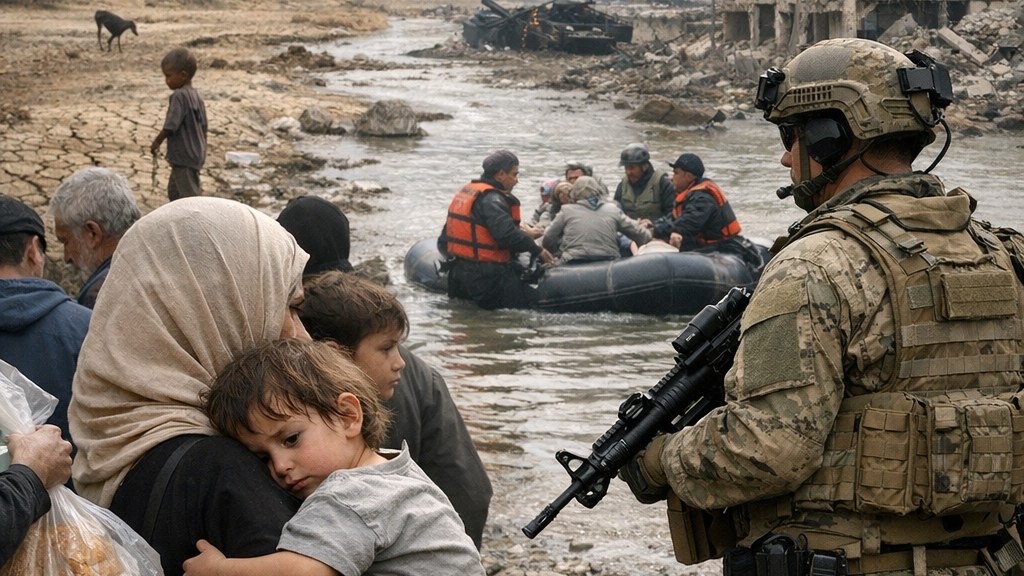
The phrase “age of permanent crisis” describes a world where emergencies no longer arrive one at a time, and where many societies are being forced to respond before they have fully recovered from the last shock.
## Crises now overlapIn 2026, the global crisis map is crowded. Wars are driving hunger and displacement. Climate extremes are damaging homes, crops and public services. High debt and slower growth are limiting the ability of governments to respond.
This does not mean every country is in collapse. It means that shocks are becoming harder to separate. A flood can hit a country already strained by food prices. A conflict can close trade routes and raise energy costs far from the battlefield. A health emergency can spread faster where people have been displaced and hospitals are weak.
Humanitarian agencies estimate that more than 239 million people face serious health risks in emergency settings this year. Aid plans have become more selective because funding has not kept pace with need. That has forced difficult choices about which services, countries and communities receive help first.
## Conflict is driving hunger and displacement
The clearest sign of the current era is the central role of conflict. The 2026 global food crisis assessment found that 266 million people in 47 countries faced high levels of acute food insecurity in 2025. Two-thirds of those people were concentrated in 10 countries: Afghanistan, Bangladesh, the Democratic Republic of the Congo, Myanmar, Nigeria, Pakistan, South Sudan, Sudan, Syria and Yemen.
Conflict remained the main driver of severe hunger. Famine was confirmed in Gaza and parts of Sudan in 2025, a rare and grave marker of system failure. In many places, violence has cut farmers off from fields, blocked markets, damaged roads and made aid delivery dangerous.
Displacement figures show the same pattern. By the end of 2025, 82.2 million people were living in internal displacement worldwide. That was slightly below the 2024 peak, but still one of the highest totals ever recorded. For the first time in the available record, new internal displacements linked to conflict and violence surpassed those caused by disasters. Conflict and violence caused about 32.3 million movements inside countries in 2025, while disasters caused about 29.9 million.
## Security spending is rising
Governments are also spending more on defense. World military expenditure reached about $2.887 trillion in 2025, the 11th straight annual increase. The global military burden rose to 2.5 percent of world GDP, its highest level since 2009.
The United States, China and Russia together accounted for just over half of global military spending. Europe recorded a sharp rise, driven by the war in Ukraine and wider rearmament. Asia and Oceania also saw higher spending as governments responded to regional tensions and uncertainty.
This spending reflects real security concerns. It also creates trade-offs. More money for defense can mean less room for social services, climate adaptation, debt reduction or emergency reserves, especially in countries already under fiscal pressure.
Climate change is no longer a separate future risk. It is now part of the operating conditions for governments, cities and households.
The years from 2015 to 2025 were the hottest 11 years on record. The year 2025 was the second or third warmest year ever measured, at about 1.43°C above the 1850-1900 average. Extreme heat, heavy rain, tropical cyclones, drought and wildfire continue to damage infrastructure and disrupt lives.
The effects are uneven. Wealthier countries often have stronger warning systems, insurance and public budgets. Poorer countries, and communities already affected by conflict, often face the same hazards with fewer protections.
## Economies have thinner cushions
The global economy has shown resilience, but the outlook remains fragile. The latest global growth projection puts expansion at about 3.1 percent in 2026 and 3.2 percent in 2027. That is below many pre-pandemic trends.
War, commodity price swings, trade tensions and high borrowing costs all weigh on governments and households. Inflation has eased in many places from its recent peaks, but price pressure has not disappeared. Food, fuel and housing remain sensitive points for families.
High public debt also limits policy choices. Many countries spent heavily during the pandemic and then faced energy and food shocks. Now they must manage higher interest costs while still funding schools, hospitals, infrastructure, climate protection and security.
## A new planning problem
The age of permanent crisis is not just a story about disasters. It is a planning problem. Old systems were often built to respond to emergencies as temporary events. The current pattern demands longer-term resilience.
That means stronger early warning systems, better local health care, safer infrastructure, social protection, climate adaptation and conflict prevention. It also means protecting basic public trust, because communities are more likely to cooperate during emergencies when institutions are seen as fair and capable.
The central challenge is simple but difficult: countries must prepare for several crises at once, while still trying to build normal life.
AI Perspective
The key takeaway is that crisis response can no longer be treated as short-term repair work. The same communities may face conflict, climate pressure, food insecurity and debt stress at the same time. Planning for resilience is becoming as important as reacting to emergencies.


-134c72da.webp)


-6c40e5ef.webp)

-1d29b0b2.webp)
-2721737f.webp)
-55bf1fe2.webp)