[[[SUMMARY_START]]]
Travel demand remains strong, but visitors are looking beyond the biggest capitals and resort hubs.
Smaller cities are benefiting from lower costs, easier access, and a desire for less crowded trips.
The shift may help spread tourism income more widely, if local services and housing are protected.
Major destinations are still powerful, but many travelers now want deeper, slower journeys.
[[[SUMMARY_END]]]
Smaller cities are moving closer to the center of global tourism as travelers seek value, space, and more local experiences after years of record demand in famous destinations.
International tourism has returned to full strength. Global international arrivals reached about 1.52 billion in 2025, up 4% from 2024. Export revenues from international tourism were estimated at about $2.2 trillion.That growth is good news for many economies. It also adds pressure to cities already coping with crowded streets, strained public transport, rising housing costs, and frustrated residents. In this setting, smaller and mid-sized cities are becoming more important to the future of travel.
## A Shift Away From the Same Hotspots
For decades, many international trips were built around a short list of famous places. Paris, Rome, Barcelona, New York, London, Venice, Tokyo, and Bangkok remain powerful draws. They have airports, hotels, museums, restaurants, and global name recognition.
But the next phase of tourism is not only about those places. Travelers are showing more interest in second stops, regional cities, and quieter urban centers near major hubs. Examples include Reims as an add-on to Paris, Girona near Barcelona, Brescia near Milan, Fukuoka beyond Tokyo, and Santa Barbara outside Los Angeles.
These places offer recognizable culture without the same level of crowding. They often have lower hotel prices, shorter lines, and easier access to local food, markets, neighborhoods, and public spaces. For many visitors, that can make a trip feel more personal and less rushed.
Recent travel surveys show the change clearly. More than half of surveyed European travelers in 2025 said they were seeking less popular or off-the-beaten-path destinations. Another large global survey found that 63% of consumers were likely to visit a lesser-known “detour” destination on their next trip.
## Overtourism Is Changing City Policy
The rise of smaller cities is also linked to a problem in larger destinations: tourism pressure. In Barcelona, city planning documents show that most residents still see tourism as economically useful. But they also show rising concern about crowding, price increases, and pressure on daily life. More than 60% of surveyed residents said the city had reached its tourism capacity limit.
Similar tensions have appeared in parts of Spain, Italy, Japan, Greece, and other high-demand destinations. The issue is not tourism itself. It is the concentration of too many visitors in the same neighborhoods, streets, beaches, and historic sites at the same time.
Governments are responding in different ways. Some are limiting short-term rentals. Others are raising visitor fees, controlling cruise arrivals, managing crowd flows, or promoting alternative routes. Japan’s tourism strategy has placed emphasis on sustainable destinations, regional attraction, and increasing nights spent outside the main urban centers.
## What Smaller Cities Can Offer
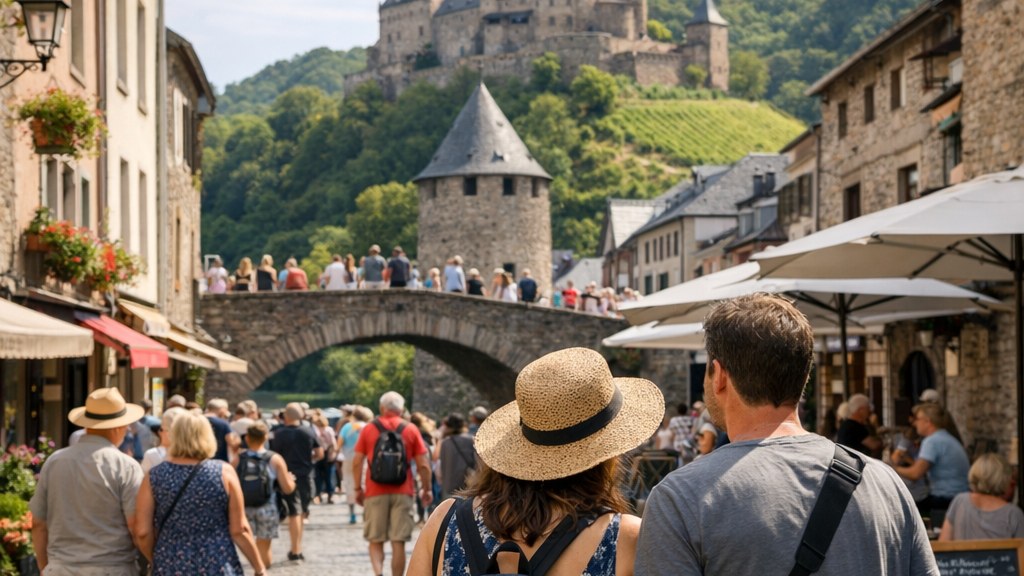
Smaller cities do not need to copy capitals to succeed. Their advantage is often scale. A compact historic center, a strong food identity, a university, a festival, a riverfront, a local craft tradition, or access to nearby nature can be enough to attract travelers who want a slower pace.
Cities such as Bologna, Porto, Ghent, Ljubljana, Oaxaca, Kanazawa, and Savannah show how smaller urban destinations can build strong identities. They offer culture and walkability without relying only on large monuments or luxury shopping.
Good transport matters. Rail links, regional airports, bus networks, bike routes, and clear visitor information can turn a secondary city into an easy choice. Travelers are more likely to add a smaller city when it is simple to reach and simple to understand.
Digital tools are helping, too. Online maps, short-form video, booking platforms, and AI trip planners make it easier for travelers to discover places that once depended on guidebooks or word of mouth.
## Growth Brings Risks Too
Smaller cities are not automatically protected from the problems seen in larger destinations. A sudden rise in visitors can still affect rents, local businesses, public space, waste systems, and transport.
The difference is that many smaller cities still have time to plan. They can set rules before growth becomes unmanageable. They can protect housing, support local ownership, improve public transport, and encourage visitors to stay longer rather than pass through quickly.
The strongest tourism model for smaller cities may not be based on maximum arrivals. It may be based on better value: longer stays, local spending, cultural respect, and benefits that residents can see.
Major cities will remain central to global travel. But the future is likely to be more distributed. Travelers want famous places, but many also want room to breathe. Smaller cities are increasingly ready to meet that demand.
AI Perspective
The rise of smaller-city tourism shows that travelers are becoming more selective. People still want culture and beauty, but they also want comfort, value, and a sense of connection. The best results will come when cities grow tourism at a pace that also works for residents.


-134c72da.webp)


-6c40e5ef.webp)

-1d29b0b2.webp)
-2721737f.webp)
-55bf1fe2.webp)
-9f154954.webp)