[[[SUMMARY_START]]]
Many people say the years now seem to pass more quickly than they once did. Research points to a mix of aging, routine, digital overload, and constant interruption.
Daily life is packed with alerts, messages, and shifting tasks. That can blur one day into the next and leave people feeling busy without feeling grounded.
Experts say the feeling is real, even if clock time has not changed. The way people remember, attend, and organize life helps shape how fast time seems to move.
[[[SUMMARY_END]]]
Modern life often feels rushed, compressed, and hard to hold onto. Weeks disappear. Months blur together. Many people feel they are always catching up, even when they are doing ordinary things like answering messages, commuting, shopping, or planning a weekend.
That feeling is not just a cultural cliché. Research across psychology, neuroscience, and workplace studies suggests that time can seem to speed up for several reasons at once. Some are tied to aging and memory. Others are linked to digital habits, constant interruption, and the spread of work into more hours of the day.
Human beings do not experience time in a simple, mechanical way. The brain tracks events, change, attention, and memory. That means a day can feel slow while it is happening, but later seem short in memory. It also means a routine month may leave a weaker impression than a month filled with new places, people, or tasks.
This helps explain a familiar pattern. Childhood often feels long in retrospect because early life contains many firsts. New schools, new friendships, new skills, and new environments create rich memories. Adult life often becomes more structured. Work schedules, repeated chores, and settled routines can make long stretches of time feel less distinct when people look back on them.
Recent work on time perception and aging continues to support that broad idea. Studies suggest that with age, people may register fewer clearly separated mental events, which can make periods of life feel more compressed in memory. Researchers also note a simple proportional effect: one year is a much larger share of a child’s life than of a middle-aged adult’s life.
## Digital life fills attention with fragments
The modern environment adds another layer. Phones, watches, laptops, messaging apps, streaming platforms, and social feeds compete for attention all day. Many of these systems are built around short, frequent checks. Even when each interruption is small, the result can be a day broken into many fragments.
Workplace research in recent years has described growing concern about digital overload, techno-stress, and the strain caused by too many apps, meetings, notifications, and communication channels. Employees report feeling pressure to stay responsive, keep up with information, and switch quickly between tasks. That can create a strong sense of acceleration, even when total output does not rise in the same way.
The issue is not screen use alone. Large comparative studies have found that the effect of screen time depends on context and balance. Purposeful digital use can support social connection, convenience, and access to information. But heavy or poorly balanced use is often linked with lower well-being, worse sleep, more stress, and a weaker sense of control over daily life.
## Busyness is not the same as fullness
One reason modern life feels fast is that many people live in a state of continuous partial attention. They are not fully resting, but not fully immersed either. A person may move from email to chat, from a short video to online shopping, from a work meeting to family logistics, all within an hour. The day becomes crowded, but not always memorable.
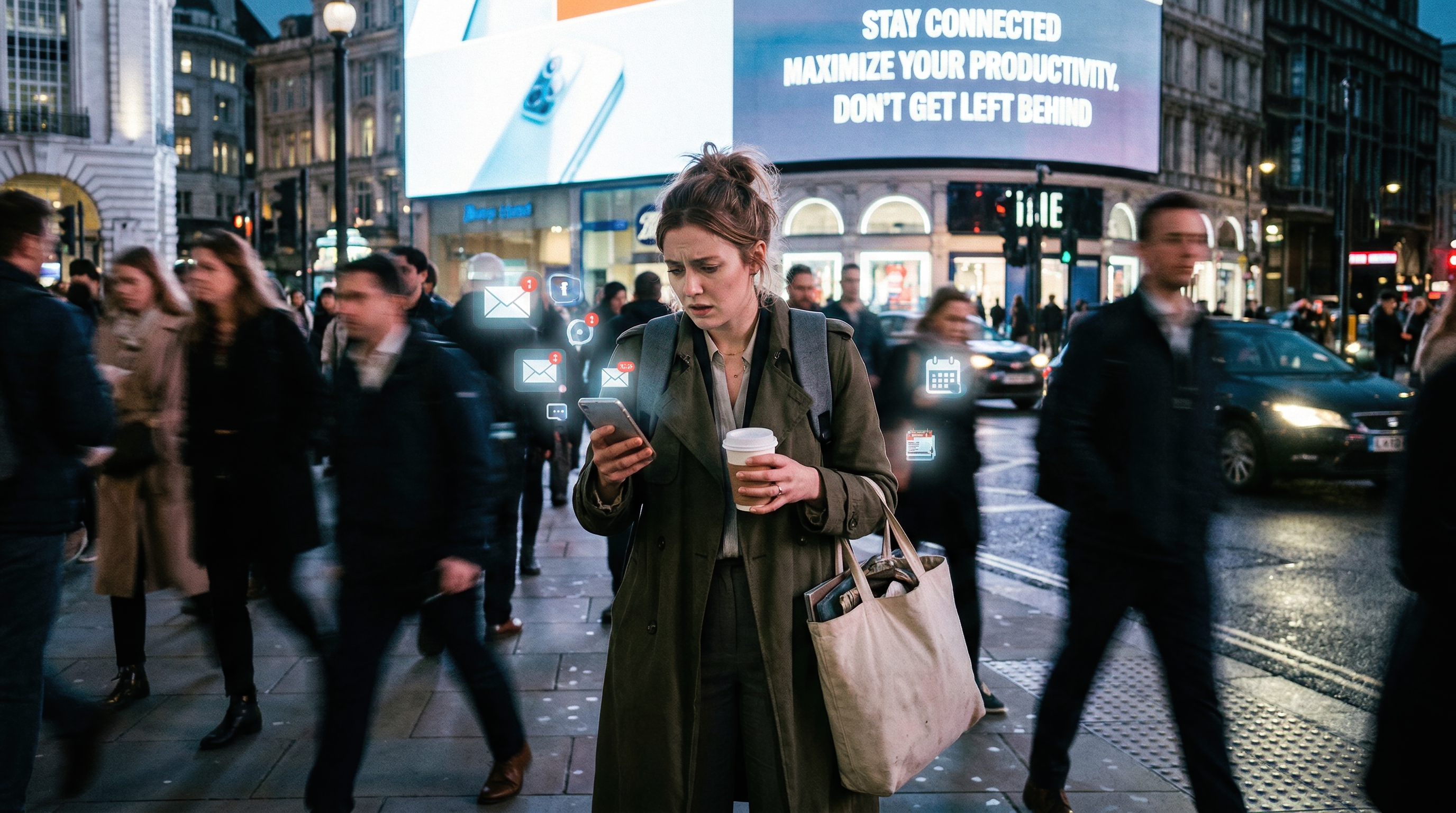
Research on memory and isolation offers an important clue here. Studies have found that unique events can enrich memory and change how time is experienced. Novel experiences can make life feel more textured. They may not slow the clock, but they can make periods of life feel larger and more substantial afterward.
That may help explain why vacations, major life events, and meaningful social gatherings often feel different from routine weeks. They create stronger markers in memory. By contrast, a month dominated by repetitive work and endless small digital tasks may feel both exhausting and strangely empty.
## Work, home, and leisure now bleed together
Another force is the weakening of boundaries. In many jobs, digital tools have made it easier to work from almost anywhere. They have also made it easier for work to remain present after office hours. Messages arrive at night. Group chats stay active. Personal time is often interrupted by administrative tasks, updates, or low-level worry about what has been missed.
This does not affect everyone in the same way, but the pattern is widespread enough to shape the culture of time itself. When fewer parts of the day feel clearly separate, life can seem like one long stream of obligation. The pace may feel faster because there are fewer clean pauses.
At the same time, people are expected to process more information than in earlier eras. Shopping, travel, news, health, finance, school, and social life all now generate a steady flow of prompts and decisions. Convenience has grown, but so has cognitive load.
## Why the feeling matters
The sense that life is speeding up is not only poetic. It can shape mental health, attention, and satisfaction. When people feel time is always slipping away, they may become more anxious, more distracted, or less able to notice what is happening around them.
The research does not point to one single cause. Instead, it suggests a layered answer. Aging changes how life is remembered. Routine compresses memory. Digital systems fragment attention. Constant connectivity weakens boundaries. Together, these forces can make modern life feel faster than ever, even though each day still contains the same 24 hours.
AI Perspective
The modern feeling of speed seems to come less from time itself and more from how attention is used and how memory is formed. A crowded day can still feel strangely hollow if it is broken into too many small pieces. That makes the quality of experience, not just the quantity of activity, an important part of how people live through time.


-134c72da.webp)


-6c40e5ef.webp)