[[[SUMMARY_START]]]
Southeast Asian governments are giving nuclear power fresh attention as electricity demand rises with the expansion of AI-focused data centers. Malaysia, Indonesia, Vietnam and the Philippines are all studying or reviving nuclear options, while Singapore’s tight power limits are pushing more digital infrastructure into nearby markets. The shift reflects a wider search for stable, low-carbon electricity, but major questions remain over cost, safety, regulation and timing.
[[[SUMMARY_END]]]
Nuclear power is getting a new look in Southeast Asia as governments try to prepare for a sharp rise in electricity demand from artificial intelligence data centers.
The region has become an increasingly important destination for server farms, cloud facilities and chip-linked digital infrastructure. That growth is bringing jobs and investment, but it is also putting new pressure on power grids that are already stretched in some markets.
In response, several countries are revisiting long-delayed nuclear plans, with a growing focus on small modular reactors as well as larger conventional plants.
Malaysia has emerged as one of the clearest examples. Johor, just across the border from Singapore, has attracted a wave of data center projects and cloud investment. The state has become one of the region’s fastest-growing digital infrastructure clusters, but that expansion has also raised concern about electricity supply, water use and the pace of grid upgrades.
Singapore remains a major regional digital hub, yet its limited land and constrained power system have encouraged a more selective approach to new data center capacity. That has pushed developers and technology groups to look more closely at nearby locations in Malaysia, Indonesia and other parts of Southeast Asia.
Against that backdrop, governments are again weighing nuclear energy as a possible source of round-the-clock electricity. The appeal is clear: AI data centers need large and steady power supplies, and nuclear plants can in theory provide reliable low-carbon generation at scale.
## Countries move at different speeds
Indonesia has taken some of the most concrete recent steps. Nuclear power has been included in its long-term energy planning, and officials have said the country is preparing for nuclear capacity to be built in stages in the next decade. Public statements in early 2026 pointed to a goal of developing several gigawatts of nuclear capacity by 2034, with small modular reactors often mentioned as one of the most practical options for an archipelago with many separate grids.
Vietnam is also moving more quickly than it was a few years ago. After shelving earlier nuclear plans in 2016, it has revived the policy and in 2025 gave nuclear power renewed strategic backing. In March 2026, Vietnam and Russia signed an agreement tied to the development of a nuclear power plant, underscoring Hanoi’s effort to diversify its future energy mix as power demand rises.
The Philippines remains a special case because it already has the long-idled Bataan nuclear plant, completed decades ago but never put into service. The country has continued to study whether Bataan could be revived or whether new nuclear projects, including small modular reactors, would be more realistic. Over the past year, the Philippines has also strengthened parts of its nuclear governance framework, a step seen as necessary before any commercial program can move ahead.
Malaysia has not committed to a commercial nuclear build, but interest has clearly increased as it positions itself as a regional hub for AI and cloud computing. Nuclear, including small modular designs, is now more openly discussed as part of the long-term energy conversation, especially as the scale of future data center demand becomes harder to ignore.
Thailand has also been part of the broader regional discussion, including technical and policy work around small modular reactors, though it is still at an earlier stage than the most active countries.
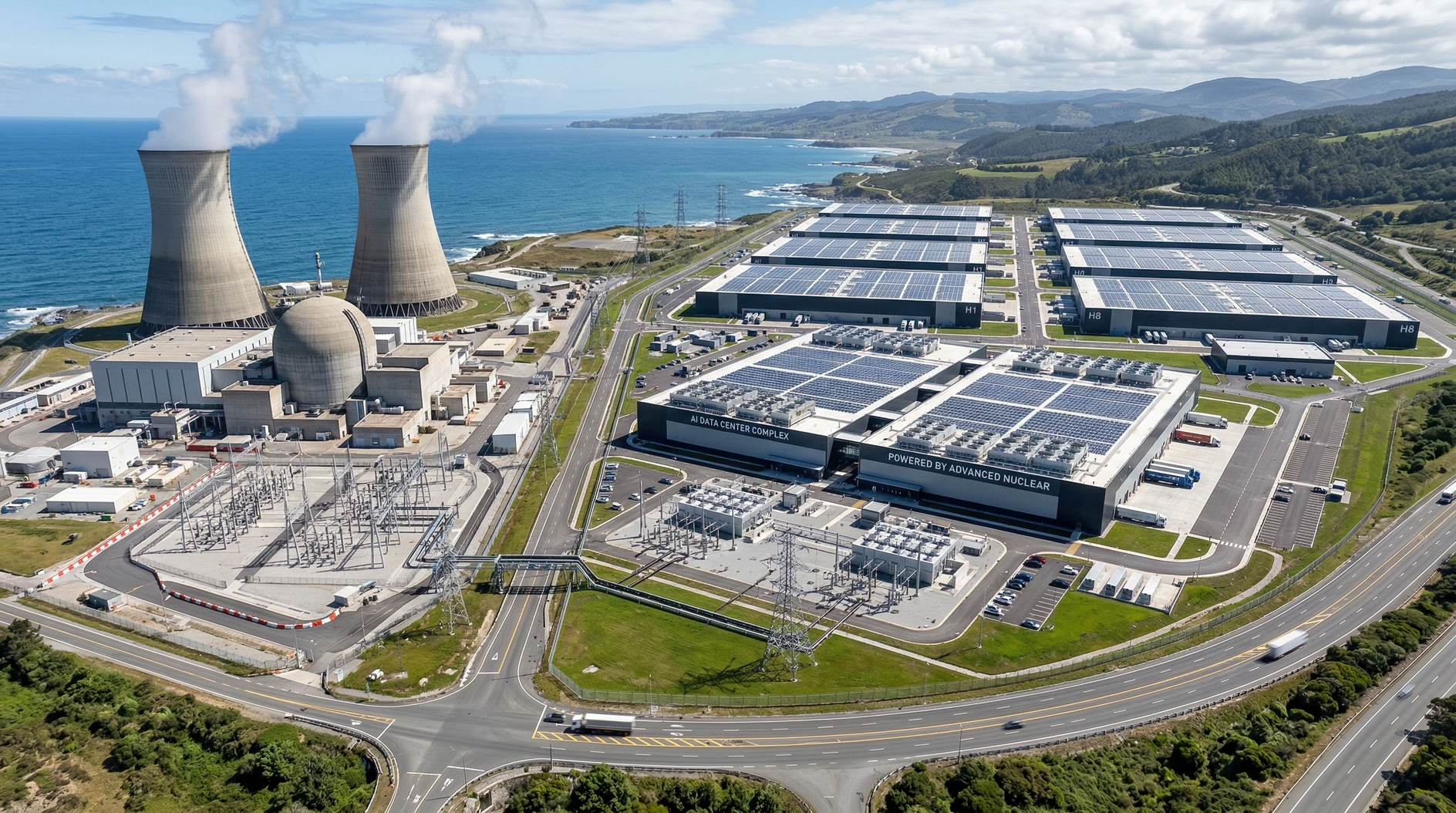
AI infrastructure is helping change the energy conversation because its power needs are unusually high. Training and running advanced AI systems requires dense clusters of servers and cooling systems that can consume far more electricity than traditional enterprise computing.
Industry and energy researchers have warned that planned large data centers now represent a growing share of future power demand worldwide. In Asia-Pacific, the problem is not just generation. Transmission lines, substations, transformers and water systems can all become bottlenecks.
That matters in Southeast Asia, where many economies are still expanding rapidly and where fossil fuels continue to make up a large part of the power mix. Governments want more digital investment, but they also want to avoid locking in even more coal- and gas-heavy electricity over the long term.
Nuclear power offers one possible answer, yet it is not a quick fix. Large reactors take many years to finance, license and build. Small modular reactors are promising on paper, but they are still at an early commercial stage in most of the world. Countries also need stronger regulators, trained workforces, public trust and clear rules for waste and emergency planning.
## A long-term choice, not a near-term solution
For now, Southeast Asia’s nuclear revival is better understood as a long-term strategic shift than as an immediate answer to AI demand. Gas, solar, transmission upgrades, battery storage and efficiency measures are still likely to do more of the short-term work.
Even so, the direction of travel is becoming clearer. As data centers spread across the region and AI raises the value of dependable electricity, nuclear power is moving back into policy debates that had been quiet for years.
Whether that leads to operating reactors this decade will depend on each country’s politics, financing and regulatory readiness. But the pressure behind the discussion is real, and it is coming not only from climate goals or energy security, but also from the basic power needs of the digital economy.
AI Perspective
This story shows how AI is no longer only a technology issue. It is also becoming a power and infrastructure issue. In Southeast Asia, the real test will be whether governments can expand electricity supply in a way that is reliable, affordable and trusted by the public.


-134c72da.webp)


-6c40e5ef.webp)