[[[SUMMARY_START]]]
Indoor green walls are moving beyond decoration as new web-based tools help building teams monitor water, light and plant health from a dashboard. The shift is linking living walls to sensors, automated irrigation and building management goals. Supporters say that can make plant walls easier to run at scale, though experts note that real performance depends on design, upkeep and the conditions inside each building.
[[[SUMMARY_END]]]
Indoor green walls have long been used to soften offices, hotels and public buildings with a layer of living plants. Now a growing set of web-based tools is changing how those walls are managed. Instead of relying only on manual checks, building teams can use online dashboards to follow moisture levels, irrigation, lighting and maintenance needs across one site or many.
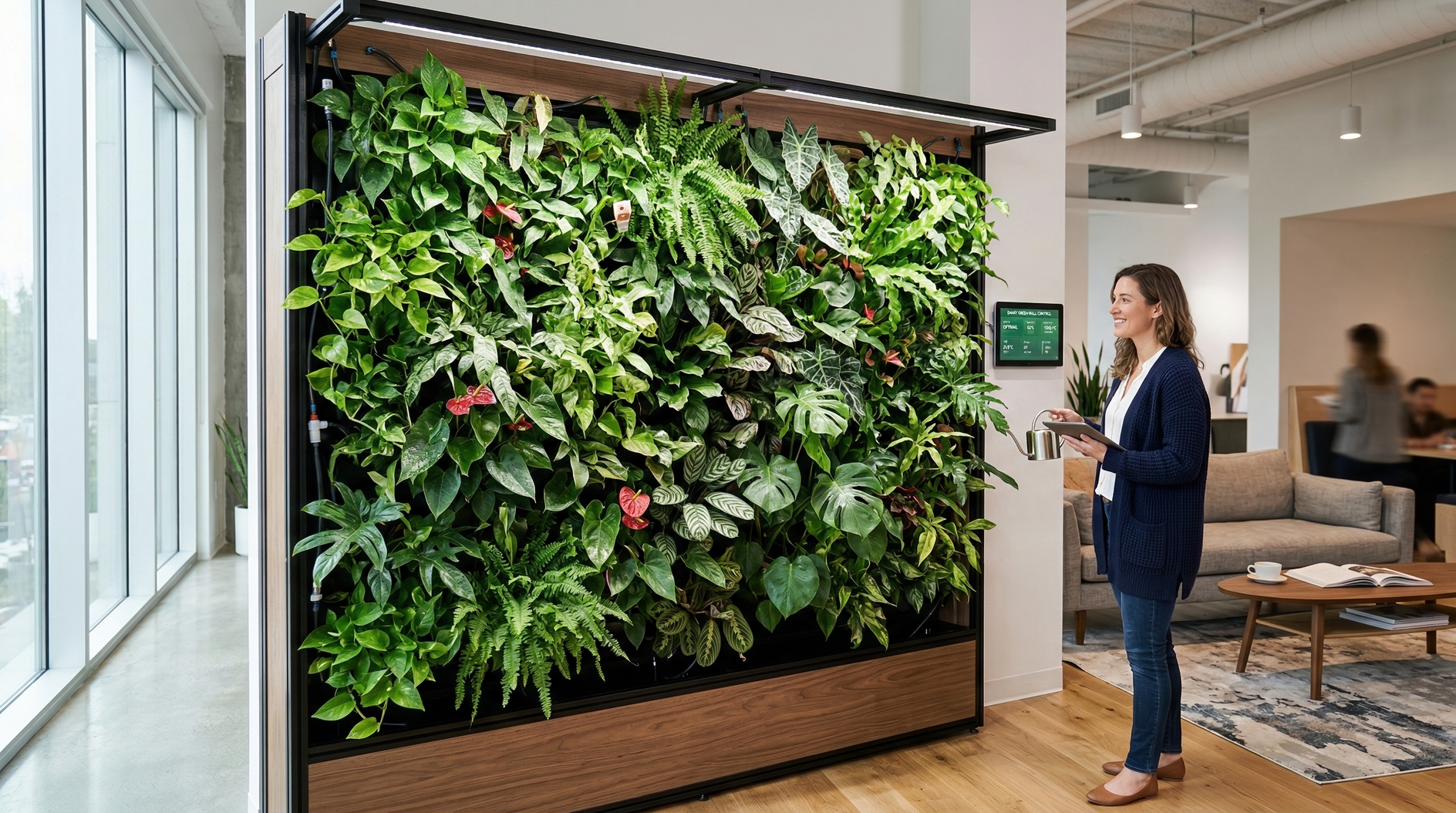
For years, indoor green walls were often treated as design features first and building systems second. They brought color, texture and a sense of nature into lobbies, meeting areas and corridors. But they could also be hard to maintain. Plants do not thrive on appearance alone. They need the right balance of water, light, nutrients and air movement, and those conditions can shift quickly inside large buildings.That is where web applications are starting to change the picture. New platforms connect plant walls to sensors, pumps and irrigation controls, then show the data in a browser-based dashboard or mobile interface. In practical terms, that means a facilities team can see when a reservoir is low, whether a growing zone is too dry, or when one wall is performing differently from another.
## From ornament to operating system
The technology behind these systems is not especially mysterious. It usually combines moisture or water-level sensors, automated irrigation, timers, remote alerts and a cloud-based control panel. Some companies now market indoor living walls with app-based monitoring, remote management and analytics as standard features rather than premium extras.
This matters because maintenance has long been one of the biggest barriers to wider use. A plant wall may look simple from the outside, but behind it sits a small ecosystem. Pumps can fail. Drainage can clog. Light conditions vary across a wall. Plant species respond differently to indoor heat and humidity. A web platform does not remove those risks, but it can make problems visible earlier and help service teams respond faster.
In large portfolios, that could be especially useful. An office operator or hotel group may have several living walls in different cities. A shared dashboard can help central teams compare conditions, track maintenance visits and spot recurring issues before plants visibly decline. That changes the green wall from a one-off feature into something closer to managed infrastructure.
## Why building owners are interested
The appeal is not only visual. Indoor green walls sit at the intersection of design, wellness and sustainability. Research on living walls suggests they may support better humidity control, help with acoustic comfort and improve how occupants perceive a space. Some studies also report benefits for indoor air quality and well-being, although results vary and depend heavily on wall size, plant choice, airflow and the surrounding ventilation system.
That caution is important. Green walls are sometimes marketed as if they can solve indoor air problems on their own. In reality, specialists say performance depends on careful design and realistic expectations. A living wall can contribute to a healthier and more pleasant interior, but it is not a simple substitute for good ventilation, filtration and routine building maintenance.
## A growing role in smart buildings
The wider building industry is also changing around these systems. Facilities teams are already used to web dashboards for lighting, heating, cooling and energy use. Green wall software fits naturally into that environment. It can become one more layer in a building’s digital management stack, with alerts, maintenance logs and performance records available remotely.
That integration may help living walls gain more credibility with property managers, who often need clear operating data before approving new features. If a plant wall can be monitored like other building assets, it becomes easier to justify in day-to-day operations. It also helps reduce one of the oldest fears around indoor planting: that a neglected wall will quickly become a costly problem.
There is also a cultural shift at work. In many modern interiors, people want signs of life, not only polished surfaces and screens. A smart living wall answers both impulses. It offers greenery and softness, but it also comes with the data, controls and traceability that building managers expect.
## Living systems, not just living decor
The result is a subtle but important reframing. Indoor green walls are no longer only decorative backdrops for reception desks and atriums. With web-based monitoring and automation, they are starting to be treated as living systems that require oversight, generate useful data and contribute to how a building feels and functions.
That does not mean every building needs one, or that every installation will succeed. Plants remain plants. They need good care, sound design and suitable indoor conditions. But smarter digital tools are making it easier to give them that support.
As cities look for gentler, healthier and more memorable interiors, that combination of biology and software is likely to become more common. The green wall is still a wall of plants. But in a growing number of buildings, it is also becoming part of the operating logic of the space itself.
AI Perspective
This story shows how digital tools can help nature work better indoors, not replace it. The most interesting shift is practical: plants are being managed with the same care and data that buildings already use for other systems. If that continues, green walls may become a more dependable part of everyday architecture rather than a fragile luxury.


-134c72da.webp)


-6c40e5ef.webp)