[[[SUMMARY_START]]]
NASA’s Artemis II mission has launched from Florida, sending four astronauts on a 10-day trip around the Moon and back.
The flight is the first crewed mission of the Artemis program and the first human lunar voyage in more than 50 years.
The crew includes three NASA astronauts and one Canadian astronaut, reflecting the mission’s international role.
The test flight is designed to prove the rocket, spacecraft, and operations needed for later missions deeper into lunar exploration.
[[[SUMMARY_END]]]
Artemis II has begun with a successful launch from Kennedy Space Center in Florida, starting NASA’s first crewed journey around the Moon since the Apollo era. The mission sent four astronauts into space aboard the Space Launch System rocket and Orion spacecraft on April 1, 2026. It is a major test flight for the systems that NASA plans to use in future lunar missions.
The launch marks a major milestone for human spaceflight. Artemis II is the first time astronauts have flown on NASA’s Space Launch System, or SLS, and the first crewed flight of the Orion spacecraft. NASA describes the mission as a key step toward returning humans to the Moon on a sustained basis and preparing for later missions beyond low Earth orbit.The four-person crew is led by commander Reid Wiseman and pilot Victor Glover. Mission specialists are Christina Koch and Jeremy Hansen of the Canadian Space Agency. Their flight around the Moon and back is expected to last about 10 days.
The mission lifted off from Launch Complex 39B at Kennedy Space Center during an evening launch window on April 1. The launch came after final rollout, pad work, and crew quarantine in late March. NASA had targeted early April launch opportunities after earlier scheduling changes tied to technical work and readiness checks.
## A crew with several firsts
The flight stands out not only because it returns astronauts to lunar-distance travel, but also because of who is on board. Victor Glover is the first Black astronaut assigned to a lunar mission. Christina Koch is the first woman to fly on a mission around the Moon. Jeremy Hansen is the first Canadian set to travel to the Moon.
That mix gives Artemis II symbolic weight as well as technical value. Unlike the Apollo missions, which were carried out by all-male American crews, Artemis II reflects a broader international and generational shift in human space exploration.
The mission is not intended to land on the Moon. Instead, it is a high-stakes test of the spacecraft, rocket, ground systems, and crew operations during a deep-space voyage. Engineers and mission planners want to confirm that Orion can support astronauts safely beyond Earth orbit and bring them home after the trip.
## What the mission will test
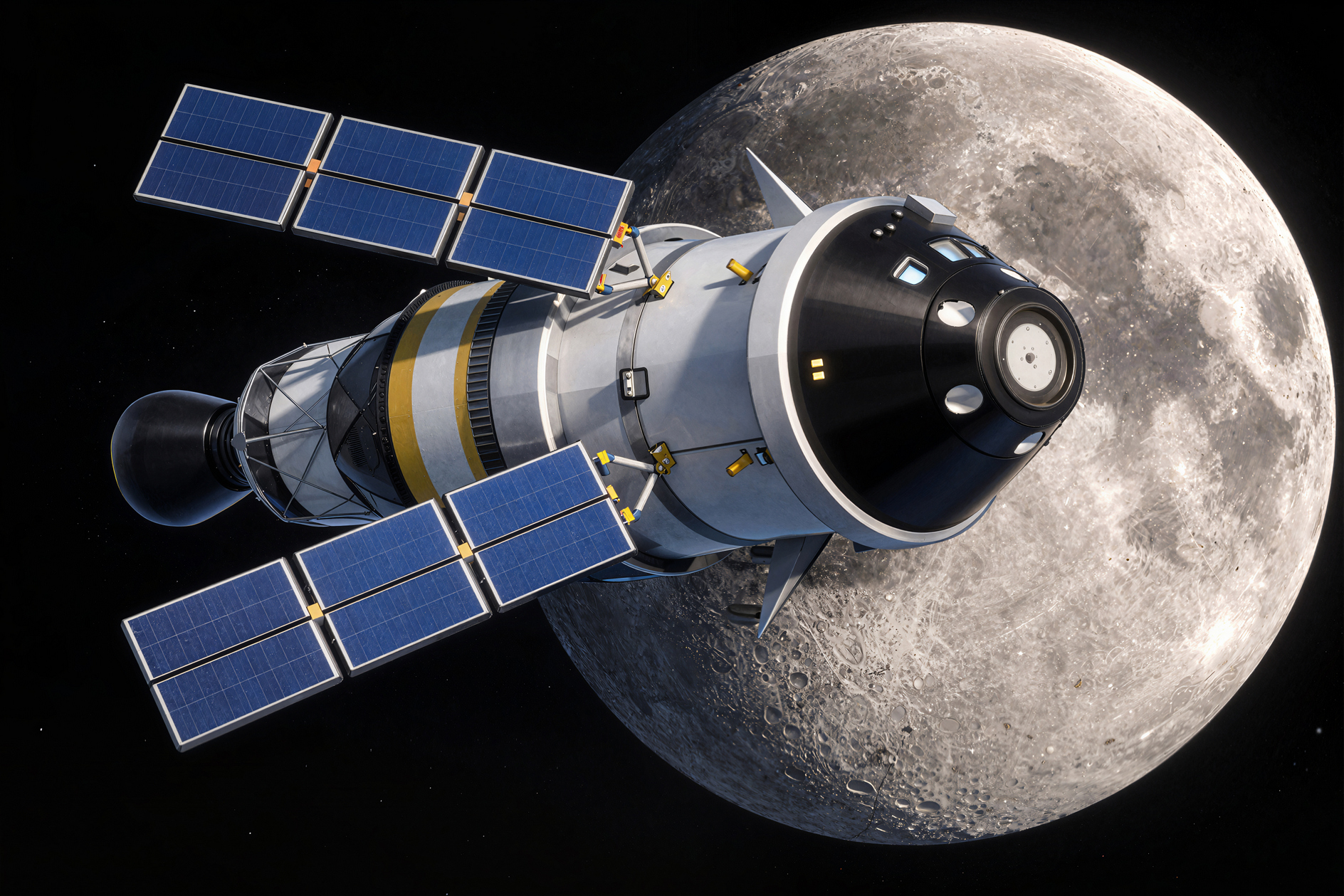
NASA has said Artemis II builds directly on Artemis I, the uncrewed test flight that sent Orion around the Moon in 2022. That earlier mission demonstrated that the spacecraft could make the journey without astronauts. Artemis II now adds the human element, which is essential before later missions attempt more ambitious goals.
The mission also carries scientific and operational value. NASA has said the crew will work with teams on the ground to support investigations linked to human health and deep-space travel. These lessons are expected to help shape later missions to the Moon and, over the longer term, Mars.
## Part of a larger lunar program
Artemis II is one mission inside a broader effort to rebuild regular human exploration beyond Earth orbit. The Artemis program aims to develop a long-term presence at and around the Moon, using new spacecraft, new landing systems, and international partnerships.
In recent planning updates, NASA adjusted the order and design of some future Artemis missions. Even so, Artemis II remains the first major crewed test of the system and an important proof point for the wider program. Its success matters not only for the next flight, but for the credibility of the larger strategy.
Public interest has been strong around the launch. Large crowds gathered along Florida’s Space Coast to watch the rocket rise from the same general area used for Apollo-era lunar missions. The moment connected a new generation of astronauts and engineers with a legacy that has shaped spaceflight for decades.
For now, the focus is on the crew’s trip around the Moon and safe return to Earth. If the mission goes as planned, Artemis II will stand as the clearest sign yet that human lunar exploration has entered a new phase.
AI Perspective
Artemis II matters because it turns years of planning and testing into a real human mission beyond Earth orbit. It also shows how space exploration now blends national ambition with international partnership. If the flight performs well, it could give the Moon a more regular place in human spaceflight again.


-134c72da.webp)


-6c40e5ef.webp)