[[[SUMMARY_START]]]
Europe is becoming a central supplier of the hardware and services needed for lunar travel. Its service modules already provide power, propulsion, air and water for Orion missions, while new projects will add habitat space, communications, refueling and cargo delivery around and on the Moon.
Taken together, these systems show that Europe’s role in lunar exploration is no longer limited to science instruments. It is helping build the transport, support and communications network for repeated journeys between Earth, lunar orbit and the surface.
[[[SUMMARY_END]]]
Europe’s role in returning humans to the Moon is no longer a supporting detail. It is becoming part of the core system that will carry crews out from Earth, keep them alive in deep space, and help them work in lunar orbit and on the surface.
The clearest example is the European Service Module, the section attached to NASA’s Orion spacecraft. Built in Europe for the Artemis program, it provides propulsion, electrical power, thermal control, and key life-support supplies such as water and air for the crewed flights around the Moon and back to Earth.
ESA says the module is the “powerhouse” of Orion. It carries solar arrays for electricity, tanks for fuel and water, and the engines that guide, steer and propel the spacecraft. Recent ESA mission material says the module uses 33 engines in total, making it the propulsion heart of the vehicle for the outbound trip and the journey home.
## The engine room behind Orion
The service module is one of the most visible European contributions to lunar exploration because it is mission-critical from launch through return. Without it, Orion would not have the power, maneuvering ability, consumables, or temperature control needed for long trips beyond low Earth orbit.
Europe’s contribution is also continuing beyond a single flight. Additional service modules are being built for later Artemis missions. The hardware planned for Artemis III will support the lunar campaign aimed at the Moon’s south polar region. Another is set to help Artemis IV, when Orion is due to carry astronauts to the Gateway station in lunar orbit.
## Building the next layer: living and working near the Moon
Europe’s role expands further at Gateway, the outpost planned for orbit around the Moon. ESA is providing Lunar I-Hab, a habitation module that will give astronauts living space, sleeping areas, dining functions, experiment capacity and several docking ports. ESA lists its habitable volume at about 10 cubic metres, with Gateway as a whole designed to support up to four astronauts for stays of as long as 90 days when combined with other modules.
Lunar I-Hab is scheduled to travel on Artemis IV. ESA says Orion and its European Service Module will propel this module toward Gateway, where it will join other elements already in lunar orbit. That means Europe is not only helping crews reach the Moon, but also helping build the place where they may live and work once they get there.
Another European Gateway contribution is the ESPRIT system, now split into elements called Lunar Link and Lunar View. Lunar Link is designed to handle high-speed communications between Gateway and the Moon. Lunar View is intended to bring refueling capacity, including xenon and chemical propellants, to help extend the station’s working life.
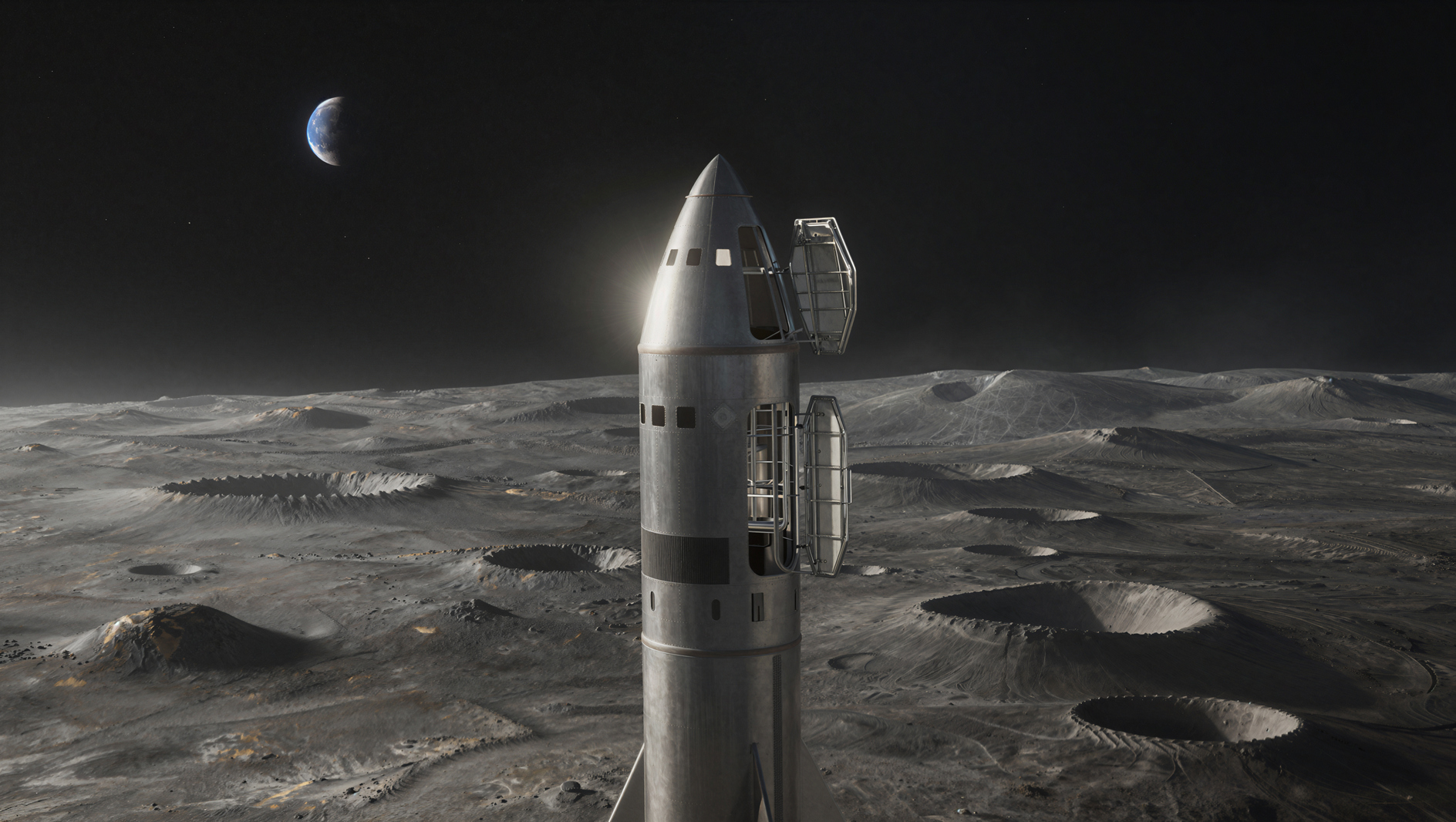
The long-term strategy goes beyond spacecraft hardware. Europe is also developing Moonlight, a lunar communications and navigation program meant to create a dedicated service network around the Moon. ESA says the system is intended to support high-speed communications, data transfer, precise navigation, autonomous landings and surface mobility.
A precursor satellite called Lunar Pathfinder is being assembled in Britain. ESA has said it is intended to begin operations in 2026 and serve as an early step toward the wider Moonlight network. If that network is completed, future astronauts, rovers and landers would no longer need to rely only on direct links or mission-by-mission navigation setups.
Europe is also preparing for direct cargo delivery to the lunar surface through Argonaut, its first lunar lander program. ESA signed the main contract for the Argonaut Lunar Descent Element in January 2025. The agency says the lander is meant to give Europe autonomous and regular access to the Moon from the start of the next decade, with the first descent element to be delivered in 2030 and a first operational mission expected in 2031.
Argonaut is designed to carry infrastructure, science payloads, rovers and supplies such as food, water and air. ESA says it should be able to survive lunar day and night for five years. That points to a broader European aim: not just helping crews travel to the Moon, but helping sustain a repeated presence there.
## A larger role in a shared lunar program
Taken together, these projects show a clear pattern. Europe is supplying the systems that power travel, support crews, connect missions, refuel stations and move cargo. Some of those systems are already flying. Others are still in assembly or development and remain subject to schedule changes that are common in spaceflight.
But the direction is clear. The journey to the Moon and back is being built as an international architecture, and Europe is providing several of the pieces that make that architecture work.
AI Perspective
Europe’s lunar role now looks practical as much as symbolic. It is helping provide the power, logistics and communications that make repeated missions possible. That matters because long-term exploration depends on reliable systems, not just single launches.


-134c72da.webp)


-6c40e5ef.webp)