[[[SUMMARY_START]]]
Much of daily life is guided by forces people rarely see. Algorithms sort information, microbes support health, pollution affects bodies, and supply chains set what reaches store shelves. These hidden systems are not abstract. They influence prices, work, food, health, and the rhythm of ordinary days.
[[[SUMMARY_END]]]
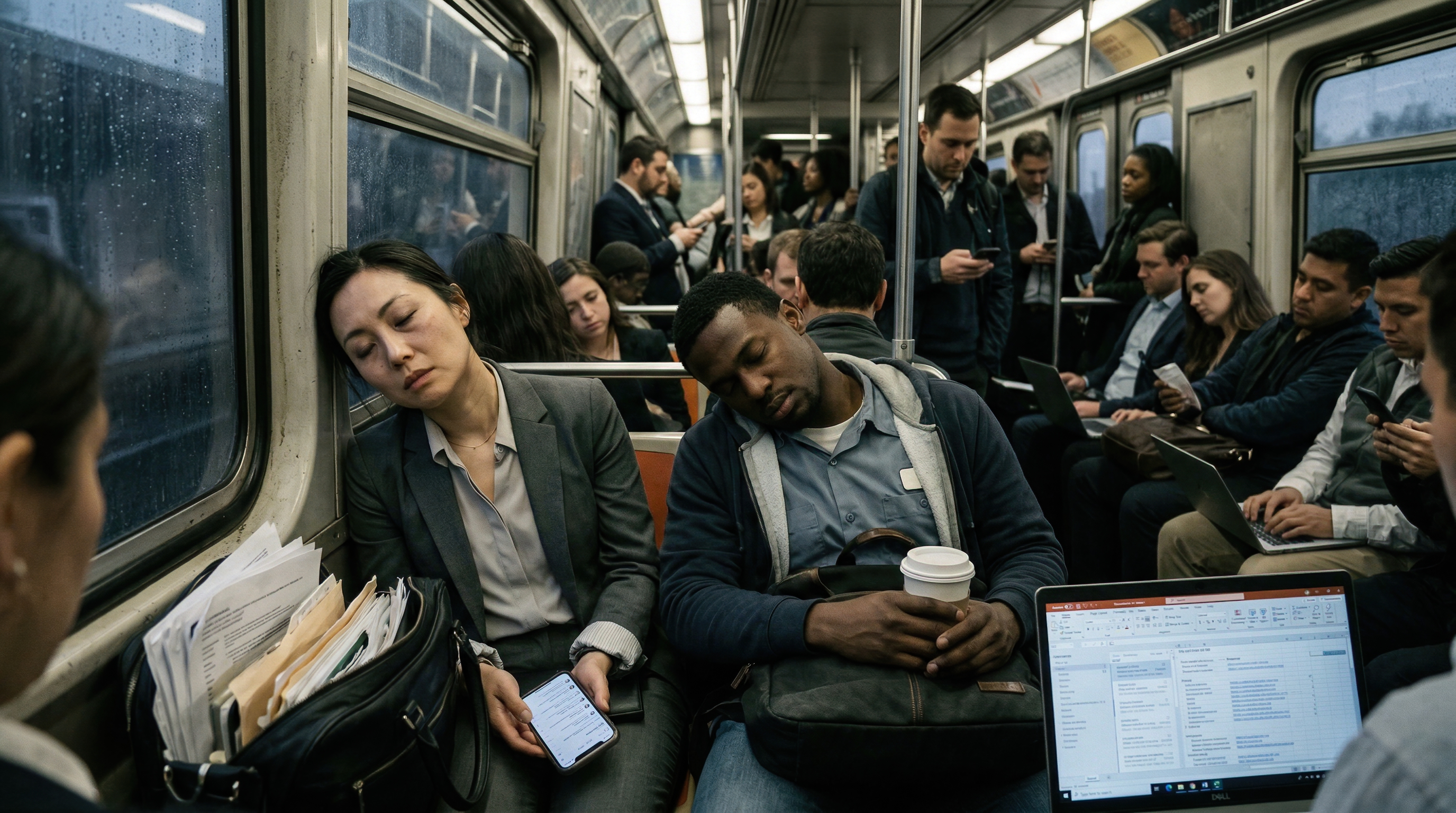
Most people move through the day without noticing how many unseen systems are at work around them. A phone map suggests the fastest route. A store price changes online. Air quality shifts from one block to the next. Tiny organisms inside the body help digest food and train the immune system.
These forces are easy to miss because they often work quietly in the background. Yet together they shape how people travel, shop, eat, work, and stay healthy. In 2026, the most powerful parts of modern life are often the ones least visible.
One of the clearest invisible forces is the algorithm. It decides which posts appear first on a social feed, which videos are recommended next, and in many workplaces, how tasks are assigned or measured.
These systems are no longer limited to the biggest technology platforms. New research and policy work in recent months show that algorithmic tools are spreading across offices, warehouses, transport services, and customer platforms. In many cases, they help employers schedule labor, track performance, and make faster decisions. They can also shape opportunity in less obvious ways by deciding what gets seen, what gets flagged, and what gets rewarded.
Pricing is also becoming harder to read with the naked eye. Regulators in the United States said this year that some surveillance-based pricing systems can use details such as location, browsing activity, time, and other signals to tailor offers or prices for individual consumers. That means two people may not always see the same deal at the same moment, even when they are looking at the same item.
## The body depends on unseen life
Another invisible force is much older than the digital economy: microbes. The human microbiome includes bacteria, fungi, viruses, and other organisms that live on the body and inside it. Scientists now describe these communities as central to ordinary health, not just to disease.
Researchers say the human body carries roughly as many microbial cells as human cells. These microbes help break down food, produce some useful compounds, and support immune function. Their work is constant and mostly unnoticed. A routine meal, a course of antibiotics, stress, sleep, and the built environment can all affect this internal ecosystem.
This has changed the way medicine and public health think about the line between the human body and its surroundings. The hidden biology of daily life is not separate from modern living. It is part of it.
## Air, waste, and supply chains work in the background
That makes daily routines more connected to environmental systems than many people realize. A commute, a cooking method, a wildfire season, or the design of a city street can affect exposure. What feels like a private routine is often shaped by public infrastructure and broader energy choices.
Food offers another example. Shoppers see a shelf, a price tag, and a package. They do not see the transport network, warehouse timing, crop risk, refrigeration chain, or data systems behind it. When those hidden networks run smoothly, daily life feels normal. When they fail, shortages and price swings appear quickly.
Waste works the same way. The world wasted about 1.05 billion tonnes of food in 2022, equal to 19% of food available at the retail, food service, and household levels. Most of that waste happens far from public attention, but it affects household budgets, food security, and climate pressures.
## Why the unseen matters more now
What ties these examples together is not mystery. It is dependence. Modern life relies on systems that are increasingly complex, data-driven, and physically distant from the people who depend on them.
Some of these forces are beneficial. Wireless networks, logistics software, sanitation systems, and microbial science can make life safer and more efficient. Others can deepen inequality, increase exposure, or reduce human control when they are poorly designed or weakly understood.
The challenge for households and policymakers is not to make every hidden system visible at all times. It is to understand which invisible forces deserve closer public attention because they affect health, fairness, and resilience in direct ways.
In everyday life, the most important changes are often not the loudest ones. They arrive through code, air, bacteria, pricing systems, and global delivery chains. They are out of sight, but rarely out of effect.
AI Perspective
This topic matters because modern life often feels personal and immediate, even when it is being shaped by large systems in the background. The more society depends on invisible networks, the more important transparency and basic public understanding become. Seeing these forces more clearly can help people make better choices and ask better questions about the world around them.


-134c72da.webp)


-6c40e5ef.webp)