[[[SUMMARY_START]]]
The phrase "One China" remains central to how Beijing defines sovereignty and how many governments manage ties with both China and Taiwan. Recent disputes, military pressure and diplomatic friction show that the issue is not only about history. It affects trade, security, international meetings and the rules of global recognition.
[[[SUMMARY_END]]]
The words are short, but the consequences are wide. The idea known as the "One China" principle continues to shape diplomacy across Asia and far beyond it.
At its core, the issue is about who represents China internationally and how Taiwan is treated in world affairs. That question has been disputed for decades. In 2026, it still affects military tensions, trade talks, parliamentary visits and the way governments speak about peace in the Taiwan Strait.
Beijing says there is only one China in the world, that Taiwan is part of China, and that the government of the People’s Republic of China is the only legal government representing China internationally. Chinese officials present that position as a basic rule of international relations and tie it directly to the way countries build diplomatic relations with Beijing.
That view is also linked by China to United Nations General Assembly Resolution 2758, adopted on October 25, 1971. The resolution restored the seat of the People’s Republic of China at the United Nations and removed the representatives of Chiang Kai-shek. It settled the question of which government held China’s seat at the UN.
The dispute did not disappear after that vote. Taiwan kept its own government, military and political system. It operates as a self-ruled democracy, but most countries do not maintain formal diplomatic recognition of Taipei because they recognize Beijing instead.
## Why the issue is active again
The subject has stayed sensitive, but recent events have pushed it back into daily politics. In late March, China sanctioned a Japanese lawmaker over his Taiwan ties. Beijing said his activities violated the one-China principle and interfered in China’s internal affairs.
Around the same time, a bipartisan group of U.S. senators visited Taipei and voiced support for Taiwan’s efforts to pass a special defense budget worth $40 billion over eight years. The proposed spending includes missile defense, artificial intelligence for defense and support for local defense production.
Those moves matter because Taiwan sits at the center of a broader strategic contest. China opposes official exchanges between Taiwan and foreign governments. The United States does not formally recognize Taiwan as a country, but remains its strongest informal backer and a major arms supplier. That creates a narrow and often tense diplomatic space in which words, meetings and military actions are watched closely.
## More than a diplomatic slogan
The phrase "One China, one world" is not a formal diplomatic formula used in the same way as the "One China" principle. But it captures a real point: the issue reaches far beyond cross-strait politics.
It touches global shipping routes, semiconductor supply chains, alliance planning and the credibility of international rules. Taiwan is a major part of the world technology economy, especially in advanced chip production. Any crisis in the Taiwan Strait would not stay local for long.
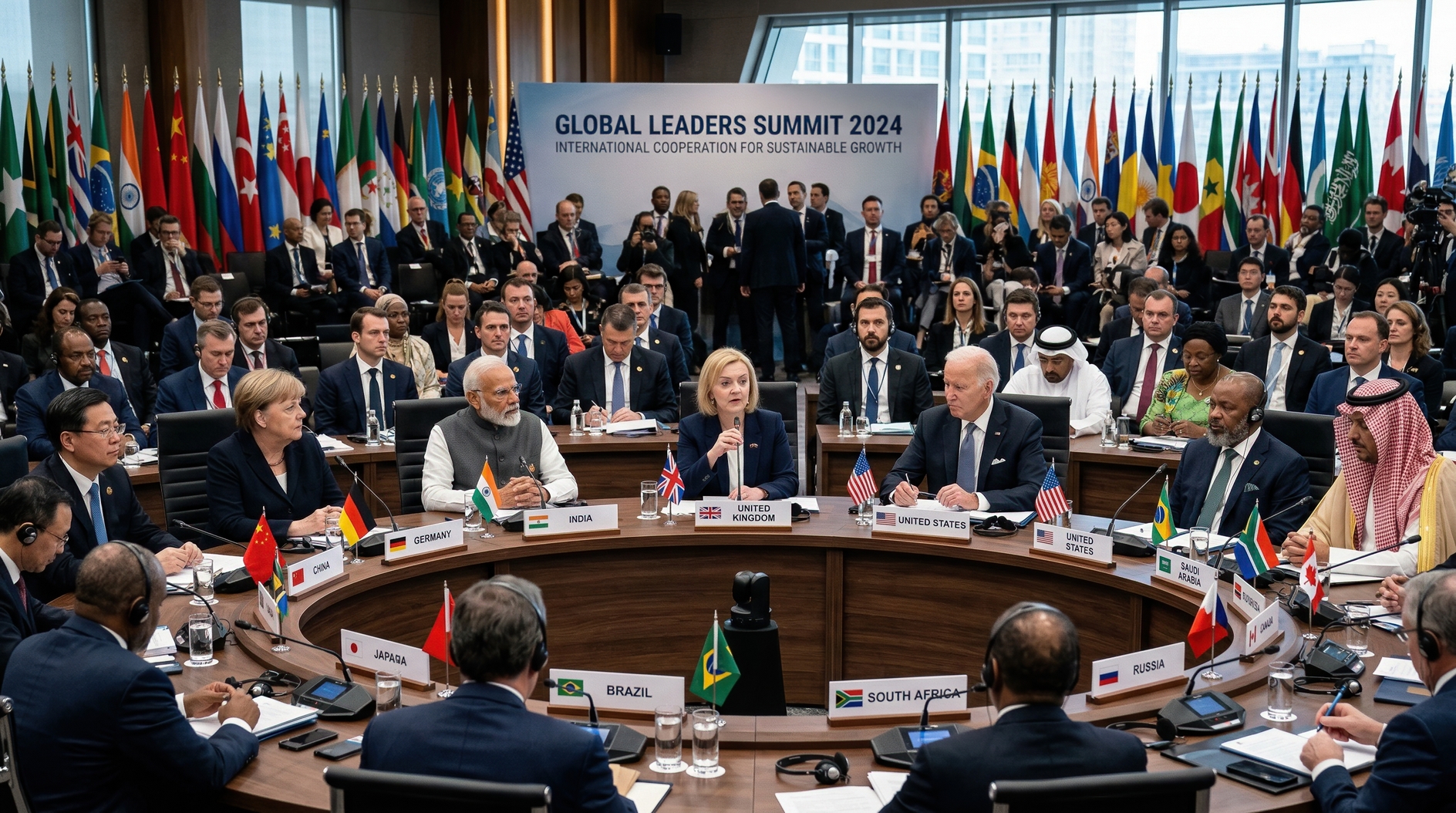
The result is careful language, and sometimes deliberate ambiguity. For many capitals, the goal is to avoid a sudden break with Beijing without accepting any unilateral change in Taiwan’s status by force.
## A question of recognition and participation
The debate is also about international space. Beijing argues that Taiwan cannot act as a separate sovereign state in global organizations that require statehood. Taiwan, meanwhile, continues to seek meaningful participation in international bodies and forums, especially where public health, civil aviation, trade and technical coordination are involved.
This is why the issue returns in settings far removed from military headlines. It can affect summit invitations, trade frameworks, sports naming rules and the wording of official documents. Even when tensions are low, the question of how Taiwan appears on the world stage remains politically charged.
For Beijing, this is about sovereignty and territorial integrity. For Taiwan, it is also about dignity, security and practical access to the international system. For other countries, it is often a test of how to manage ties with both sides without triggering a crisis.
## The wider world is already involved
In practice, the Taiwan question is no longer a narrow regional matter. It already shapes relations between China and the United States, Japan, Europe and many smaller states that must navigate economic dependence, security concerns and diplomatic pressure.
That is why a simple phrase can carry so much weight. "One China" remains one of the most consequential ideas in modern diplomacy. It links history to present-day power, and legal arguments to military risk.
As long as Beijing insists the matter is non-negotiable, Taiwan protects its separate system, and major powers stay engaged in the region, the issue will remain global. The words may be familiar, but the stakes are still rising.
AI Perspective
This topic shows how a few words can shape the behavior of governments around the world. The main lesson is that language, recognition and military power are closely connected in international politics. A stable future will depend not only on strength, but also on restraint and clear communication.


-134c72da.webp)


-6c40e5ef.webp)