[[[SUMMARY_START]]]
Cash is still used in daily life, but its role is shrinking in many countries.
Cards, mobile wallets, and instant bank transfers are taking a larger share of payments.
The shift is driven by convenience, online commerce, and new payment systems, even as many governments move to protect access to cash.
[[[SUMMARY_END]]]
Cash has not vanished. But in many parts of the world, it is no longer the default way to pay.
From city transit and coffee shops to online shopping and person-to-person transfers, digital payments now handle a growing share of everyday spending. That change has been building for years, but recent data show it is becoming more visible across regions with very different banking systems, incomes, and consumer habits.
The move away from cash is not happening everywhere at the same pace. But the direction is clear.
Recent global industry estimates suggest cash now accounts for less than half of worldwide consumer payments, down from about half just a year earlier. In many advanced economies, the decline is even sharper at physical stores, where contactless cards, mobile wallets, and account-to-account transfers have become routine.
In the United States, consumer payment surveys show cash still has a place, especially for small purchases, but digital methods continue to expand. Credit cards, debit cards, remote payments, and mobile payments all gained ground in 2024. Even so, many people still keep some cash on hand, showing that physical money remains a backup as much as a main tool.
In the euro area, cash remains the most commonly used payment instrument at the point of sale by number of transactions. But its share has continued to fall. The pattern suggests a slow transition rather than a sudden break: consumers still use notes and coins, yet they are doing so less often as digital options become easier and more widely accepted.
## Why people are paying differently
One reason is simple convenience. A phone tap or card tap is often faster than handling bills and coins. For online shopping, cash is rarely an option at all, so growth in e-commerce naturally pushes spending toward digital rails.
Another reason is infrastructure. In many countries, banks, payment networks, and fintech firms have spent years making digital payments faster and cheaper. Contactless card readers are now common in shops. Mobile wallets are built into smartphones. Instant payment systems let consumers and businesses move money directly between bank accounts in seconds.
Brazil is one of the clearest examples. Its Pix system, launched by the central bank in late 2020, has become a major part of daily commerce. It is used for everything from utility bills to street sales and small business payments. The system helped make bank-to-bank transfers immediate and simple, reducing the need for both cash and some card transactions.
Sweden shows another path. It has been one of the world’s most digital payment markets for years, with cash use falling steadily. Mobile payment tools and card payments are now deeply embedded in everyday life, and the country’s central bank has repeatedly pointed to the shrinking role of cash in stores.
China also offers a powerful example of how quickly habits can change when QR-code payments become standard. In many urban areas, paying through large mobile platforms has become normal for transport, food, taxis, and neighborhood shopping, leaving cash with a much smaller everyday role.
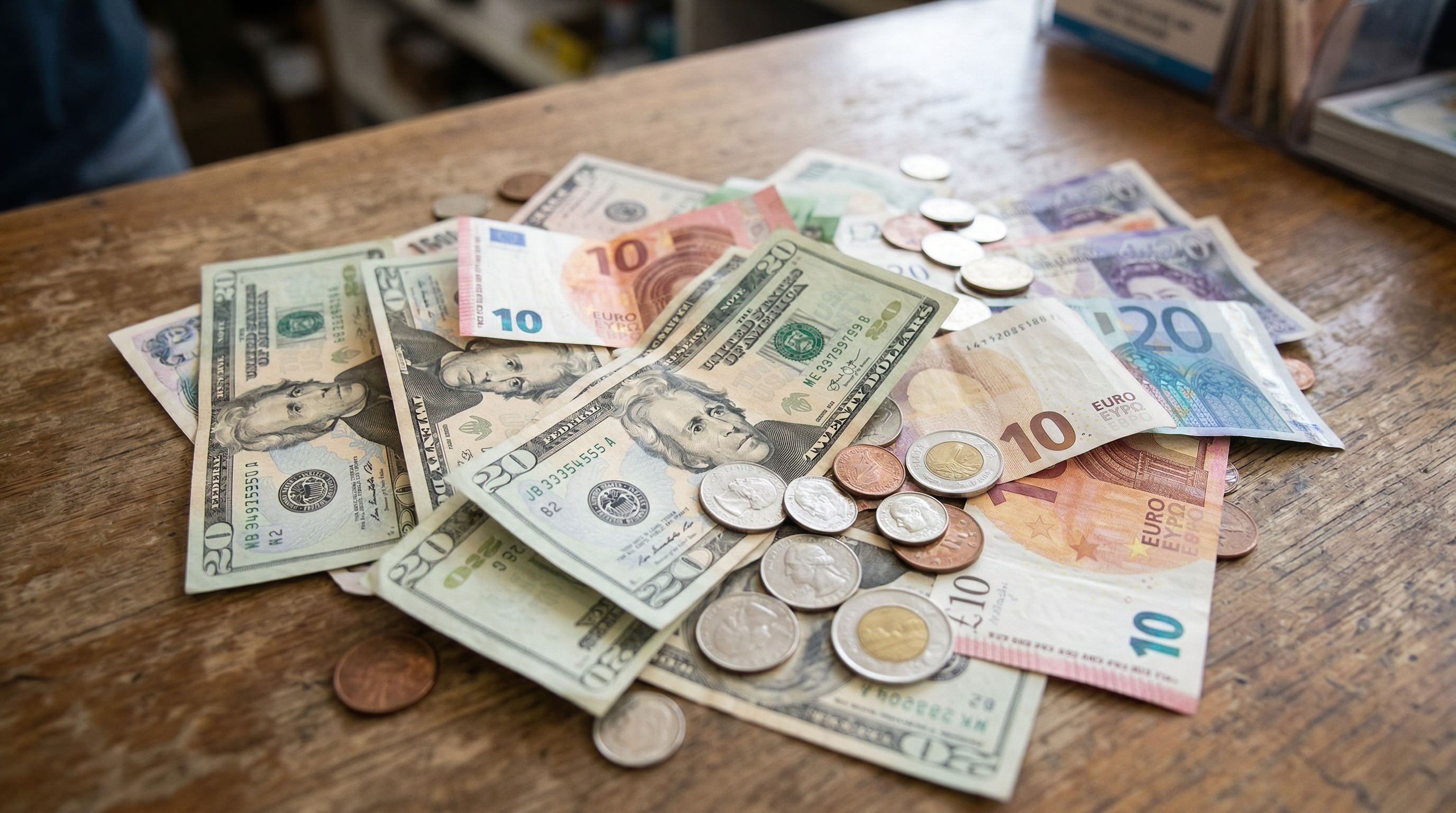
Cash is disappearing quietly partly because the change can feel gradual. A few fewer ATMs. Shorter bank counter hours. More self-checkout lanes. More signs that prefer card or app payments.
But the shift also raises concerns. Older people, rural communities, low-income households, migrants, and people with limited digital access may depend more heavily on cash. When branches close or ATMs are removed, using physical money becomes harder even before it stops being accepted.
That has led some authorities to act. In the United Kingdom, new rules are meant to preserve reasonable access to cash withdrawal and deposit services. In Australia, policymakers have been reviewing how to keep cash both available and usable as everyday demand falls. Norway, despite being one of Europe’s most digital markets, has strengthened the legal right to pay with cash in many in-person settings.
These moves reflect a broader concern: resilience. Digital systems are efficient, but they can fail during power cuts, cyber incidents, telecom outages, or technical errors. Cash may be less popular than before, yet it remains one of the few payment methods that works offline and does not depend on a device, network, or battery.
## Not a full disappearance
For all the headlines about cashless societies, the world is not becoming fully cash-free anytime soon.
In many countries, cash is still important for budgeting, informal work, gifts, tips, and small-value transactions. Central banks also continue to issue and protect physical currency as legal tender. Even where digital payments dominate, authorities increasingly describe cash as a public good that supports inclusion and emergency preparedness.
So the real story is not that cash is suddenly gone. It is that cash is becoming less central to ordinary life. People are reaching for it less often, businesses are building around it less, and payment systems are giving consumers more reasons to leave it in their wallets.
That is why cash is disappearing quietly: not through one dramatic ban or one global policy, but through millions of small daily choices, repeated over time.
AI Perspective
The decline of cash shows how quickly payment habits can change when technology becomes easy and widely accepted. But convenience is not the only goal of a payment system. The countries drawing the most attention now are often the ones trying to balance speed and innovation with access, choice, and resilience.


-134c72da.webp)


