[[[SUMMARY_START]]]
The world economy is still growing in 2026, but major institutions say the expansion remains weak and uneven. Trade tensions, wars, policy uncertainty, and fragile investment are weighing on confidence. Many developing economies are still lagging behind pre-pandemic income trends, even as inflation eases in much of the world.
[[[SUMMARY_END]]]
The global economy is showing fresh signs of strain as geopolitical instability, trade friction, and weak investment continue to weigh on growth in 2026. Output is still expanding, and inflation has cooled from its earlier peaks in many countries. But the broader picture is one of caution rather than strength, with businesses, investors, and governments navigating a more uncertain environment.
International forecasts suggest the world economy has avoided an outright downturn, but not a strong recovery.The International Monetary Fund said in its January 2026 update that global growth is expected to reach 3.3% in 2026 and 3.2% in 2027. That points to continued expansion, but it also reflects a world economy facing persistent downside risks from geopolitical escalation, financial market stress, and shifting trade policy.
The World Bank offered a more subdued view, projecting global growth at 2.6% in 2026 before a slight rise to 2.7% in 2027. It said resilience has held up better than expected, but warned that the 2020s are still on course to become the weakest decade for global growth since the 1960s.
That gap in tone matters. It shows that while some forecasters see steady momentum, there is broad agreement on the deeper problem: growth is not collapsing, but it is not strong enough to erase the damage from recent shocks.
## Trade and conflict remain central risks
A main source of pressure is the overlap between geopolitical conflict and economic fragmentation.
Recent assessments from the OECD and the IMF point to trade barriers, policy uncertainty, and supply chain security concerns as key forces holding back business activity. The OECD has warned that weaker confidence, tighter financial conditions, and substantial barriers to trade are reducing the pace of global expansion and slowing world trade growth.
The risks are not only theoretical. Ongoing conflict in the Middle East and the war in Ukraine continue to threaten energy markets, shipping routes, food prices, and investor sentiment. The IMF has also flagged the danger that a sharper escalation in geopolitical tensions could quickly damage global stability.
Trade itself has not collapsed. Global merchandise and services trade continued to expand through the second half of 2025, and total trade value reached a record level of about $35 trillion. But momentum slowed, and the outlook remains vulnerable to new restrictions, transport disruptions, and rising costs.
## Investment stays soft in a more fragmented world
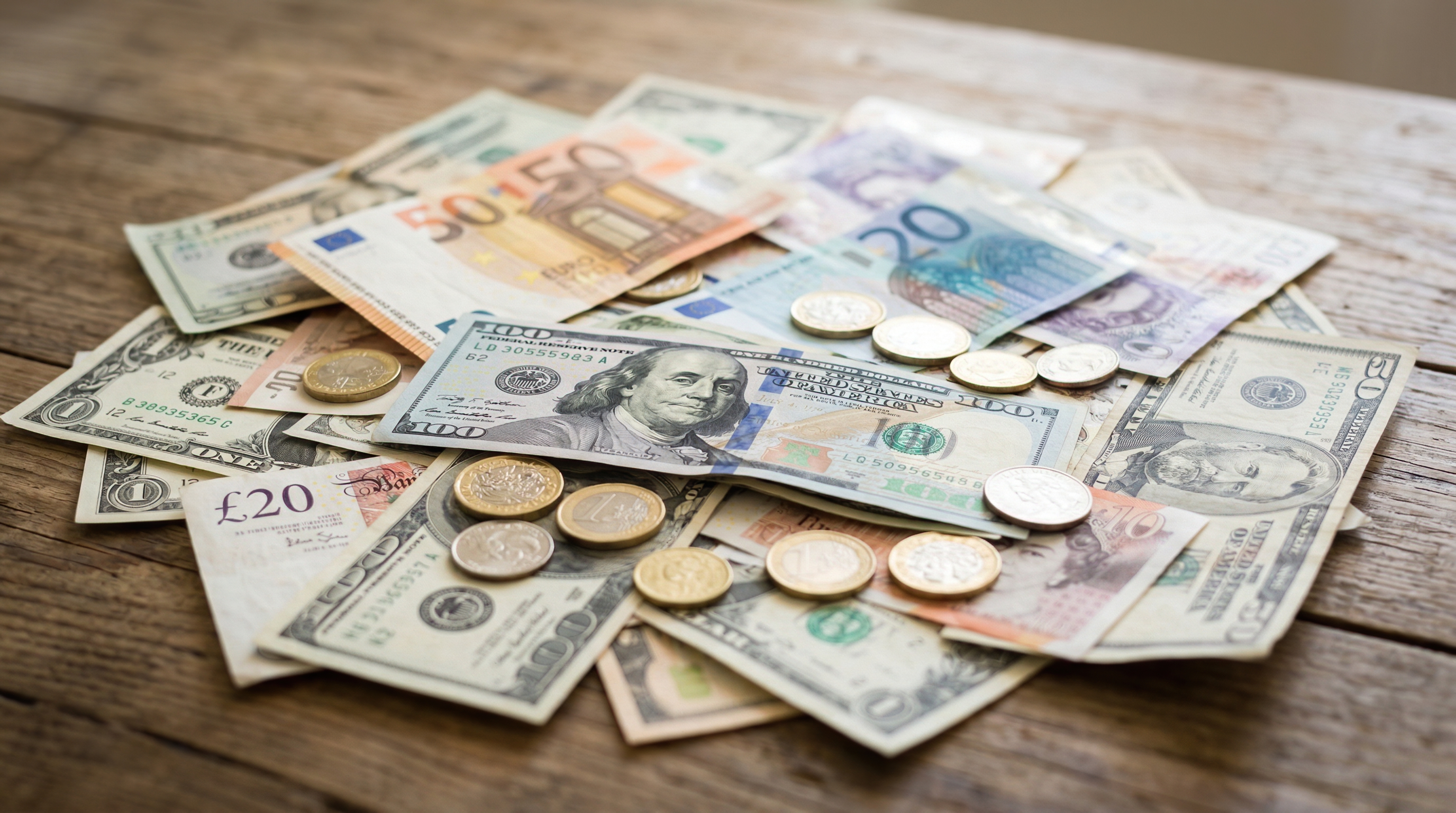
Global foreign direct investment fell 3% in the first half of 2025, extending a slump that has lasted for two years. Investment in industry and infrastructure was especially affected. Higher interest rates played a role, but so did trade tensions, regional conflict, and efforts by companies and governments to reorganize supply chains around security and political risk.
That shift is reshaping the geography of production. Firms are still spending in strategic sectors, especially technology, energy, and supply-chain resilience. But broader cross-border investment has become more selective, and that is making it harder for many lower-income economies to attract capital, create jobs, and build long-term productive capacity.
For developing countries, this remains a serious concern. The World Bank said that by the end of 2025, roughly one in four developing economies still had lower per capita incomes than in 2019. That underlines how uneven the global recovery remains, even years after the pandemic shock.
## Inflation is easing, but confidence is fragile
Inflation has improved in many places, giving central banks more room than they had during the worst of the price surge. Even so, the picture is mixed.
Some economies still face sticky price pressures, especially where trade costs have risen or currencies remain under stress. At the same time, slower growth is limiting how much support governments can provide, especially in countries with high debt and tight budgets.
This leaves policymakers in a difficult position. They need to preserve stability and rebuild fiscal space while also responding to weaker demand, social pressure, and strategic competition.
The result is a world economy that looks stable on the surface but remains exposed underneath. Growth continues, yet confidence is fragile. Trade is still moving, yet fragmentation is deepening. Inflation is easing, yet households and firms in many places still feel squeezed.
For now, the global economy appears to be absorbing repeated shocks rather than overcoming them. That may be enough to avoid a crisis. It is not yet enough to deliver a broad, durable sense of security.
AI Perspective
The global economy is not in free fall, but it is operating with less margin for error. When conflict, trade friction, and weak investment happen at the same time, even modest shocks can have wider effects. The main takeaway is that resilience is still present, but it looks increasingly costly and uneven.


-134c72da.webp)


-6c40e5ef.webp)