[[[SUMMARY_START]]]
In a culture that rewards constant output, doing nothing is gaining new value. Researchers and health experts say rest, unstructured time, and even boredom can support well-being, attention, and creativity. The shift is also shaping debates about work hours, burnout, and what a balanced life should look like.
[[[SUMMARY_END]]]
For years, modern life has treated busyness as a sign of virtue. Full calendars, side projects, and the pressure to stay reachable have made idleness look wasteful. But a quieter countercurrent is growing: the idea that doing nothing, at least sometimes, is not failure. It is a human need.
The change is showing up across work, wellness, and everyday culture. People are talking more openly about burnout. Employers are testing shorter workweeks. Therapists and health specialists are warning about the emotional cost of constant striving. And researchers are taking a closer look at boredom, mind wandering, and the value of mental downtime.## A backlash against constant output
The modern productivity ideal promises control, efficiency, and self-improvement. Yet for many people, it has also brought guilt around rest. Even time off can feel like a task to optimize.
Health experts increasingly describe this pattern as harmful when it becomes extreme. The problem is not ambition itself. It is the feeling that every hour must be useful, measurable, or marketable. When people cannot switch off, stress can build, sleep can suffer, and rest may stop feeling restorative.
That tension helps explain why “doing nothing” has moved from a joke or luxury into a serious cultural conversation. In some circles, it is framed as resistance to hustle culture. In others, it is simply basic self-preservation.
## What boredom and rest can do
Researchers draw an important distinction between chronic, distressing boredom and short periods of unstructured mental space. Long-term boredom can be linked to poorer well-being and rumination. But brief pauses, quiet breaks, and looser attention may do something different.
Recent work on creativity suggests that mind wandering during breaks can help later performance on creative tasks. Other studies indicate that boredom at work is not always purely negative. In some cases, it may push people toward meaningful leisure activities, which can in turn support creativity.
This does not mean every blank hour becomes a breakthrough. It means the mind may benefit from time that is not tightly managed. Ideas often arrive when attention softens: during a walk, while staring out a window, or in the pause after focused effort.
Older neuroscience and psychology research has long suggested that the brain remains highly active during rest. That background activity appears to play a role in reflection, memory, and internal thought. Newer studies are adding to the case that nonstop stimulation may crowd out some of these processes.
## Why the message matters now
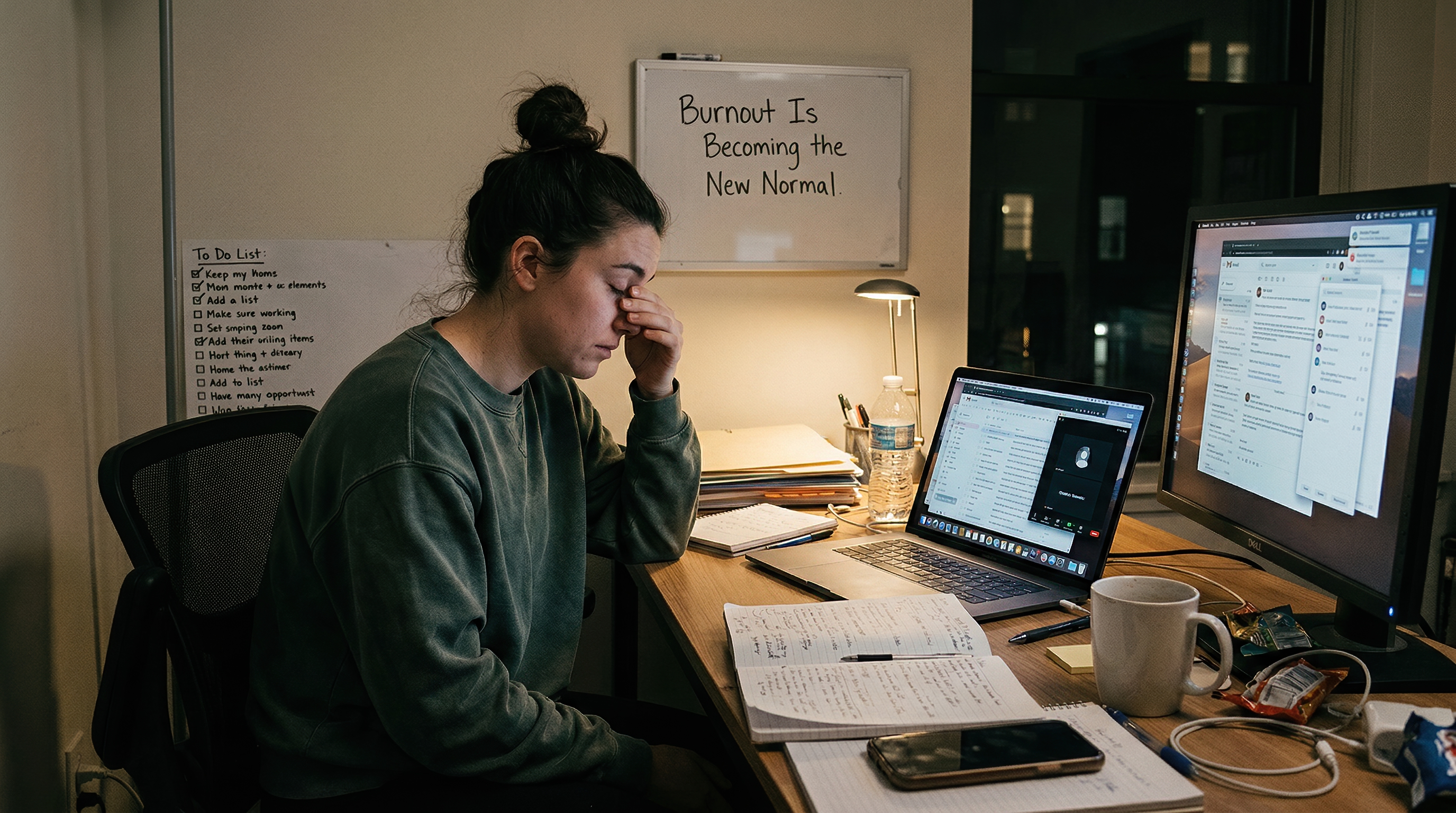
Some recent psychological research points to rising concern about boredom in the digital age, even as screens provide endless distraction. The paradox is simple: people may feel overstimulated and under-rested at the same time.
Work culture is changing too. A major 2025 study of four-day workweek trials across 141 organizations and 2,896 employees in several countries found improvements in burnout, job satisfaction, mental health, and physical health when hours were reduced without cutting pay. The study focused on workplace reform, not idleness as a philosophy. Still, it added weight to a broader idea: more time is not always better work.
That finding fits a wider cultural reassessment. The question is no longer only how to get more done. It is also how much pressure a person can absorb before productivity starts to damage the life it is supposed to support.
## From luxury to life skill
For some people, doing nothing remains a privilege. Many workers have limited control over their hours, multiple jobs, caregiving duties, or financial pressure that makes rest hard to protect. Any cultural celebration of idleness can sound hollow if it ignores that reality.
Still, the appeal of intentional rest is broad because it speaks to a common experience. People are tired of feeling late to their own lives. They want room to think, to drift, to recover, and to be present without turning every moment into output.
That does not require a grand retreat from modern life. In practice, it may look small and ordinary: leaving the phone behind for a short walk, sitting without filling the silence, protecting an afternoon without goals, or letting a commute remain empty instead of packed with content.
The art of doing nothing is not really about doing nothing forever. It is about making peace with moments that do not produce proof. In a world obsessed with visible productivity, that can be harder than it sounds.
And that may be why the idea resonates now. Rest is no longer just recovery from work. Increasingly, it is being treated as part of a meaningful life, and perhaps as one of the few spaces where attention, creativity, and calm still have room to return.
AI Perspective
This topic reflects a wider shift in how people define a good life. Productivity still matters, but many now seem to be asking whether constant efficiency is worth the personal cost. The renewed respect for rest suggests that time without output may be less a waste than a form of balance.


-134c72da.webp)


-6c40e5ef.webp)