[[[SUMMARY_START]]]
Rapid change is no longer arriving as a rare shock. It is becoming part of daily life in work, climate, technology, politics and the economy.
Recent surveys and institutional reports show people are adapting, but also showing signs of strain.
The clearest pressure point is the workplace, where artificial intelligence, new skills demands and uncertainty are reshaping expectations.
[[[SUMMARY_END]]]
Change is becoming less like a headline and more like background noise. It is always present. It is in meetings about artificial intelligence, in warnings about extreme weather, in rising costs, in new job skills and in the way people talk about trust, security and the future.
## A constant signal in daily lifeFor many people, change no longer arrives as one major disruption. It comes as a steady stream of smaller adjustments. A new tool at work. A revised company plan. A different price at the store. A hotter summer. A new rule, risk or warning.
This does not mean people are ignoring change. It means many are learning to live beside it. The result is a quieter form of fatigue. The world keeps shifting, but each new shift can feel less surprising than the last.
Recent global and workplace research points to the same pattern. People expect more disruption. They also want clearer guidance, more stability and a stronger sense that change is being managed with them, not simply delivered to them.
## Work is the clearest pressure point
The workplace shows this pattern most clearly. Artificial intelligence has moved from a future idea into a daily work tool for many employees. In a large U.S. workforce survey conducted in February 2026, half of employees said they used AI at work in some way. Eighteen percent said it was very or somewhat likely that their job would be eliminated within five years because of AI, automation or robots.
That mix of use and concern explains why change can feel normal and stressful at the same time. Workers may use new systems to write, summarize, search, code or analyze information. But they may also wonder whether the same systems will reduce the value of their role.
A 2026 workplace technology study found another sign of strain. Sixty-five percent of AI users said they feared falling behind if they did not adapt quickly. Yet 45 percent said it felt safer to focus on current goals than to redesign work around AI. The finding captures a common tension: workers are told to innovate, while still being judged by today’s deadlines.
The skills outlook adds to the pressure. A major global jobs report released in 2025 projected that 22 percent of jobs could be disrupted by 2030. It estimated 170 million new roles could be created and 92 million displaced, leaving a net gain of 78 million jobs. The same report found that nearly 40 percent of workers’ core skills are expected to change by 2030.
## Uncertainty has spread beyond offices
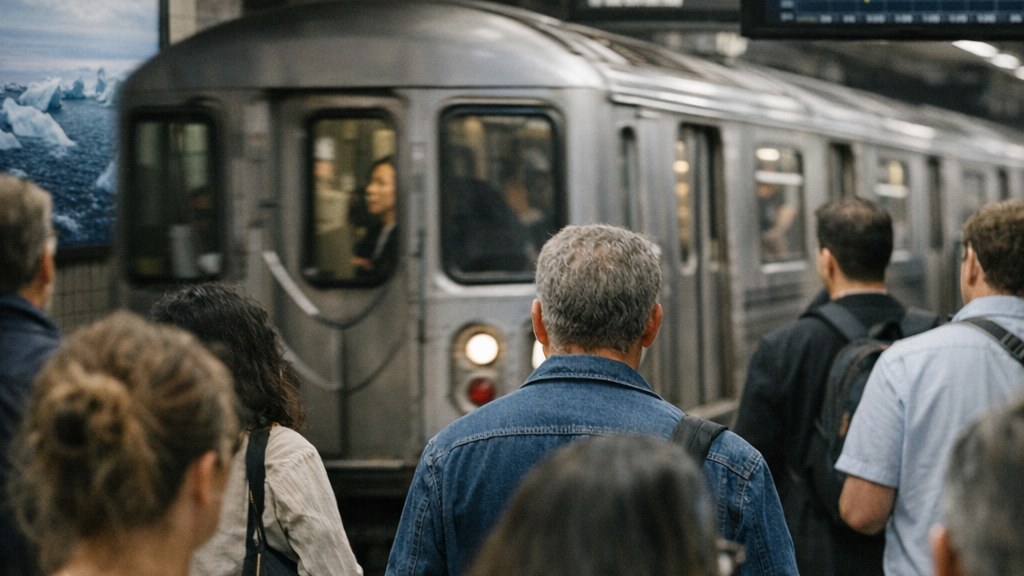
A 2026 global trust survey found high levels of economic anxiety and a retreat into smaller, more familiar circles. Seven in ten respondents were described as hesitant or unwilling to trust people who differed from them in values, background, information sources or views on solving social problems. That does not stop change, but it can make societies less able to discuss it calmly.
Economic conditions add another layer. The global economy is still growing, but the outlook remains cautious. In April 2026, global growth was projected at 3.1 percent for 2026 and 3.2 percent for 2027, with trade barriers, policy uncertainty and geopolitical risks weighing on the forecast. For households and businesses, that means planning takes place in a fog of shifting costs, markets and rules.
## Climate change makes the background louder
Climate change is another part of the constant signal. The year 2024 was confirmed as the hottest year on record, with global average temperature about 1.55 degrees Celsius above the 1850-1900 average. Scientists have stressed that one year above 1.5 degrees does not mean the long-term Paris Agreement limit has been breached. But the record still fits a wider trend of rising heat, ocean warming, sea level rise and more damaging extremes.
For many communities, this turns climate change into a practical issue. It affects insurance, housing, farming, power grids, water supplies and emergency planning. In that sense, climate is no longer only a scientific warning. It is part of local budgets and household decisions.
## The new normal is still unsettled
The phrase “new normal” can make change sound complete. The evidence suggests something different. Many systems are still in motion. AI is spreading, but training and strategy remain uneven. Jobs are changing, but not all workers have the same access to new skills. The economy is expanding, but shocks remain close. Climate risks are rising, but adaptation is uneven.
The result is a world where change is familiar, but not always understood. People may be less shocked by disruption, yet still tired by it. The challenge for leaders, employers and public institutions is not only to announce change. It is to make change legible, fair and manageable.
That may be the main difference between change as progress and change as noise. People can handle movement. They struggle more when they cannot see where it is going, who benefits, or how they are supposed to keep up.
AI Perspective
The clearest takeaway is that people are not rejecting change itself. They are reacting to the speed, volume and uncertainty around it. Change becomes easier to accept when people are given time, trust, practical support and a clear reason for why it matters.


-134c72da.webp)


