[[[SUMMARY_START]]]
Daily life is increasingly shaped by constant digital input, even as many people spend less time in shared physical spaces.
Recent surveys show high levels of online use, news fatigue, loneliness, and weaker neighbor ties.
Researchers say the problem is not screen time alone, but the shift toward passive, fragmented attention.
The result is a culture that receives more signals while leaving less room for direct experience.
[[[SUMMARY_END]]]
A growing body of recent research points to a quiet change in modern life. Many people are not cut off from information. They are surrounded by it. But the same environment that delivers news, messages, alerts, videos, and updates can also reduce the time and attention left for unplanned, in-person experience.
## A life filled with signalsMost adults now live with the internet close at hand. In a 2025 U.S. survey, nine in ten adults said they use the internet every day. About 41% said they are online almost constantly. Smartphone ownership and home broadband remain common, although access still differs by income, age, and place.
This constant access has changed the texture of ordinary time. People can check the weather, answer work messages, follow a conflict overseas, watch a short video, order food, compare prices, and respond to friends without leaving the same chair. These actions are useful. They also create a steady demand for attention.
The pressure is visible in news habits. A December 2025 survey found that 52% of U.S. adults felt worn out by the amount of news available. Six in ten said they had reduced the amount of news they get overall. The fatigue was stronger among adults under 50, where 57% said they felt worn out by the volume of news.
## Less shared time, more managed attention
Time-use data show how much of daily leisure is still spent on screen-based or solitary activities. In 2024, Americans age 15 and older spent an average of 5.07 hours a day on leisure and sports. Of that, 2.60 hours went to watching TV. Socializing and communicating took 0.59 hours, or about 35 minutes. Playing games and using a computer for leisure took 0.57 hours.
The numbers do not mean that all screen time is harmful or all offline time is rich. A video call can support a long-distance friendship. A group chat can hold a family together. Online communities can be important for people who feel isolated where they live.
But the balance has become harder to manage. Recent research on digital behavior suggests that how people use technology matters more than the simple amount of time spent with it. Purposeful use, with clear goals and limits, is linked with better attention and well-being. Passive use, driven by habit, boredom, or alerts, is linked with weaker attention and lower well-being.
Young adults appear especially aware of this tension. Recent studies describe them as actively trying to manage information flows, emotions, social relationships, attention, and self-presentation. That means daily life now often includes a second layer of work: not just living, but filtering, sorting, muting, replying, deleting, and deciding what deserves focus.
## Social contact is changing shape
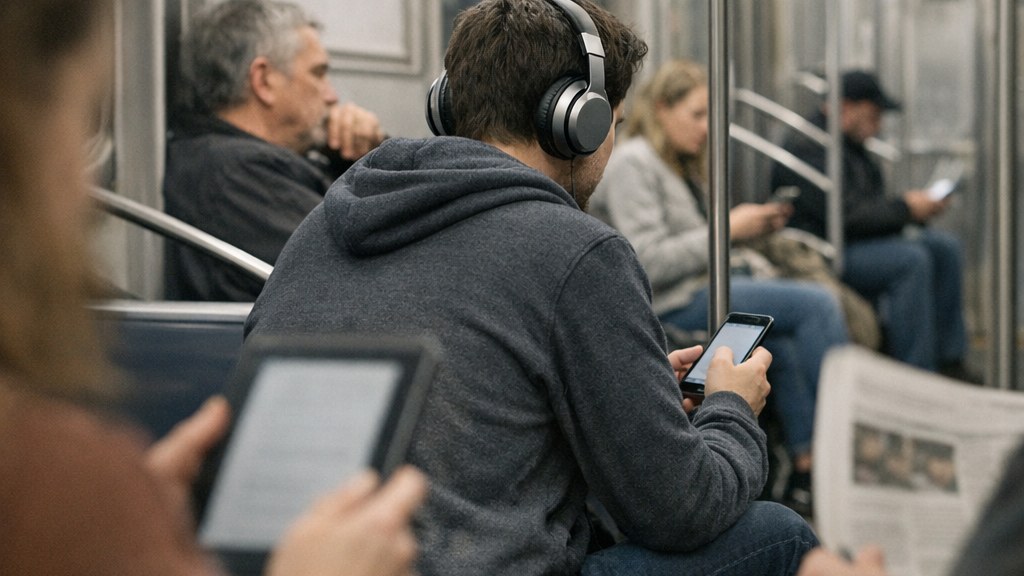
This matters because neighbor contact is a simple form of social life. It does not require shared politics, hobbies, work, or family history. It can be a greeting on a sidewalk, a short conversation at a mailbox, or help during an emergency. When these small contacts fade, daily life can become more private and more mediated by devices.
Loneliness data add another layer. A 2024 national survey found that 16% of U.S. adults feel lonely or isolated all or most of the time, while 38% feel that way sometimes. Adults under 50 were more likely than older adults to report frequent loneliness, 22% compared with 9%.
The picture is not one of total withdrawal. Many people still have close friends, family support, work ties, religious communities, clubs, teams, and online networks. The change is more subtle. People may be connected, but also tired. They may receive more messages, but have fewer moments that feel settled. They may know more about the world, but feel less present in their immediate surroundings.
## The modern burden of interpretation
The phrase “processing more” describes more than information volume. It also captures the mental work of deciding what is true, what matters, what requires action, and what can be ignored. That work now follows people across the day.
A person may wake up to overnight alerts, scan headlines before breakfast, respond to workplace platforms, read school messages, watch breaking news clips, compare health advice, receive automated reminders, and manage social expectations across several apps. None of these tasks is unusual. Together, they can make normal life feel like a stream that must be handled rather than a day that can be experienced.
The issue is not solved by rejecting technology. Digital tools are now part of health care, education, work, banking, transport, and family life. The more practical question is whether people, communities, schools, employers, and platforms can create more room for attention that is chosen rather than captured.
That may mean fewer alerts, clearer work boundaries, more time in shared public spaces, stronger local groups, and more deliberate use of media. It may also mean treating attention as a limited resource, not an endless supply.
Modern life has made it easier to know, watch, track, and react. The challenge now is to protect enough quiet, physical, and social space to actually live what all that information is meant to serve.
AI Perspective
The main lesson is that connection and attention are not the same thing. A person can be highly connected and still feel scattered or alone. The next stage of digital life may depend less on adding more tools and more on choosing where human attention should rest.


-134c72da.webp)


