[[[SUMMARY_START]]]
Companies and public bodies are giving software systems more authority to rank, route, approve, block and act.
The shift is creating a growing tension between what people mean and what automated systems are built to optimize.
AI agents, decision tools and rule-based platforms are pushing organizations to define human oversight more clearly.
[[[SUMMARY_END]]]
Human intent is becoming harder to separate from system logic as AI tools and automated platforms take on more work across business, government and daily life. The issue is no longer only whether machines can complete tasks. It is whether they understand what people actually wanted when those tasks were assigned.
## A shift from tools to decision systemsFor years, automation was mostly built around fixed steps. A person filled out a form. A system checked boxes. A result followed. Newer AI systems are less rigid. They can summarize, classify, recommend, plan and sometimes take action across several tools.
That change has made work faster in areas such as customer service, software development, hiring support, finance, cybersecurity and office administration. It has also created new pressure points. A user may ask for a practical outcome, while the system follows its own model of probability, risk, policy or efficiency.
In simple terms, people often communicate goals. Systems often execute rules.
That gap can matter. A customer may want a fair explanation. A business platform may prioritize speed. A hiring manager may want a broader view of a candidate. A screening tool may rank résumés by patterns in past data. A security team may want context. An automated defense system may block first and ask questions later.
## Why intent can get lost
Human intent is often vague, emotional and context-heavy. People use incomplete language. They change their minds. They make exceptions. They rely on social cues and judgment.
System logic is different. It depends on data, labels, permissions, rankings, thresholds and design choices. Even a flexible AI model operates inside limits set by training data, software architecture and business rules.
This is why a system can appear useful and still miss the point. It may complete the task that was written down, but not the purpose behind it. It may optimize for fewer support calls, lower fraud losses or faster approvals while overlooking fairness, trust or a special human circumstance.
The rise of AI agents adds another layer. These systems can be asked to pursue a goal, choose steps and use tools on a person’s behalf. In offices, that can mean drafting messages, updating records, searching files, opening tickets or coordinating workflows. In technical settings, it can mean monitoring systems, writing code or responding to alerts.
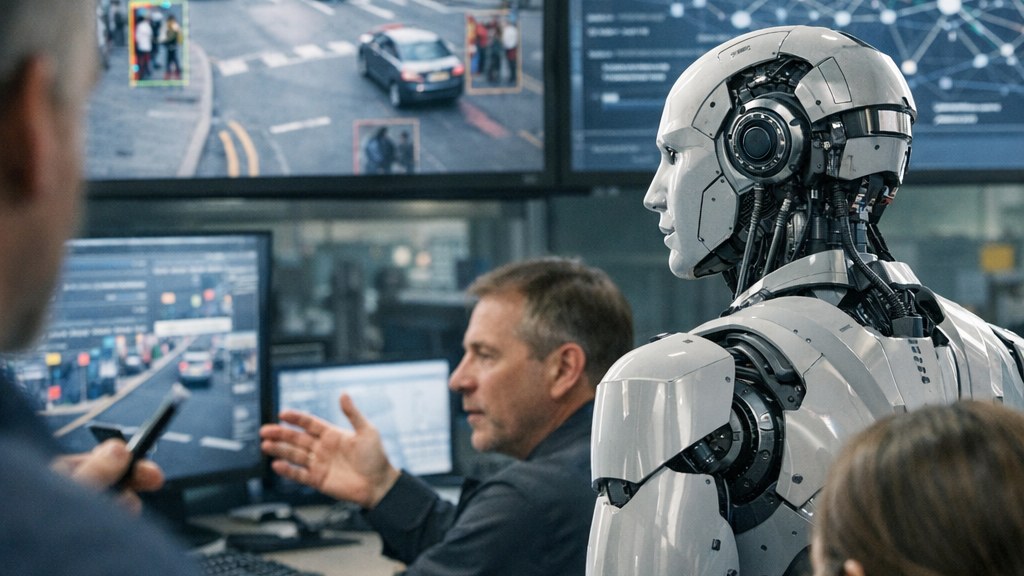
## Oversight is becoming a design issue
Governments and standards bodies have been moving toward the same basic point: human oversight cannot be an afterthought. The European Union’s AI Act includes human oversight among the requirements for high-risk AI systems as the law phases in. The OECD’s AI principles also stress human agency, accountability and safeguards against misuse. In the United States, the National Institute of Standards and Technology has promoted risk management practices for trustworthy AI.
These efforts reflect a wider change. Oversight is not just a compliance document. It has to be built into the system itself.
That can include clear audit logs, visible reasons for decisions, human override options, permission limits, testing for bias and error, and procedures for escalation. It can also include simpler choices, such as telling users when they are dealing with an automated system and making it easy to reach a person when stakes are high.
Many organizations are also learning that “human in the loop” is not always enough. A person who approves hundreds of automated recommendations may not truly control the process. Effective oversight requires time, authority, training and access to the information needed to challenge the system.
## The challenge ahead
The competition between human intent and system logic is not limited to AI. It appears in ranking feeds, navigation apps, payment filters, workplace software and public service portals. AI makes the issue more visible because it can act in more open-ended ways and produce answers that sound confident.
The practical task is to align systems with real human goals, not just measurable targets. That means asking what a system is optimizing, who benefits, who may be harmed and where human judgment must remain final.
Automation will continue to expand because it can reduce delays and handle complex work at scale. But the systems that earn trust are likely to be the ones that make room for human purpose, not only machine efficiency.
AI Perspective
The main issue is not whether systems are smart. It is whether their actions stay connected to human purpose. As more decisions move through automated tools, clear responsibility and easy intervention will matter as much as technical performance.


-134c72da.webp)


