[[[SUMMARY_START]]]
Major choices about technology, energy, climate and society are increasingly being shaped by default settings, delayed rules and infrastructure already being built.
Recent global assessments point to four forces driving the next decade: artificial intelligence, climate change, geopolitical rivalry and demographic change.
The result is a quieter form of decision-making, where inaction can have the same effect as a formal policy choice.
[[[SUMMARY_END]]]
The future is not always decided in dramatic votes or landmark speeches. Much of it is being set by systems that keep moving while governments, companies and citizens debate what should happen next.
## Decisions are moving into the backgroundAcross the world, many long-term choices are now being made through defaults. A city that delays upgrading flood defences is still choosing a level of risk. A company that adds artificial intelligence to hiring or customer service without clear oversight is still changing how people are judged. A power grid that connects new data centres before new supply is ready is still shaping energy prices and emissions.
This is the passive future: not a future with no decisions, but one where decisions are made by momentum. Contracts are signed. Software is deployed. Roads, chips, grids and data centres are built. Once those choices become physical or technical infrastructure, they are harder to reverse.
Recent international assessments describe the same broad pressure points. The next decade is being shaped by technological acceleration, climate change, geostrategic shifts and demographic change. Each force is large on its own. Together, they are narrowing the space for slow responses.
## AI is becoming a default layer
Artificial intelligence is the clearest example. General-purpose AI systems are moving into offices, schools, hospitals, public services and security tools. They can draft text, write code, analyse images and support decisions at a scale that older software could not.
The main question is no longer whether AI will be used. It is where it will be used, who will check it and what happens when it fails. The 2026 international AI safety assessment found that risk management is still developing and that current safeguards have limits. It also noted that many organisations now use layered controls, because no single safeguard is reliable enough on its own.
Regulation is beginning to catch up. In the European Union, major AI Act rules are moving through staged implementation. The law creates duties for higher-risk systems and for providers of general-purpose AI models. Other governments are working through narrower rules, voluntary frameworks or sector-by-sector oversight.
But adoption is faster than lawmaking. That means many early choices may come from procurement teams, software vendors and platform defaults rather than public debate.
## Energy choices are being locked in
The same pattern is visible in energy. Global energy demand grew in 2025, while electricity demand grew much faster than overall energy demand. Solar power was the largest single source of global energy demand growth, meeting more than a quarter of the increase. Low-emissions sources together supplied nearly 60 percent of demand growth.
At the same time, oil, gas and coal demand also rose. In the United States, data centres accounted for half of the growth in electricity use in 2025. This links the AI boom directly to grid planning, land use, water demand and local power costs.
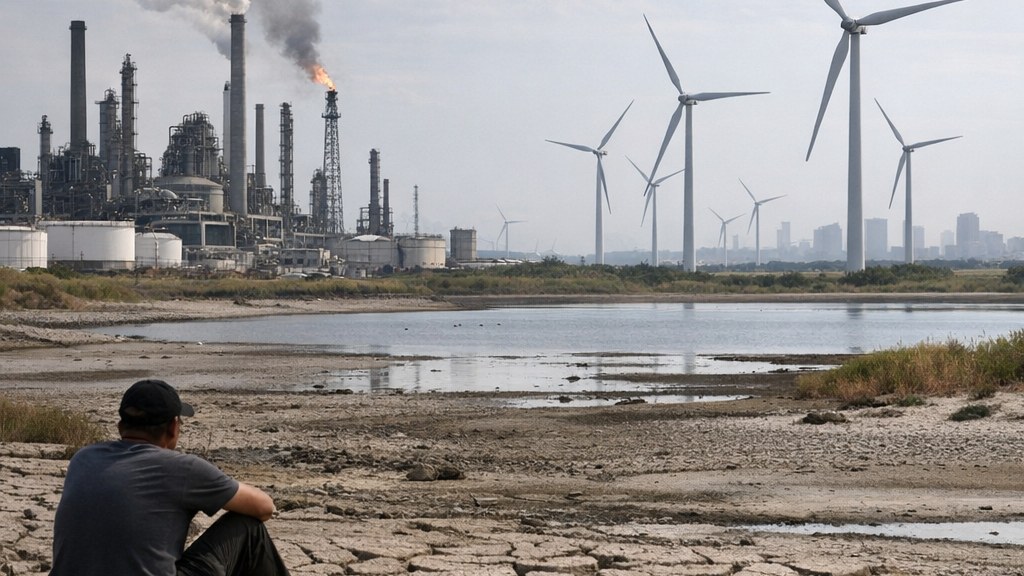
The passive element is important. If energy systems are expanded only to meet the fastest bidder or the nearest emergency, the future grid may reflect urgency more than strategy.
## Climate delay is also a decision
Climate change shows the cost of waiting most clearly. The State of the Global Climate 2025 found that 2025 was either the second or third warmest year on record, at about 1.43 degrees Celsius above the 1850-1900 average. Ocean heat content reached the highest level in the 66-year observational record. Global mean sea level remained near record highs.
These figures do not require new political interpretation to matter. They already affect insurance, farming, migration, health planning and public budgets. Heatwaves, floods, droughts and storms force decisions even when no one has chosen a long-term plan.
The risk is that societies respond mainly after damage occurs. Rebuilding after floods, paying higher insurance costs or moving people from unsafe areas are all decisions. They are simply more expensive and less orderly than preparation.
## Demography and geopolitics add pressure
Population change is another slow force with hard effects. The world population was about 8.2 billion in 2024 and is projected to peak near 10.3 billion in the mid-2080s. By 2050, about one in six people globally is expected to be over 65.
Ageing societies will need different health systems, pension rules, housing and labour policies. Younger and faster-growing regions will need jobs, schools, infrastructure and investment. If those systems are not redesigned, the default will be strain on families, workers and public budgets.
Geopolitical rivalry also pushes passive choices. Trade rules, technology controls and defence spending can shift supply chains before voters fully see the results. Companies then adapt to the new environment, and those adaptations can become the next normal.
The central issue is not that leaders lack choices. It is that delay, fragmentation and automatic adoption are becoming choices of their own.
AI Perspective
The main lesson is that the future is shaped by small defaults as much as by big announcements. Better public oversight does not mean stopping change, but making hidden choices visible earlier. The societies that ask clear questions before systems harden may have more control over what comes next.


-134c72da.webp)


