[[[SUMMARY_START]]]
Digital platforms are facing growing scrutiny over the way they compete for human attention.
Regulators, health officials and researchers are focusing on design features such as infinite scroll, autoplay, push alerts and personalized recommendations.
The debate now reaches schools, families, workplaces and governments, with new rules emerging in Europe and Australia.
[[[SUMMARY_END]]]
The modern internet is built to notice when people pause, click, scroll, watch and return. That data helps platforms decide what appears next. For many users, attention is no longer shaped only by choice. It is also shaped by systems designed to keep them engaged.
## A daily habit becomes a public issueThe concern is not that people use digital tools. Phones, messaging apps, video platforms and social networks are now part of work, school, family life and public debate. They help people learn, organize, create and stay connected.
The concern is how easily these tools can turn a short check into a long session. A notification can interrupt a meal. A short video can lead to another, then another. A feed can refresh without an obvious stopping point.
Recent U.S. teen survey data shows how normal this has become. Most teenagers use social platforms, and nearly half say they are online almost constantly. YouTube and TikTok remain among the most frequently used services by teens, while Instagram and Snapchat also remain daily habits for many.
Parents report tension over phones, but the issue is not limited to children. Adults also face persistent alerts from work chats, news updates, shopping apps, games, maps, banks and social feeds. The result is an attention environment that rarely stays quiet.
## Design is at the center of the debate
Regulators are increasingly looking at platform design, not only at harmful content. The features under review include infinite scroll, autoplay, push notifications, read receipts, rewards, streaks and highly personalized recommendation systems.
In February 2026, European regulators issued preliminary findings that TikTok’s design may breach the Digital Services Act. The review focused on features including infinite scroll, autoplay, push notifications and a personalized recommender system. The finding was preliminary and did not end the case.
The Digital Services Act requires the largest online platforms in the European Union to assess and reduce systemic risks, including risks affecting minors and mental well-being. The law has made platform architecture a matter of public oversight.
The same shift is visible outside Europe. Australia’s minimum age rule for many social media accounts took effect on December 10, 2025. It requires platforms to take reasonable steps to prevent people under 16 from holding accounts on covered services.
In the United States, federal proposals and state-level measures continue to focus on youth online safety, addictive feeds, notifications and parental consent. Legal challenges remain likely because these rules often touch speech, privacy and business practices.
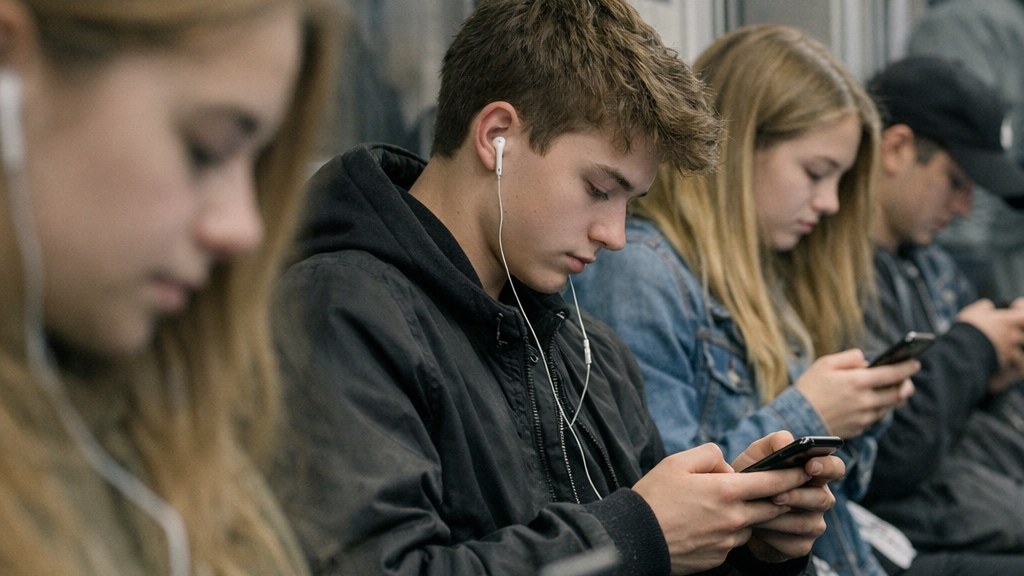
Researchers have long studied whether phones and notifications affect concentration. Experimental work has found that even receiving a phone notification can disrupt performance on attention-heavy tasks, even when the user does not pick up the device.
This has shifted part of the discussion away from total screen time. A person may spend many hours online for school or work without the same effect as hundreds of brief interruptions. The pattern of use matters. So do the timing, the content and the user’s age.
Public health authorities have also warned that heavy or hard-to-control social media use can be linked with sleep problems, anxiety, depression symptoms, bullying and reduced well-being among some young people. The evidence is complex. It does not show that every user is harmed. It does show that some groups face higher risk.
A large international survey across Europe, central Asia and Canada found that problematic social media use among adolescents rose from 7% in 2018 to 11% in 2022. It also found that 34% of adolescents played digital games daily, with 22% playing for at least four hours on gaming days.
## Families, schools and companies look for limits
The response is moving beyond advice to “use your phone less.” Schools are testing phone-free policies. Families are setting device-free meals, bedtime charging rules and app limits. Employers are reconsidering after-hours messaging and meeting overload.
Technology companies have added tools such as screen-time dashboards, quiet modes, parental controls and reminders to take breaks. Critics say these tools often place most of the burden on users, including children, while the systems themselves remain optimized for engagement.
The policy debate now centers on responsibility. One side argues that users and parents need better habits and stronger digital literacy. Another argues that platforms should not be allowed to profit from designs that make self-control harder.
The likely future is a mix of both. People will keep using digital services because they are useful. Governments will keep pressing platforms to show how their systems work. The central question is whether attention can again become something people direct, rather than something constantly requested from them.
AI Perspective
The attention debate is becoming less about blaming users and more about understanding the systems around them. Personal discipline still matters, but design choices can make discipline easier or harder. A healthier digital environment will likely require clearer rules, better defaults and more honest control for users.


-134c72da.webp)


