[[[SUMMARY_START]]]
Software updates have moved from occasional events to a normal part of daily life.
Phones, browsers, cars, office tools and AI services now change in the background, often without much notice.
The shift improves security and adds features, but it also creates new pressure for users, companies and governments.
[[[SUMMARY_END]]]
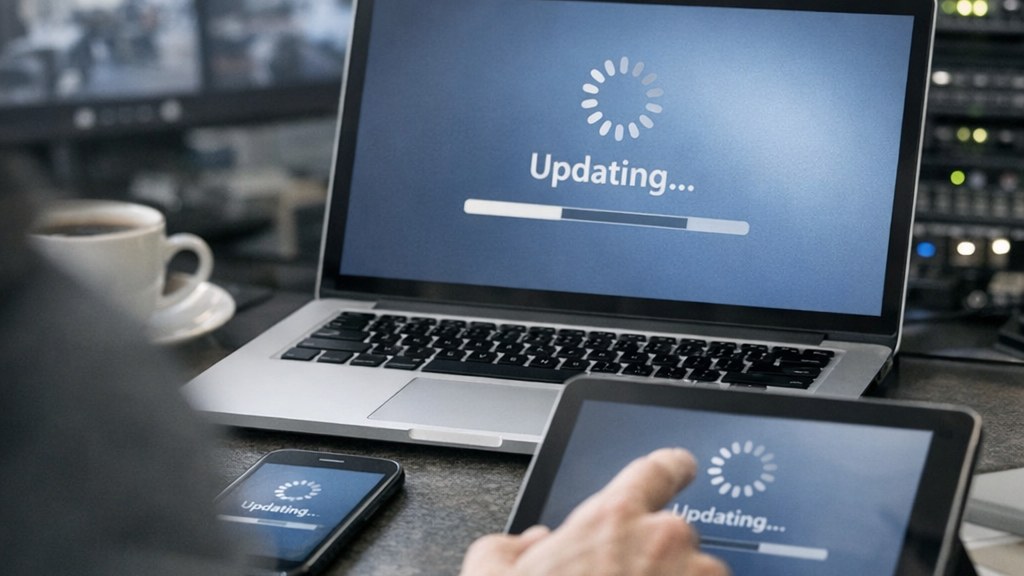
The modern digital world no longer stands still. A phone can change overnight. A browser can add security fixes within days. A work app can move a button, replace a feature or add an AI tool before the next staff meeting. For many people and businesses, life has become a constant state of update.
## Updates now run the digital dayThe update cycle is now built into the way technology works. Microsoft continues to release monthly security updates for Windows on the second Tuesday of each month. Android publishes monthly security bulletins. Apple regularly issues security releases for iPhone, iPad and Mac. Chrome has used a four-week major release cycle, with security refreshes between major versions, and plans to move to a two-week stable release cycle in September 2026.
These changes are not limited to computers. Smart TVs, watches, routers, cars, payment terminals and home security cameras all depend on software that can be changed after sale. In many cases, the product a person buys is not the same product they use a year later.
The same pattern is spreading through artificial intelligence services. Chatbots and workplace AI tools can change their default models, safety behavior, file tools and voice features through server-side updates. Users may not install anything, but the service can still feel different from one week to the next.
## Security is the main driver
The strongest reason for constant updating is security. Attackers move quickly when flaws become public. Governments and companies now track actively exploited software vulnerabilities, and many security teams treat patching as a race against time.
This has changed expectations. A device that cannot be updated may become a risk. A company that delays updates may leave networks open to known attacks. A home router or camera that stops receiving security fixes can become weak even if it still turns on and appears to work.
The end of support for older systems shows how important updates have become. Windows 10 reached the end of regular support on October 14, 2025. PCs running it can still operate, but normal free security fixes have ended unless users or organizations take part in an extended update program. That change turned an operating system decision into a security decision for households, schools and small businesses.
Governments are also moving updates into law. The European Union’s Cyber Resilience Act sets cybersecurity duties for many products with digital elements. It includes obligations linked to vulnerability handling and security updates. The rule reflects a wider view that software support is now part of product safety.
The update system brings benefits, but it also carries risk. The July 19, 2024, CrowdStrike outage showed how one faulty update can affect the real world. A content update for the company’s Falcon security software caused crashes on Windows systems. Microsoft estimated that about 8.5 million Windows devices were affected, less than 1 percent of Windows machines worldwide, but the disruption reached airlines, hospitals, banks and other services.
The incident was not a cyberattack. It was a failure inside a trusted update process. That made it an important warning for the technology industry. Fast updates can protect systems, but speed also requires testing, staged rollouts, rollback plans and clear communication.
For large organizations, updates are now a form of operations management. Hospitals, airports, banks and public agencies must balance urgency with caution. Waiting too long can expose systems. Moving too fast can create outages. The safest path often involves testing updates on smaller groups before wider deployment.
## Users face update fatigue
For ordinary users, the update age can feel confusing. Some updates are urgent security fixes. Others add features, change menus or remove familiar options. Many arrive with long notes that few people read.
Automatic updates reduce that burden, but they also reduce control. A person may wake up to a phone that looks different. A worker may open a familiar tool and find that the interface has changed. A driver may find that a car’s screen has new settings after a remote update.
This is the trade-off of connected technology. The digital world is safer and more flexible when products can be repaired quickly. It is also less stable. Ownership now often includes an ongoing relationship with the company that maintains the software.
The update is no longer a rare interruption. It is the condition of modern technology. The challenge is to make that condition safer, clearer and less tiring for the people who depend on it.
AI Perspective
The constant update cycle is a sign that digital products are never truly finished. That can make technology safer and more useful, but it also shifts more responsibility onto users and institutions. The next step is not fewer updates, but updates that are better tested, better explained and easier to trust.


-134c72da.webp)

