[[[SUMMARY_START]]]
AI is moving from chat boxes into cameras, glasses, phones and headsets.
The shift is making digital assistants more aware of what people see, hear and do.
Smart glasses are becoming an important test case for this new layer of computing.
The change also raises fresh questions about privacy, consent and control.
[[[SUMMARY_END]]]
Artificial intelligence is no longer only something people open in a browser or app. It is becoming a layer between people and the world around them. Cameras, microphones, screens and wearable devices now let AI systems read signs, translate speech, answer questions about objects and place digital information inside a person’s field of view.
## From chatbot to world-facing assistantThe first wave of generative AI reached most people through text. Users typed a question and received an answer. That model is changing fast.
Newer AI systems can work with voice, images, video and screen content at the same time. OpenAI’s GPT-4o, introduced in 2024, was built to reason across audio, vision and text in real time. Google has also moved its Gemini assistant toward live camera and screen understanding, including features that let users ask questions about what their phone camera or screen is showing.
This matters because the interface is changing. AI is becoming less like a search box and more like a guide that can observe a situation. It can identify a landmark, explain a menu, summarize a document on a desk or translate a conversation as it happens.
The phrase “first layer of reality” describes this shift. It does not mean AI replaces the physical world. It means AI increasingly appears before a person reaches for a search engine, opens a map or asks another person for help.
## Smart glasses move into the center
Smart glasses are one of the clearest signs of this transition.
Ray-Ban Meta glasses have brought AI features into a familiar form: ordinary-looking eyewear. The latest versions include hands-free photo and video capture, open-ear audio, voice access to Meta AI, live translation and longer battery life. Meta and EssilorLuxottica also expanded the line in 2026 with prescription-focused styles, showing that the companies want these devices to become daily eyewear rather than occasional gadgets.
The market is no longer only experimental. EssilorLuxottica said AI-glasses units, including Ray-Ban Meta and Oakley Meta models, were above 7 million in 2025. That figure shows that wearable AI has moved beyond early demos and into a real consumer category.
Google is also building for this space through Android XR, a platform for headsets and glasses that brings Gemini into extended reality devices. Its public demonstrations have focused on glasses that can understand speech, see what the wearer sees and place helpful information in view.
Snap has also said it plans to launch lightweight Specs in 2026. Those glasses are designed for augmented reality experiences, including AI-powered tools that can anchor digital information to the physical world.
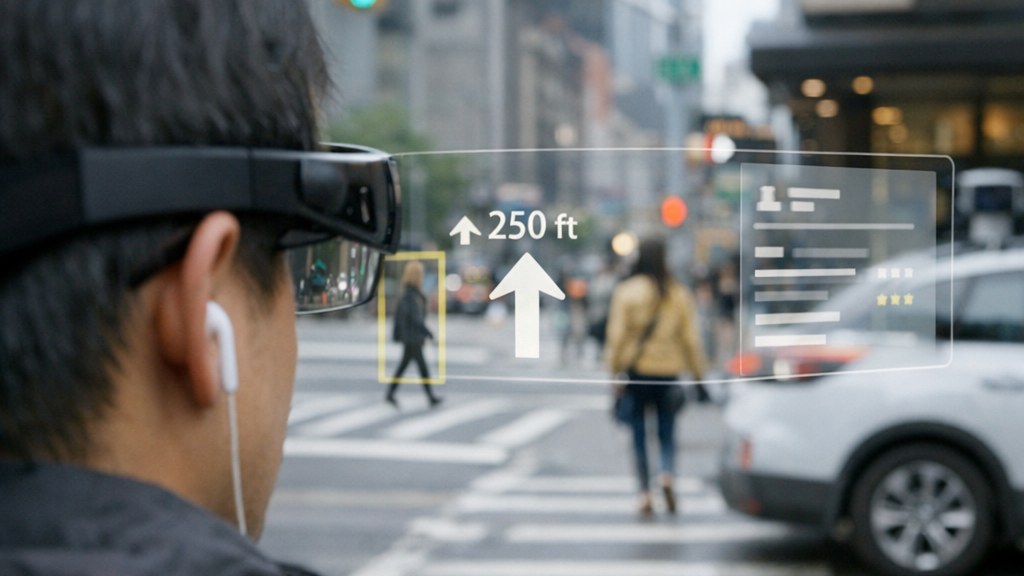
The appeal is easy to understand. A traveler could look at a train sign in another language and get help. A student could ask about a diagram. A worker could receive instructions while keeping both hands free. A person with vision or hearing needs could use AI to describe surroundings, amplify speech or translate in real time.
These are practical uses, not science fiction. They also explain why companies are racing to make AI faster, more visual and more wearable.
But the same features create risks. Glasses with cameras and microphones can record people nearby. AI that can recognize objects, places and faces may collect sensitive information about people who never chose to use the device.
Privacy groups and lawmakers have already raised concerns about possible facial recognition in smart glasses. The concern is not only about one product. It is about what happens when cameras, identity tools and large AI systems become easy to wear in public.
Regulators are also moving. The European Union’s AI Act places restrictions on several high-risk AI uses, including certain biometric systems and real-time remote biometric identification in public spaces for law enforcement. These rules show that governments are trying to define limits while the technology is still developing.
## A new computing habit
The bigger change may be behavioral. If AI becomes the first thing people consult when they look at a room, a street, a product or another person, it could reshape ordinary judgment.
That may save time. It may also make people more dependent on systems that can be wrong, biased or incomplete. A helpful answer delivered instantly through a lens may feel more authoritative than it really is.
For now, the technology is still uneven. Battery life, comfort, price, accuracy, privacy settings and social acceptance all remain barriers. Many people may prefer phones for years. Others may reject wearable cameras in shared spaces.
Still, the direction is clear. AI is moving closer to the senses. It is becoming part of how devices see, hear and explain the world. The next phase of computing may not begin with a keyboard or a touchscreen. It may begin with a question spoken into the air while an AI watches the same scene as the user.
AI Perspective
The key issue is not whether AI can add information to daily life. It is whether people can still choose when that layer appears and what it is allowed to know. The most useful future will likely be one where AI helps quietly, but remains visible, accountable and easy to turn off.


-134c72da.webp)


-6c40e5ef.webp)

-1d29b0b2.webp)