[[[SUMMARY_START]]]
Instant services are moving from novelty to normal life.
Fast delivery, real-time payments, AI chat and constant mobile access are reducing the time between wanting and receiving.
Research links heavy digital use with stronger preference for immediate rewards, though the effects vary by person.
The change is reshaping shopping, work, money and attention.
[[[SUMMARY_END]]]
Waiting is becoming less common in daily life. A message can be answered by an AI tool in seconds, a payment can clear instantly, and household goods can arrive at the door within hours.
## Speed is becoming the defaultFor many people, the day now runs on systems built to remove delay. Search engines answer questions instantly. Streaming services start films without a trip to a store. Food, medicine and groceries can be ordered from a phone. Customer service bots can reply before a human agent is free.
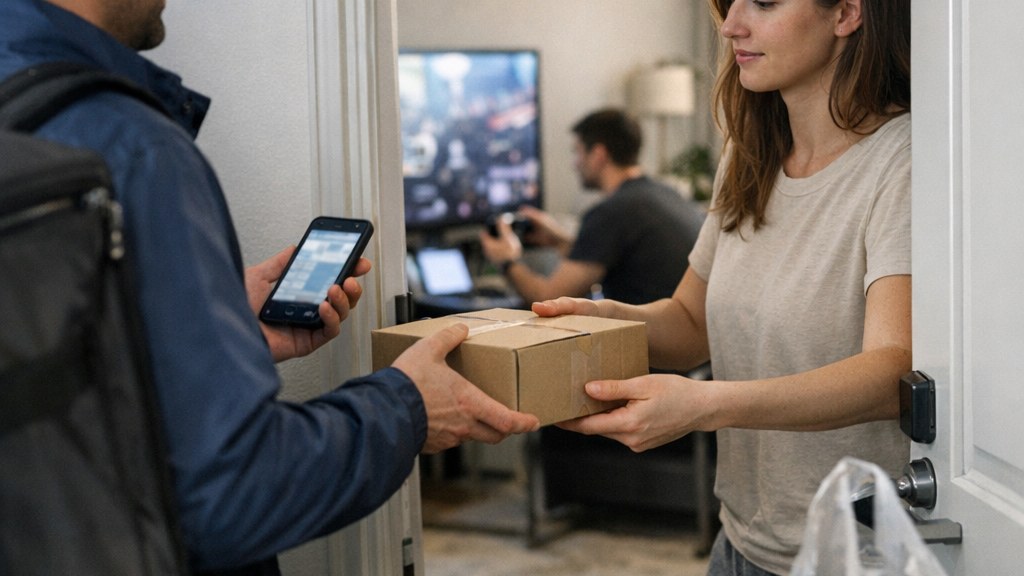
The shift is visible in retail. In 2025, Amazon said more than 13 billion items reached Prime members worldwide the same day or next day, including more than 8 billion in the United States. Walmart has also expanded delivery in 30 minutes or less in dozens of U.S. markets, with eligible items ranging from groceries and baby supplies to medicine, pet food and electronics.
Money is changing too. The Federal Reserve’s FedNow service, launched in July 2023, was designed to let participating banks and credit unions move payments at any time of day, every day of the year. It is part of a wider move away from systems that depend on business hours and batch processing.
## A new rhythm for everyday choices
These systems save time. They also change what feels normal. A delivery that once seemed fast may now feel slow. A website that takes a few seconds to load can seem broken. A customer support email that takes a day can feel out of step with chat tools that respond almost immediately.
The change is not only about convenience. It affects how people plan. When essentials can arrive quickly, some households may keep fewer backup supplies. When digital maps update live, drivers may tolerate less uncertainty. When entertainment is available on demand, viewers may be less willing to sit through slow starts, long ads or fixed schedules.
There is no single measure of human patience. But researchers often study a related idea called delay discounting. It describes the tendency to choose a smaller reward now over a larger reward later. A 2025 review of studies on problematic technology use found a positive relationship between excessive use of the internet, smartphones, games or social media and higher rates of delay discounting across 50 papers.
Earlier work using actual smartphone usage data also found that more screen time was linked with a stronger preference for immediate rewards. Social media and gaming apps were among the categories tied to that pattern. These findings do not prove that phones alone make people impatient. They do show that instant digital environments and impulsive choices often appear together.
Patience depends partly on attention. It is harder to wait when a device offers quick relief from boredom every few seconds. Notifications, short videos and endless feeds create many small chances to leave the present task.
A 2025 randomized trial tested what happened when participants blocked mobile internet on their smartphones for two weeks while still allowing calls and text messages. The study found improvements in subjective well-being, mental health and sustained attention. The result suggests that constant mobile internet access can affect how people focus, even if phones also bring clear benefits.
The strongest lesson is not that instant systems are harmful by themselves. Fast access can help a parent get medicine, a worker receive pay, a patient book care or a small business collect money. In emergencies, speed can be essential.
The risk is that people may carry emergency-level expectations into ordinary life. A short wait at a store, a slow reply from a friend or a delayed package can feel more frustrating when so many other systems have trained users to expect immediate results.
## The next test for technology
Companies are now competing not only on price and quality, but on time. The fastest service often wins attention. That gives businesses a reason to keep shrinking the space between request and result.
The next challenge is balance. Users want speed when it matters, but they also need room for focus, planning and calm. Some schools, workplaces and families are already using phone-free periods, notification limits and slower communication norms to protect attention.
Instant systems are unlikely to disappear. The more realistic question is how people use them without letting every part of life become urgent. Patience may not vanish, but it may need to be practiced more deliberately than before.
AI Perspective
Instant technology is useful when it removes waste and helps people act quickly. The harder question is whether every delay should be treated as a problem to solve. A healthier digital culture may keep fast tools while also protecting the slower habits that support attention, trust and long-term decisions.


-134c72da.webp)


-6c40e5ef.webp)

-1d29b0b2.webp)