[[[SUMMARY_START]]]
Smart speakers, cameras, thermostats, appliances and energy tools are changing the meaning of home technology.
They do not only respond to commands. They also create steady streams of data about daily routines.
The shift is bringing convenience, energy savings and safety features, but it is also raising privacy, security and transparency questions.
[[[SUMMARY_END]]]
The smart home is no longer just a set of gadgets. It is becoming a living data system, where lights, doorbells, thermostats, speakers, appliances and sensors observe patterns and respond to them. For many households, this brings comfort and control. It also means the home is producing more information than many residents may realize.
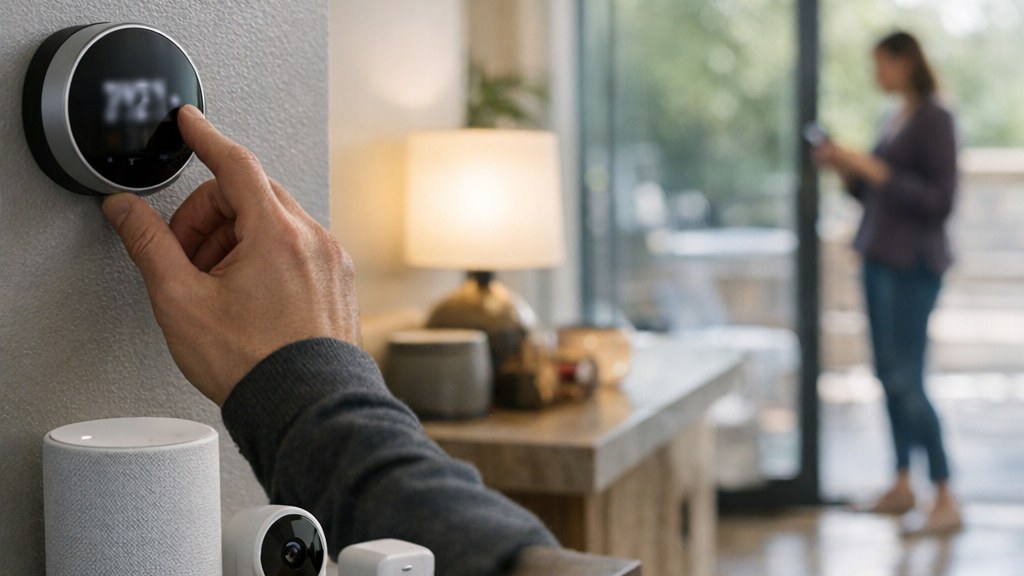
## The home as a sensor networkA modern connected home can track when people wake up, which rooms they use, when a package arrives, how much power an appliance consumes and whether a window or garage door is open. A smart speaker may process voice commands. A video doorbell may record motion at the edge of a property. A thermostat may learn patterns of occupancy and temperature preference.
These functions are often presented as simple conveniences. Lights turn on automatically. A phone alert warns that someone is at the door. A heating system lowers energy use when no one is home. Yet each action depends on data. The home becomes a network of small measurements, taken throughout the day.
Consumer spending shows that connected technology remains part of daily life. A 2025 U.S. consumer survey found that households spent an average of $896 on connected devices in the previous year, up from $764 in 2024. The same wider trend is visible in smart home products, from basic plugs and bulbs to cameras, security systems and connected appliances.
## Convenience is expanding fast
The technical side of the smart home is also changing. The Matter standard, backed by many major technology and device companies, was designed to help products from different brands work together more easily. Its 1.5 release in November 2025 added support for cameras, garage doors and other closures, soil sensors and more advanced energy management.
Those changes show where the market is moving. Cameras are becoming more central to home systems. Energy data is becoming more detailed. Devices can increasingly communicate not only with a user’s phone, but also with other products, utilities and home energy services.
A connected thermostat can be part of a broader energy plan. A soil sensor can work with irrigation equipment. An electric vehicle charger can become part of a household energy system. In this model, the home is not passive. It senses, calculates and adjusts.
## Privacy concerns are growing with adoption
The same features that make smart homes useful can make them sensitive. A 2025 federal survey of 401 U.S. smart home users found that people viewed voice assistants as the most problematic device category for security and privacy. Users were more confident about security devices and thermostats, but the study also found gaps in understanding across device types.
A separate 2025 survey of 2,000 U.S. homeowners focused on smart thermostats found that 52 percent did not know how data was collected from those devices. Only 14 percent of smart thermostat owners said they had researched a manufacturer’s data privacy policy before buying. At the same time, 70 percent of homeowners said they would be willing to replace a thermostat with one that provides more privacy.
The privacy issue can also reach beyond the buyer. Smart doorbells and outdoor cameras may capture visitors, neighbors, delivery workers and people passing by. Recent research on smart cameras and video doorbells has highlighted this bystander problem. The person who installs the device controls the system, but other people may still appear in its data.
## Security and trust are becoming product features
Security has become a major concern because smart products can remain in homes for years. Software updates help fix vulnerabilities and keep connected products working. A 2024 federal review of 184 smart products found that nearly 89 percent of manufacturer product pages did not clearly disclose how long the products would receive software updates. Basic internet searches still failed to find support information for two-thirds of the devices reviewed.
That lack of clarity matters. A connected lock, camera or health monitor is not only a physical object. It depends on software, cloud services and security support. If those supports end without clear warning, the device may lose features or become less secure.
Governments have begun to respond. The United States created a voluntary Cyber Trust Mark program for consumer smart products. The label is designed to show when a product meets baseline cybersecurity standards and to give shoppers more information through a QR code. In Europe, new cybersecurity rules for products with digital elements are set to require stronger protections for connected devices sold in the market.
## A cultural shift inside the home
The smart home is becoming a place where private life and data infrastructure overlap. It can help older adults live independently, reduce wasted energy, improve home security and make daily routines easier. It can also make ordinary behavior more visible to companies, platforms and service providers.
The question for many households is no longer whether a device is smart. It is whether the device is understandable. Buyers are being asked to judge not only price, design and features, but also data practices, update promises and the level of control they keep after purchase.
For the smart home to earn lasting trust, transparency will matter as much as automation. A home that learns from its residents also needs clear limits on what it collects, how it shares information and how long it keeps working safely.
AI Perspective
Smart homes show how everyday comfort now depends on invisible data flows. The main challenge is not the presence of sensors, but whether people can understand and control them. The most trusted homes of the future may be the ones that are smart, secure and easy to question.


-134c72da.webp)


