[[[SUMMARY_START]]]
A new climate economy is forming around protection, repair and resilience.
It includes flood defenses, heat planning, water security, stronger buildings, climate data, insurance tools and climate-ready farming.
Recent global estimates show adaptation needs are far larger than current public finance.
That gap is turning adaptation from a public works issue into a wider market for governments, banks and businesses.
[[[SUMMARY_END]]]
For years, climate business mainly meant cutting emissions. Solar power, wind farms, electric vehicles and batteries received most of the money and attention. That is now changing. As heat waves, floods, droughts, wildfires and sea level rise put pressure on cities, farms and supply chains, a second climate economy is starting to grow: adaptation.
## A shift from prevention only to protection tooClimate adaptation means preparing for the effects of a warmer world. It does not replace the need to cut greenhouse gas emissions. It deals with risks that are already here or are now difficult to avoid.
The work can be simple or complex. It can mean planting shade trees, raising roads, restoring wetlands, installing early warning systems, redesigning drainage, cooling schools and hospitals, or changing crop varieties. It can also mean new insurance products, better climate risk models, resilient power grids and water-saving technology.
The reason this economy is beginning to expand is clear. The World Meteorological Organization has said 2025 was one of the warmest years on record. Recent years have also brought repeated examples of costly climate stress, from flooding in cities to drought pressure on agriculture and dangerous heat in workplaces.
## The finance gap is still large
The strongest sign that the adaptation economy is still young is the size of the funding gap.
The UN Environment Programme’s latest adaptation assessment estimates that developing countries will need about $310 billion to $365 billion a year by 2035 for adaptation. International public adaptation finance to developing countries was about $26 billion in 2023, down from $28 billion in 2022. That means estimated needs are roughly 12 to 14 times larger than current flows.
Many countries are planning, but planning is not the same as building. The same global assessment found that most countries now have some form of national adaptation planning instrument. The challenge is moving from plans and pilot projects to construction, maintenance and long-term finance.
This is where the economy is starting to change. Adaptation is no longer seen only as emergency spending after a disaster. It is increasingly being treated as investment before damage happens.
## What the adaptation market includes
The adaptation economy touches many sectors.
In infrastructure, it includes stronger bridges, roads, ports, rail systems and power networks. In cities, it includes drainage upgrades, flood barriers, reflective roofs, public cooling centers and urban trees. In agriculture, it includes drought-tolerant seeds, irrigation systems, soil protection and weather information for farmers.
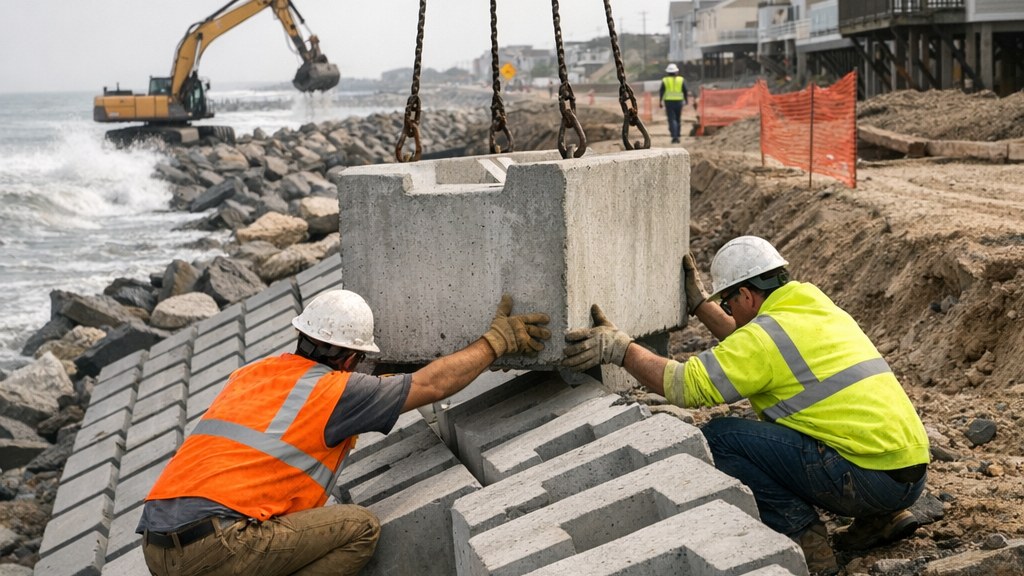
Early warning is one of the clearest examples. Better forecasts and warning systems can reduce deaths and damage when storms, floods or heat waves arrive. For poorer countries and small island states, these systems can be among the most important first investments.
Nature-based solutions are also becoming part of the market. Mangroves can reduce storm surge. Wetlands can hold floodwater. Trees can lower street temperatures. These projects often need public support, but they can also protect private assets such as hotels, farms, factories and housing.
## Business interest is growing, but barriers remain
Banks and companies are paying more attention because climate risk is becoming a balance-sheet issue. A flooded warehouse, overheated data center, damaged road or failed harvest can affect revenue and credit risk. Insurers are also reviewing how physical climate risks affect pricing and coverage.
Recent development finance work has pointed to a growing opportunity for financial institutions to fund resilience through ordinary debt and equity products, as well as newer tools such as contingent finance and resilience bonds. Some estimates suggest corporate resilience investment could create a large annual financing opportunity for banks by 2030.
But adaptation can be harder to finance than clean energy. A solar project sells electricity. A flood wall sells avoided loss, which is harder to measure. A shaded street may improve health and productivity, but the financial return may not go directly to the investor. This makes public policy, standards and risk-sharing important.
Governments often need to set building codes, land-use rules, climate data standards and public procurement plans before private capital can move at scale. Multilateral banks and public funds can help by taking early risk and proving which models work.
## Why the beginning matters
The adaptation economy is likely to grow because climate impacts are becoming more visible and more expensive. But its growth will not be even. Wealthier cities and companies can often protect themselves first. Poorer communities may face the greatest risks while having the least money to prepare.
That creates a policy test. If adaptation becomes only a private market, protection may follow wealth. If it is built with public planning, fair finance and local needs in mind, it can reduce losses and support jobs at the same time.
The early stage of this economy is therefore important. The decisions made now will shape what gets protected, who pays, and who benefits.
AI Perspective
The adaptation economy is a sign that climate risk is becoming part of everyday economic planning. The most useful projects will be those that protect people while also keeping transport, food, water and power systems working. The main challenge is making sure resilience is affordable for the communities that need it most.


-134c72da.webp)


